If you regularly store bulk shopping and batch-cooked food, choose a chest freezer if you have enough floor space and want a large, open compartment. Choose an upright freezer if you want to find portions more easily in separate compartments. In either case, check the usable capacity, dimensions and installation requirements of the specific model, then compare its power-cut storage time, energy consumption and noise level according to your priorities.
Who is this choice for?
Households that shop or cook in bulk
If bulk shopping and batch cooking take up more space than your fridge freezer can offer, start by working out how much usable capacity you need. A chest freezer gives you open space for bulky items, while an upright model makes it easier to organise food in compartments. UFC-Que Choisir distinguishes between these two formats in particular by their footprint and how easy they are to access.
People who check their freezer stock regularly
If you want to find portions sorted by type or date, look at the interior layout as well as the capacity. The drawers in an upright freezer can make it easier to keep things organised, as long as they’re the right size for your containers.
Households with an unheated room
If you’re planning to use a cellar, utility room or garage, the room temperature matters just as much as the available space. The climate class describes the ambient temperature range the appliance is designed for; also check any model-specific guidance for use in a cold room.
Which features should you prioritise?
Upright freezer
Choose this if: floor space is limited and you want frequent access to food stored in separate drawers.
Bear in mind: drawers can make it harder to store large items or unusually shaped containers.
Chest freezer
Choose this if: you have enough room and want to store bulk shopping or batch-cooked food in one large, open compartment.
Bear in mind: a chest freezer takes up more floor space, and smaller items at the bottom may be harder to find.
Under-counter freezer
Consider this: as an extra freezer when space is very limited and you only need a little more capacity.
Bear in mind: check that its capacity is enough for your usual quantities before choosing it for bulk shopping.
Large fridge freezer
Consider this: if you also need to replace your fridge and its freezer compartment can meet your additional needs.
Bear in mind: assess the freezer capacity separately from the appliance’s total capacity.
| Feature | What to check | Who it matters to |
|---|
| Capacity and dimensions |
Compare the usable capacity in litres with the appliance’s dimensions, the route to its final position and the space needed to open it. |
When I do a big shop, I want to increase my food reserves without choosing an appliance I can’t install. Around 33% of consumers put finding enough capacity to suit their available space first. |
| Access and storage |
Check the size and layout of the drawers or baskets, and how easy it is to reach food at the bottom. |
If I often take out prepared portions, I want to find them without moving most of the contents. Easy access comes first for around 27% of consumers. |
| Unheated room |
Check the room’s ambient temperature against the climate class and the limits specified for the exact model. |
If I have a cellar, utility room or garage, I need an appliance designed for the temperatures it actually reaches. Suitability for the space would be the main concern for around 20% of consumers. |
| Power cuts, energy use and noise |
Compare the power-cut storage time in hours, annual energy consumption in kWh/year and noise level in dB(A). If you plan to freeze large quantities, also check the kg/24 h rating. |
I want to know how long the appliance can keep food frozen during a power cut and understand the specifications of an appliance that runs continuously. Around 20% of consumers prioritise these operating conditions. |
Mistakes to avoid
-
Choosing a chest freezer based on capacity alone
Its capacity may suit a big shop, but its width and depth, as well as the space needed to open the lid, must also suit the room.
Measure the space, the delivery route and the clearance needed for the lid. If you often take out small portions, also compare how easy they are to access in an upright freezer with drawers.
-
Assuming any freezer will work in a cold garage
The intended ambient temperature range depends on the model. A specific model may be rated for use down to −15 °C, but that doesn’t mean other appliances are too.
Note the room’s minimum and maximum temperatures, then check them against the climate class and the instructions for the model you’re considering.
-
Comparing energy ratings alone
The energy rating doesn’t tell you how long food will stay frozen during a power cut, how much the appliance can freeze in 24 hours or how noisy it is.
When comparing appliances of a similar size, also check their energy consumption in kWh/year, usable capacity, noise level, power-cut storage time and freezing capacity if you plan to freeze a large quantity at once.
-
Confusing power-cut storage time with freezing capacity
Power-cut storage time tells you how long food stays frozen during a power cut; freezing capacity tells you how much food the appliance can freeze in 24 hours. They answer two different questions.
If you do big shops or batch cook, check the kg/24 h rating. If keeping food frozen during a power cut is particularly important, also check the stated storage time in hours.
Brands to consider, depending on the model you’re looking for
Beko
Chest freezers to consider for bulk storage, particularly if the space you have in mind is unheated.
- Beko states that its HSM46740 chest freezer has a capacity of 451 L and can be used in ambient temperatures as low as −15 °C.
- This cold-temperature rating applies to this model. Check the limits for any other Beko model.
Bosch
Upright freezers to compare if capacity and compartmentalised storage are important to you.
- Bosch states that the GSN58AWEV upright freezer has a usable capacity of 366 L and will keep food frozen for 12 h during a power cut.
- Check that its dimensions and drawer layout suit your containers and available space. The GSN58AWEV’s specifications don’t apply to other models.
Liebherr
Chest freezers to consider if room conditions and frost build-up are important factors in your decision.
- Liebherr offers FrostProtect on some chest freezers designed for unheated rooms, and StopFrost on selected models to help limit frost build-up.
- Check whether these features are included and confirm the ambient temperature range on the exact model’s product page.
Electrolux
Built-in models to consider when fitting seamlessly into your kitchen matters more than storing large quantities.
- The Electrolux LUB3AE88S is a built-in freezer with a stated capacity of 98 L.
- Before choosing this model for bulk shopping, compare its 98 L capacity with the amount of food you actually want to store.
Freezers to compare on Joybuy
These models include chest freezers in different sizes and an upright freezer with compartmentalised storage. To choose between them, start with the amount of food you want to freeze and how you prefer to access it, then check the installation requirements for the model you choose.
 Image unavailable
AUCMA 291 L convertible chest freezer
This chest freezer is worth comparing if you’re looking for a large, open space for bulk shopping or batch cooking. The product name specifies a capacity of 291 L, fridge or freezer modes, an E energy rating, LED lighting and a removable basket. Select freezer mode to store frozen food; before installing it in a cold room, check the permitted ambient temperature range.
View on Joybuy
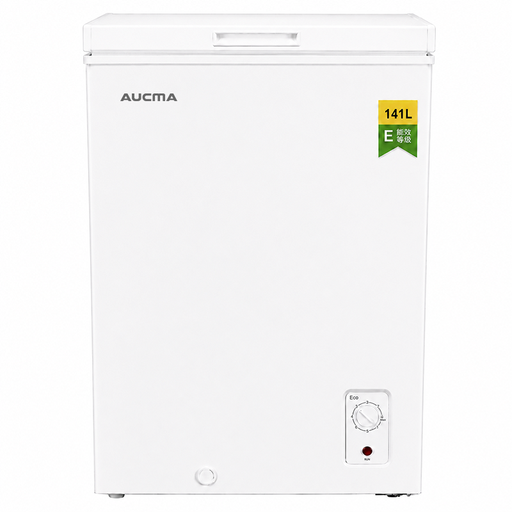 Image unavailable
AUCMA 141 L convertible chest freezer
This chest freezer may suit you if you need less extra storage than the AUCMA 291 L model offers. The product name specifies 141 L, an E energy rating, a removable basket and the option to switch between fridge and freezer modes. Select freezer mode for frozen food, and check the permitted ambient temperatures if you plan to install the appliance in an unheated room.
View on Joybuy
 Image unavailable
CHiQ JR99DWE 99 L chest freezer
This chest freezer is worth considering for extra storage rather than very large reserves. The product name specifies 99 L, a removable basket, an adjustable thermostat and an E energy rating. Make sure there’s enough clearance for installation, and check its power-cut storage time if that matters to you.
View on Joybuy
 Image unavailable
Heinrich´s 161 L No Frost upright freezer, stainless steel
This upright freezer is worth comparing if you’d rather store food in separate drawers than stack it in a chest freezer. The product name specifies 161 L, drawers, No Frost, an alarm and a C energy rating. Measure the space and check the required clearances, as well as the ambient temperature range if the room is unheated.
View on Joybuy
 Image unavailable
AUCMA 95 L convertible chest freezer
This chest freezer could provide extra storage if the amount you need to keep is within its stated 95 L capacity. The product name specifies an E energy rating, a removable basket and the option to switch between fridge and freezer modes. Select freezer mode for frozen food; if you plan to keep it in a cellar or garage, first check the ambient temperature range this model is designed for.
View on Joybuy
Frequently asked questions
Can I install any freezer in a garage or cellar?
No. Check that the garage or cellar’s ambient temperature falls within the range specified for the model you choose. The climate class describes this range; a rating of down to −15 °C for some models doesn’t apply to every freezer.
Which figure should I compare if I’m concerned about power cuts?
Compare the power-cut storage time, given in hours, and take into account the conditions behind the stated figure. Don’t confuse it with freezing capacity in kg/24 h, which tells you how much food can be frozen in a day. UFC-Que Choisir’s testing protocol assesses how well food is kept frozen without power by tracking changes in its temperature.
Should No Frost be the deciding factor?
No. No Frost may be important if you want to reduce the need for manual defrosting, but it doesn’t replace comparing capacity, dimensions, noise, energy consumption and power-cut storage time. Check the specifications of the exact model to make sure they suit the way you plan to use it.


