If you regularly buy in bulk or batch-cook at home, start by considering how much you need to freeze and how easy you want it to be to access. A chest freezer is suited to storing large quantities, while an upright freezer makes it easier to organise food by compartment. A small freezer is better for additional storage, while a fridge freezer can do both jobs if its freezer compartment is large enough for your stock. Before choosing a model, check the available space and the room temperature, then compare energy use, noise and how long food stays frozen during a power cut.
Who are these options for?
Households that buy in bulk
If you buy in large quantities, batch-cook or store home-grown produce, start by estimating how much room you need for your food and containers. A chest or upright freezer could suit you, depending on the space available and how you want to organise your stock. UFC-Que Choisir highlights the differences between these two styles in terms of size and capacity.
Households that want to find food easily
If you open your freezer often and keep prepared meals, portions and frozen food separate, ease of access matters just as much as capacity. Check the drawers, shelves and space for larger packs; the layout varies from model to model.
Households with a cold room or limited space
For a cellar, garage, utility room or compact kitchen, measure the space, the route into the room and the clearance needed to open the door or lid. Also check that the model’s recommended ambient temperature range covers the temperature of the room.
What should you consider before buying?
First decide whether you need a dedicated appliance, and whether you mainly want a large open space or easy access to separate compartments. The four options below suit different quantities and uses; check installation requirements and the specifications for each model separately.
Chest freezer
Consider it: for storing large quantities, if you have enough floor space.
Bear in mind: you’ll need to organise the open space so that food at the bottom is easy to reach. UFC-Que Choisir highlights the importance of capacity and overall size for this style of freezer.
Upright freezer
Consider it: if you want to separate foods and regularly access different categories.
Bear in mind: drawers make it easier to organise food, but their size may limit the space available for some larger containers.
Small dedicated freezer
Consider it: for extra storage when available space matters more than capacity.
Bear in mind: a small capacity can quickly fill up with a few bulk buys or batches of prepared meals.
Fridge freezer
Consider it: if you also need to replace your fridge and its freezer compartment is large enough for your usual stock.
Bear in mind: the appliance’s total capacity isn’t the same as the space available for frozen food; compare the freezer compartment separately.
| Criterion |
What to check |
Consumers concerned |
| Freezing capacity |
Compare the volume available for frozen food, in litres, with your usual stock and the size of your containers. For a fridge freezer, distinguish this from the total capacity. |
If I need to fit both bulk buys and batch-cooked meals, usable space matters more than the appliance’s external dimensions. Around 31% of consumers prioritise capacity. |
| Organisation and access |
Check the drawers, baskets and shelves, as well as the space for larger packs; with a chest freezer, consider how you’ll reach food at the bottom. |
If I often take out different portions, I want to find them without having to rearrange everything. Easy access comes first for around 25% of consumers. |
| Location |
Measure the appliance, the route into the room and the clearance needed to open the door or lid. Check the permitted ambient temperatures for the model you’re considering. |
In a cellar, garage or narrow kitchen, I need to be able to fit and open the appliance in its intended spot. Around 25% of consumers prioritise this space constraint. |
| Everyday running and power cuts |
Compare kWh/year and noise in dB(A) across models with similar capacities and formats, then check how long they can keep food frozen during a power cut. |
If the appliance is near a living area or I want to be prepared for a power cut, its energy use, noise and storage time matter every day. Around 19% of consumers put this concern first. |
Mistakes to avoid
-
Choosing the largest capacity without considering access
A chest freezer can hold large quantities, but food at the bottom needs to be organised so you can reach it. An upright freezer makes it easier to sort food by level, provided its drawers suit your containers.
Decide whether you’ll mainly store large quantities or regularly take out small portions, then check the baskets, drawers and space for larger packs.
-
Assuming “garage” means it can handle the cold
The climate class defines the range of ambient temperatures in which an appliance can be used. A feature advertised for an unheated room only applies to models that specifically include it.
Check the minimum and maximum temperatures allowed for the model against the temperatures in the room where you plan to keep it. Don’t rely on the product category alone.
-
Comparing only the energy label letter
You can’t compare appliances with different capacities based on their energy class alone. You also need to consider their stated annual energy consumption and capacity.
Check the kWh/year on the label or the European EPREL database, then compare models with similar capacities and formats. Check noise and storage time separately.
-
Assuming all models keep food frozen for the same length of time
How long food stays frozen during a power cut varies by appliance. UFC-Que Choisir assesses this when testing freezers.
Before making your choice, look up the figure for the specific model in its documentation or an independent test.
Brands to know
Bosch
Worth considering for a freestanding or integrated upright freezer, particularly if the internal layout is important to you.
- Bosch describes removable Vario Zone drawers and shelves on the GSN58VWEV model. The brand also offers upright freezers with No Frost.
- Check these features on the model you choose, along with its capacity, climate class and annual energy consumption.
Liebherr
Worth considering for a chest freezer, especially if you plan to install it in an unheated room.
- Liebherr features StopFrost on some chest freezers to help limit frost build-up, and FrostProtect on models that the brand says are suitable for unheated rooms.
- Check whether these features are included, and confirm the permitted ambient temperature range for the specific model.
Beko
Worth considering for a No Frost upright freezer or a model advertised as suitable for an unheated room.
- Beko states that its Freezer Guard feature works down to −15 °C on the B1RFNE314W model.
- This specification applies to this model only, not all Beko upright freezers. Check the product information for the model you’re considering and its installation requirements.
Whirlpool
Worth considering if you want to compare chest and upright freezers available on the French market.
- Whirlpool offers both chest and upright freezers; compare their specifications model by model.
- If delivery, removal of your old appliance or installation will affect your decision, check the terms for the offer you choose.
Products for different storage needs
These Joybuy products show three ways to meet your needs: chest freezers in different capacities, an upright freezer with compartments, and a fridge freezer. Before choosing between these formats, compare the space available for frozen food and the layout that suits your stock.
 Image unavailable
AUCMA, 291 L convertible chest freezer
Consider this if you need a 291 L chest freezer and have enough room to open the lid and reach the bottom.
The product name lists fridge and freezer modes, an E energy class, a removable basket, LED lighting and five-level digital controls.
If you plan to install it in a cellar or garage, check the permitted ambient temperature range for this model. Also check how long it can keep food frozen during a power cut.
View on Joybuy
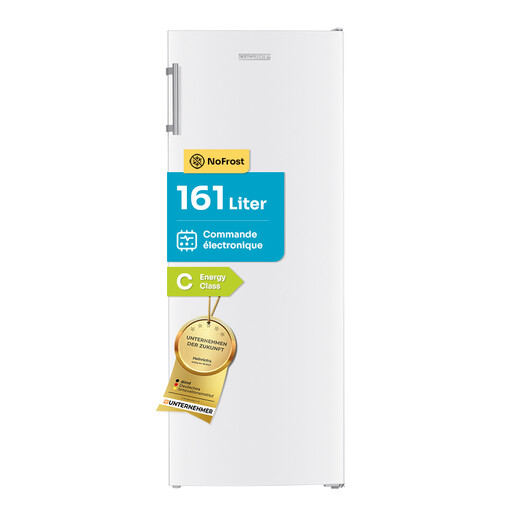 Image unavailable
Heinrich´s, 161 L No Frost upright freezer
Consider this if you’d rather organise food in an upright freezer than store it in the open space of a chest freezer.
The product name lists a capacity of 161 L, drawers, a No Frost function, an LED display, an alarm and a C energy class.
Before deciding where to put it, check its dimensions, permitted ambient temperature range and how long it can keep food frozen during a power cut. To compare its running costs, check the kWh/year.
View on Joybuy
 Image unavailable
AUCMA, 95 L convertible chest freezer
Consider this for extra storage if 95 L is enough for your needs; estimate how much room you need for bulk buys before choosing this capacity.
The product name lists fridge and freezer modes, an E energy class, a seven-level thermostat and a removable basket.
Check that the freezer mode settings suit your needs, and confirm the permitted room temperature and how long the model can keep food frozen during a power cut.
View on Joybuy
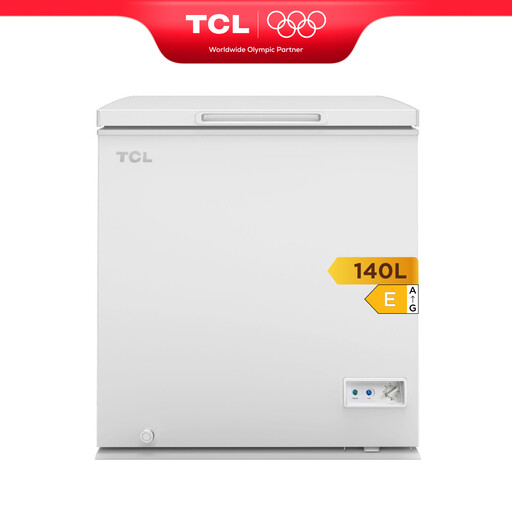 Image unavailable
TCL CF182EWE0FR, 140 L chest freezer
Consider this if you’re looking for a dedicated 140 L chest freezer and can set aside enough room to open it.
The product name lists a storage basket, a counterbalanced lid, adjustable temperature controls and an E energy class.
Compare its capacity with your actual stock and consider how easy it is to reach food at the bottom. Check the kWh/year, permitted ambient temperature and the model’s storage time in its documentation.
View on Joybuy
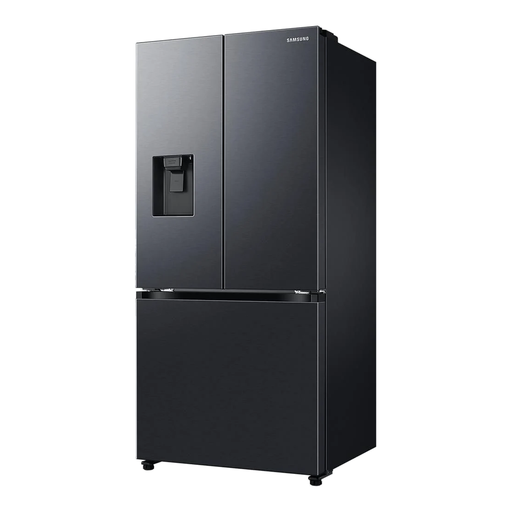 Image unavailable
Samsung RF50C530EB1, 495 L multi-door fridge freezer
Consider this if you want refrigeration and freezing in one appliance rather than adding a dedicated freezer.
The product name lists a total capacity of 495 L and an E energy class. This total capacity doesn’t represent the space available for frozen food.
Check the capacity and layout of the freezer compartment separately, as well as the clearance needed to open the doors and how long the appliance can keep food frozen during a power cut.
View on Joybuy
Frequently asked questions
How do I compare two freezers with different capacities?
First compare the space available for frozen food, then compare kWh/year, noise and storage time across appliances with similar capacities and formats. An energy label letter alone doesn’t sum up the annual energy consumption of appliances in different sizes; the European label and EPREL database let you check the declared figures for a specific model.
Can I install any freezer in a garage or cellar?
No: the room temperature must stay within the ambient temperature range permitted for the model you choose. Check the minimum and maximum limits before installing it. For example, Beko states that Freezer Guard works down to −15 °C on the B1RFNE314W; this doesn’t apply to other models.
Where can I find the energy label for a specific model?
Search for the exact model reference in the public European EPREL database. The product information lets you check energy details and, depending on the data recorded for that model, its capacity, noise level and climate class.
Is the energy class enough to choose a freezer?
No: consider the energy class alongside annual consumption in kWh and the capacity you need. The current energy label scale runs from A to G. Also check the noise level and how long the freezer can keep food frozen during a power cut, as these relate to other everyday needs.


