You’re replacing a built-in model
Check the dimensions of the housing and how the existing cabinet door is attached before choosing an appliance. Height alone won’t tell you whether the door, ventilation and opening direction will be suitable.


For a fitted kitchen, start by checking the housing dimensions, cabinet door and your need for freezer space. A single-door built-in model is a good choice if you already have a separate freezer, while a built-in fridge-freezer combines both compartments behind an integrated cabinet door. If you don’t need an integrated door or the housing isn’t suitable, consider placing a freestanding model elsewhere, following its own installation instructions.
Your choice depends on whether you need to keep your existing cabinet, want fridge and freezer space in one unit, or can install the appliance outside a housing.
Check the dimensions of the housing and how the existing cabinet door is attached before choosing an appliance. Height alone won’t tell you whether the door, ventilation and opening direction will be suitable.
A built-in fridge-freezer combines both functions behind a kitchen cabinet door. Compare the usable capacities of the fridge and freezer separately, then check that the housing and door fitting are suitable for your cabinet.
A freestanding fridge is another option if you don’t need a built-in model. Plan where it will go and check the clearances specified in its instructions: it shouldn’t be treated as a built-in appliance.
Decide on the format and installation requirements first, then compare models by the features that matter in everyday use.
Consider this if: you already have a separate freezer and want to use the housing for refrigeration only.
Bear in mind: this format doesn’t include a built-in freezer, and its door system must be compatible with your cabinet door.
Consider this if: you want fresh and frozen food in one cabinet with an integrated door.
Bear in mind: the capacity is split between two compartments, and door-fixing systems aren’t automatically interchangeable.
Consider this if: you don’t need an integrated cabinet door, or the housing can’t accommodate the built-in model you want.
Bear in mind: the appliance will be on show, and its position must meet the installation requirements for that specific model.
| Priority | What to check | Your needs |
|---|---|---|
| Cabinet and door | Measure the usable height, width and depth of the housing. Compare the installation diagram, door fixing, opening direction and ventilation requirements for the exact model. | I want to keep my existing cabinet without finding out after ordering that the appliance or its door won’t fit. |
| Capacity split | Compare the usable capacities of the fridge and freezer compartments separately. Check whether a single-door model actually has a freezer compartment. | Is a separate freezer enough for me, or do I need space for frozen food in this kitchen cabinet? |
| Cooling and defrosting | Check the cooling technology listed for each compartment, as well as how the freezer defrosts. Only look for alert functions if they’re listed in the model specifications. | I’d like to minimise manual defrosting, while knowing which features apply to the fridge and which to the freezer. |
| Energy and noise | Compare kWh/year and noise levels across appliances of a similar size and capacity, as well as their energy ratings. According to Info.gouv.fr, the consumption shown on the label is measured under standardised conditions; actual use may differ. | In an open-plan kitchen, noise matters to me as much as the consumption shown on the label. |
| During a power cut | If the storage time during a power cut is important, check the figure and conditions listed for the exact model. Don’t infer it from the capacity or cooling technology. | I want to compare this figure across models without assuming how they’ll perform in every situation. |
Two appliances of a similar height may need different depths, cabinet-door fixings or clearances. If the housing is too small, don’t force the installation.
Note all the relevant dimensions, obstacles and socket position, then compare them with the installation plan for the model you’ve chosen.
Bosch product specifications, for example, distinguish between the fixed-door hinges on the KIN86SFE0 and the sliding hinges on the KIR41NSE0. These details don’t guarantee compatibility with an existing cabinet door.
Identify and photograph the current fitting, then check the new appliance’s instructions for the door-fixing type and opening clearance.
According to Info.gouv.fr, the consumption shown on the label is based on measurements under standardised conditions and may differ from actual use. The energy rating letter alone doesn’t tell you the capacity or noise level.
Compare kWh/year, capacities and noise levels across models of a similar size; check their energy labels if these factors will help you decide.
In France, the Ministry for Ecological Transition’s FAQ explains the ‘one-for-one’ take-back scheme when you buy a new appliance of the same type. Ecosystem says this free take-back service also applies to distance sales.
Ask about take-back arrangements when you order, and check where and when you’ll need to hand over your old fridge.
These ranges show some of the configurations available to compare; the brand name is no substitute for checking the instructions for the model you choose.
Bosch France’s appliance range includes single-door built-in fridges, built-in fridge-freezers and freestanding fridge-freezers.
The range includes built-in fridge-freezers and single-door fridges; Electrolux France specifies a 1780 mm housing for the LNT6ME18S.
Whirlpool France’s range includes single-door built-in fridges and fridge-freezers, including models with sliding hinges.
These four fridge-freezers are freestanding options to consider if your kitchen doesn’t need an integrated cabinet door. Before ordering, check the space available and the ventilation requirements for each model.
 Image unavailable
Worth considering if you can install a freestanding fridge-freezer instead of keeping an integrated cabinet door. The model name lists Total No Frost, an E rating, Wi-Fi and My Zone; check the dimensions and clearances in its instructions.
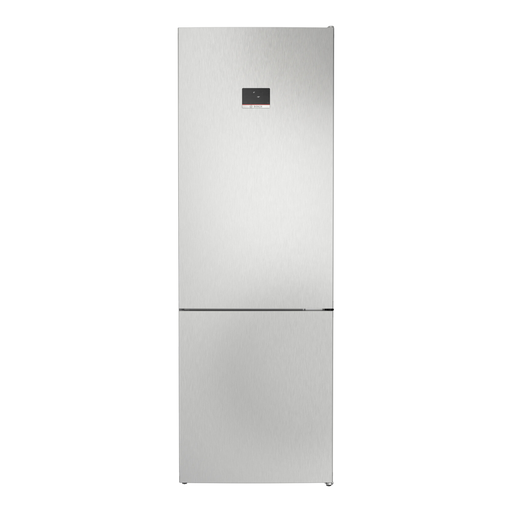 Image unavailable
This freestanding fridge-freezer is an option if you don’t need an integrated cabinet door and want the 440 L total capacity stated in its name. Check the available space, clearances and defrosting method in the model’s instructions.
 Image unavailable
This freestanding model is worth comparing if you’re looking for a large capacity and don’t need a built-in appliance. Its name lists a 444 L capacity and frost-free operation; check the capacity split, dimensions and installation clearances.
 Image unavailable
Worth comparing if you’re looking for a freestanding fridge-freezer listed as 54 cm wide and 176 cm tall. Low Frost doesn’t mean you’ll never need to defrost it manually; check the instructions and required clearances.
No. The cabinet door must be compatible with the new appliance’s fixing system, and the housing must meet its installation requirements. Bosch product specifications, for example, list fixed-door hinges for the KIN86SFE0 but sliding hinges for the KIR41NSE0. Check the existing fitting and read the instructions for the model you’re considering before making any changes.
No. Compare kWh/year, capacities and noise levels across models of a similar size, too. Info.gouv.fr explains that the consumption shown on the label comes from standardised measurements, and actual consumption depends on how the appliance is used.
Yes, as long as you can give it a separate space without an integrated cabinet door. Bosch suggests a freestanding model as an option when the housing can’t accommodate a built-in appliance. Follow the freestanding model’s ventilation and positioning instructions, and don’t assume it can be installed in the existing cabinet.
When you buy an equivalent new appliance, the Ministry for Ecological Transition’s FAQ explains the ‘one-for-one’ take-back scheme. Ecosystem says a free take-back option must also be offered for distance sales. Ask the retailer how it works in practice, including where and when to hand over your old appliance.