When choosing a built-in oven for regular use, first check that the housing, cabinet and door clearance are suitable for the model you’re considering. If you mainly cook on one shelf, conventional heating may meet your needs; for a range of dishes cooked on several shelves, look at fan-assisted modes. You can then compare capacity, cleaning and energy consumption based on the dishes you make and how often you use the oven.
Who is this guide for?
People who often cook a variety of dishes
If you regularly switch between baking, gratins and roasts, start with the types of cooking you actually do. UFC-Que Choisir recommends choosing oven modes to suit the dishes you prepare. If you regularly cook on several shelves, this is worth bearing in mind.
People replacing an oven in an existing cabinet
The usable height, width and depth of the housing are just the starting point. Also check your cabinet, the specified clearances and the space needed to open the door against the details for the exact model.
People who consider everyday use
If you use your oven frequently, choose a capacity that suits the dishes you make without overlooking cleaning. ADEME describes the energy label as a way to compare appliances; check the figures for the cooking modes you’ll use.
What should you check before buying?
In a fitted kitchen, first make sure the oven can be installed and used safely, then compare cooking modes to suit your dishes. Capacity, energy consumption and cleaning help you narrow down the compatible models.
| Criteria |
What to check |
Who is it for? |
| Installation and door clearance |
Measure the housing and compare it with the model’s installation diagram; also check the specified clearances and how far the door opens. |
If I’m replacing my oven in an existing cabinet, I want to be able to install it and open the door without blocking the way. Around 29% of consumers prioritise this compatibility. |
| Cooking modes |
Check that it has modes suited to your dishes and whether you want to cook on one shelf or several, rather than simply counting the programmes. |
When I regularly prepare several dishes or batches, I mainly need modes that suit those types of cooking. This is the priority for around 29% of consumers. |
| Capacity and handling |
Compare the usable capacity with the size of your dishes, and check the shelf positions and which accessories are included or compatible. |
When my dishes are large or I often handle hot food, cavity space and access matter most to me. Around 24% of consumers prioritise this need. |
| Energy consumption and cleaning |
Compare the stated energy consumption for similar modes, then look at the cleaning systems and any precautions for using them. |
If I use the oven often, I want to understand its energy consumption and how much time cleaning will take. This comes first for around 18% of consumers. |
Mistakes to avoid
-
Relying on the dimensions of your old oven
The external dimensions of the appliance you’re removing don’t, on their own, determine the size of the housing or the installation requirements for the new model. A compact oven and a standard-size one may need different amounts of space.
Measure the usable space in the cabinet and compare it with the installation diagram for the oven you’re considering. Don’t forget the specified ventilation and door clearance.
-
Choosing the number of programmes instead of the modes you need
According to UFC-Que Choisir, cooking modes should be chosen to suit the dishes you prepare. Conventional heating works for cooking on one shelf; consider a fan-assisted mode if you want to cook on several shelves.
Make a note of the dishes you usually cook and check that the model’s features cover them. Don’t assume you’ll use every extra function.
-
Choosing a cleaning system without considering how you’ll use it
A cleaning system doesn’t replace checking the precautions in the manual or thinking about how often you clean your oven.
Compare the cleaning methods offered by the models you’re interested in, and choose one that suits your routine.
-
Comparing energy ratings alone
Stated energy consumption depends on the mode and cycle measured. For domestic ovens, Delegated Regulation (EU) No 65/2014 sets out measurement per standard cycle in conventional mode and, where available, fan-assisted mode.
Compare figures measured in similar modes. If you look at test results, check temperature control and preheating separately.
Built-in oven brands to know
There are no brand profiles to display in this section.
A built-in oven on Joybuy
This built-in oven may suit people who regularly prepare a variety of dishes and are looking for a fan-assisted cooking mode. Check its exact configuration and make sure it’s suitable for your kitchen before choosing it.
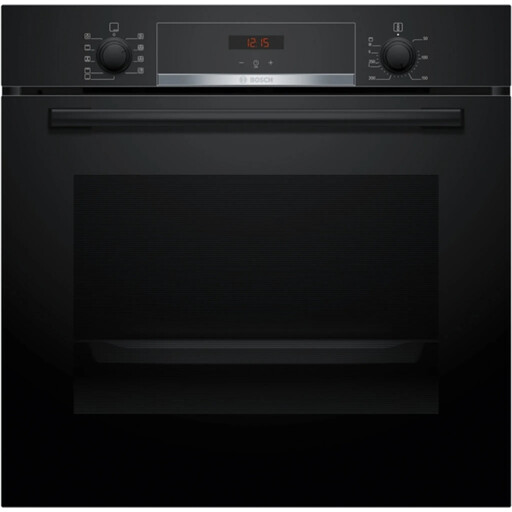 Image unavailable
Bosch HBA514BB3 built-in oven
If you prepare a variety of dishes, check that its modes suit the types of cooking you do most often.
The product name mentions 3D hot air and a stainless-steel finish. It also describes the appliance as a double oven, although the description refers to a single cavity. Confirm the configuration and usable capacity before choosing this model.
Check the installation dimensions, clearances, door opening and connection requirements in the manual against your kitchen. Also consult the energy label for the modes you plan to use.
View on Joybuy
Frequently asked questions
What should I measure before replacing a built-in oven?
Measure the usable height, width and depth of the housing, then compare them with the installation diagram for the exact model. Also check the cabinet requirements, clearances and space needed to open the door. The dimensions of your old appliance alone aren’t enough.
Do you need a fan-assisted mode if you cook often?
A fan-assisted mode is particularly useful if you regularly want to cook on several shelves, while conventional heating may suit cooking that’s mainly done on one shelf. UFC-Que Choisir recommends starting with the dishes you prepare rather than focusing only on the number of advertised functions.
How can I compare the energy consumption of two ovens?
Compare their energy labels and the stated energy consumption for similar modes. Delegated Regulation (EU) No 65/2014 defines measurements per standard cycle in conventional mode and, where available, fan-assisted mode. An energy rating alone won’t tell you how much energy each of your own cooking habits will use.
Can I use the old oven’s connection for the new one?
Don’t assume that the old appliance’s connection is suitable for the new oven. Check the requirements in the model’s manual against your existing installation, and ask a qualified professional to investigate any concerns or electrical changes.


