Households replacing a built-in appliance
If you’re keeping the cabinet and its door front, measure the housing unit and identify the existing door fixing. Choosing an appliance of a similar height does not guarantee that it will fit.


For a fitted kitchen, first check that the fridge will fit in the housing unit: its dimensions, ventilation, door fixing and opening direction must all match the model’s instructions. If you regularly freeze food, compare fridge-freezers by looking at their fridge and freezer capacities separately. If fresh food is your priority and a separate freezer meets your needs, a built-in fridge with one door may be a better fit.
If you’re keeping the cabinet and its door front, measure the housing unit and identify the existing door fixing. Choosing an appliance of a similar height does not guarantee that it will fit.
A fridge-freezer combines refrigeration and freezing, but the space allocated to each compartment varies by model. Compare both capacities with the amount of fresh and frozen food you usually store.
A low housing unit may call for a compact built-in appliance. If you mainly need fresh-food storage, a fridge with one door could also work, as long as you make other arrangements for the freezer space you need.
First rule out any models that won’t fit your cabinet, then compare the space available for fresh and frozen food. Energy-use figures can then help you choose between appliances suited to the same needs.
| Priority | What to check | Your needs |
|---|---|---|
| Cabinet compatibility | Compare the internal measurements of the housing unit with the model’s installation diagram. Check the door fixing — suitable sliding hinges or fixed hinges — along with the opening direction and clearance needed for the door. | I’m keeping my fitted kitchen, so the appliance and its door must work with the existing cabinet. I shouldn’t assume that two models of the same height are interchangeable. |
| Capacity by compartment | Check the fridge and freezer capacities separately, then look at the interior layout. Electrolux and Whirlpool product details show the difference between a fridge-freezer with both compartments and a fridge with one door and no freezer. | I often freeze meals or groceries, so dedicated freezer space matters as much as the total capacity. If a separate freezer already meets my needs, I can prioritise fresh-food storage. |
| Ventilation | Check the air inlets and outlets specified in the model’s instructions and installation diagram. Electrolux specifies a low-level air inlet and a high-level outlet for its built-in fridges; the cut-outs required will depend on the planned installation. | In an enclosed cabinet, I want to keep the necessary air passages clear without changing the installation specified for the appliance I choose. |
| Energy use and noise | For appliances with comparable functions and capacities, check the annual energy consumption in kWh/year and the noise level listed for each model. You can look up the model in EPREL, the European Commission’s public register. | My kitchen opens onto the living area, so the stated noise level is worth considering, along with energy use and usable capacity. |
A built-in fridge must also fit the housing unit and work with the door-front fixing. Bosch, for example, distinguishes between sliding hinges and fixed hinges.
Measure the inside of the cabinet, check its current door fixing and compare these details with the exact model’s instructions before ordering.
Manufacturer specifications show why this figure can be misleading: the Electrolux KNS3SE18S has 179 L of fridge capacity and 70 L of freezer capacity, while the Whirlpool WHSD18A041B1 FR has 306 L of fridge capacity and no freezer compartment.
Make a note of what you usually store, then compare the capacity and layout of each compartment.
A built-in appliance needs the air passages specified for its installation. UFC-Que Choisir points out that installation and use affect the energy consumption of refrigeration appliances.
Follow the ventilation diagram for the model you’re installing, rather than using a plan intended for a different fridge.
In France, the decree of 8 October 2014 published on Légifrance states that when a new appliance is delivered to its place of use, the old appliance must be collected from that location at the time of delivery.
Arrange collection with the seller before delivery and explain how the kitchen can be accessed.
The details below apply to the specific models mentioned, not every appliance from each brand. They offer useful points of comparison when checking your housing unit and your household’s needs.
Bosch offers built-in fridges with one door, as well as guidance on door-fixing systems.
Electrolux offers several built-in formats, including fridge-freezers with both fridge and freezer compartments.
Whirlpool product details include information such as the capacity and annual energy consumption of its built-in appliances.
These built-in models offer three ways to organise refrigeration in a fitted kitchen: a fridge-freezer, a fridge with one door and a freezer compartment, or a fridge with one door. For each one, compare the configuration you need and check that it will fit your cabinet.
 Image unavailable
This built-in fridge-freezer combines fridge and freezer compartments. The product title specifies No Frost and an energy rating of C. Before choosing it for your kitchen, check that your cabinet meets its requirements for the housing unit, ventilation and door fixing.
 Image unavailable
This built-in model combines fridge and freezer compartments, and the product title specifies an energy rating of E. Confirm the capacity of each compartment, as the listed figures don’t add up to the stated total. Also check the housing unit, ventilation and door-front fitting.
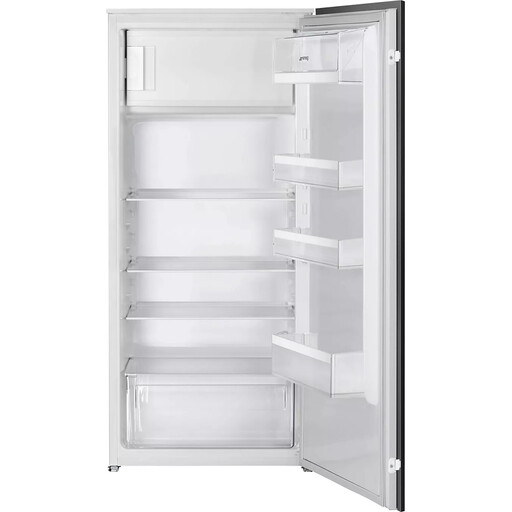 Image unavailable
This built-in fridge with one door could suit households that mainly store fresh food but also need a freezer compartment for some frozen items. The freezer has limited capacity and needs manual defrosting, so check that it suits your habits. Then check the housing unit, ventilation and rail fitting in the instructions.
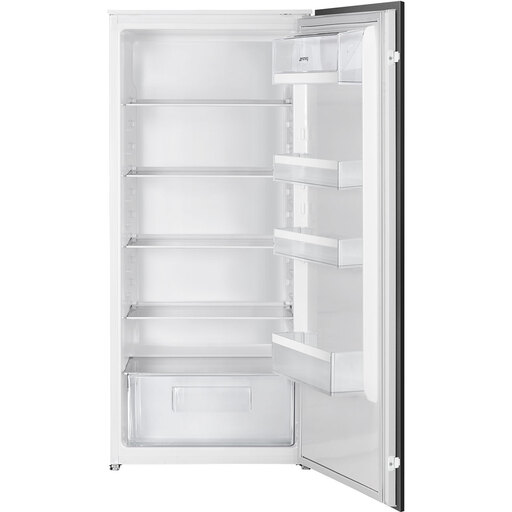 Image unavailable
This fridge with one door is designed for fresh-food storage, so you’ll need a separate solution for any freezer space you require. Confirm its capacity before buying, as the figures listed differ, and check the documentation for ventilation and door-front fixing.
Not on height alone. Compare your existing cabinet with the new model’s instructions for housing-unit dimensions, ventilation, door-front fixing, opening direction and clearance.
Compare their fridge and freezer capacities separately, then look at the interior layout. According to their product details, the Electrolux KNS3SE18S has 179 L of fresh-food capacity and 70 L of freezer capacity, while the Whirlpool WHSD18A041B1 FR has 306 L of fresh-food capacity and no freezer compartment. Your choice will also depend on how you plan to store frozen food.
Check the details and label for the exact model, including in EPREL, the European Commission’s public register for refrigeration appliances. Make sure the model reference matches the one you’re thinking of buying.
Arrange collection before delivery. The decree of 8 October 2014 published on Légifrance states that when a new appliance is delivered to its place of use, the old appliance must be collected from that location at the time of delivery. Confirm the practical arrangements and access to the appliance with the seller.