Who is this type of dishwasher for?
The first thing to check depends on what is already in place in your kitchen: the door panel, the housing or the cabinetry as a whole.
You’re replacing an old built-in dishwasher
If you want to keep the existing door panel, note the housing height, plinth position and panel dimensions. Also compare its fixings and the way the door moves with the new appliance’s installation diagram: matching widths alone aren’t enough.
You’re fitting out a new kitchen
Choose the type of integration at the same time as the cabinetry and door panel. That way, you can plan the housing dimensions, hinge system, water inlet and drainage, as well as the electrical supply at the chosen location.
You have a narrow housing
A housing designed for a 45 cm appliance calls for a model of that width, rather than a 60 cm one. Still, measure the available height and depth, then check the door panel and door clearance.
What should you check before choosing?
First decide how much space the appliance can take up and how much of its front you want to see. Then check the installation diagram for the model you’re considering: this is what you need to compare with your kitchen measurements.
Fully integrated
Consider this if: you have a compatible housing and door panel, and want the appliance concealed when the door is closed.
Bear in mind: the panel covers the front of the appliance, so its fixings and movement need to work with the plinth and hinge system.
Semi-integrated
Consider this if: you want a built-in appliance but prefer to keep the control panel visible.
Bear in mind: the control panel interrupts the line of the kitchen cabinetry, so you’ll need a door panel that suits the model.
Freestanding
Consider this if: your kitchen can’t accommodate a housing and door panel that are compatible with a built-in model.
Bear in mind: the appliance already has its own finish and won’t have the same integrated look. If you’re putting it under a worktop, check in particular whether its top can be removed. Que Choisir distinguishes this requirement from built-in installation.
| Priority | What to check | Depending on your needs |
|---|
| Housing and plinth |
Measure the internal width, height and depth, then compare them with the model’s dimensions and installation diagram. Check the space needed behind the appliance and the door clearance near the plinth. |
I’m replacing an appliance under a worktop: I want to make sure it fits and the door can open without hitting the plinth or neighbouring cabinets. |
| Door panel and hinge |
Note the dimensions of the panel you want to reuse and check its fixing points. Bosch distinguishes between fixed and sliding hinges. Check which system is intended for your chosen model, as well as the door movement shown in its installation diagram. |
I want the door panel to match the rest of my kitchen, so I need to know whether it can be fitted to the new appliance without obstructing the door. |
| Type of integration |
Check whether the control panel is concealed or visible, how much of the front the door panel needs to cover, and whether the manufacturer has any installation restrictions. For example, Electrolux states that its semi-integrated EES47310IX is supplied without a door panel and is not designed for raised installation. |
It’s important to me to see the controls without opening the door, or I’d prefer a panel that completely conceals the appliance when closed. |
| Connections |
Locate the water inlet, drainage and route for the hoses. For installation in a home in France, Promotelec states that the dishwasher socket must be supplied by a dedicated circuit. |
Before delivery, I want to know whether the planned location allows the appliance to be connected and whether the electrical installation needs to be checked. |
| Using the appliance after installation |
Once you’ve checked the installation requirements, compare appliances on a like-for-like basis. ADEME says the energy label includes information such as consumption in kWh per 100 cycles, water used per reference cycle and noise information. |
If several models suit my kitchen, I’d also like to compare their stated energy consumption and noise levels. |
A guide to the brands
These manufacturer models help illustrate the available configurations. A brand name is no substitute for checking the installation diagram for the exact model.
Bosch
In France, Bosch offers fully integrated dishwashers in 45 and 60 cm widths, including standard and XXL models.
- Bosch documentation distinguishes between fixed and sliding hinges and recommends measuring the housing before purchase.
- The SMV4EVX36F and SBH4HVX14E XXL measure 815 × 598 × 550 mm and 865 × 598 × 550 mm respectively. Check the available height rather than relying on their matching width.
Electrolux
Electrolux offers, among other models, the 45 cm fully integrated EEM43200L and the 60 cm semi-integrated EES47310IX.
- These two models illustrate the difference between a panel that covers the appliance and an installation with a visible control panel.
- Electrolux states that the EES47310IX is supplied without a door panel and is not suitable for raised installation, so plan the panel and location accordingly.
Siemens
Siemens offers the 60 cm varioHinge SN75EX23CE and 45 cm SR73EX25ME fully integrated models.
- Siemens product details list dimensions of 815 × 598 × 550 mm for the SN75EX23CE and 815 × 448 × 550 mm for the SR73EX25ME.
- The fact that these models have varioHinge does not in itself confirm that an existing door panel is compatible. Check how it is fitted and how it works with the plinth using the installation diagram.
Joybuy models for a 60 cm housing
These built-in dishwashers are listed as 60 cm wide, making them options to consider for a project with a housing of that width. Before choosing one, compare the installation diagram with the height and depth of your housing, then check how your door panel is fixed and how much space the door needs to open.
 Image unavailable
Samsung DW80H72YBB0U1, 60 cm, 13 place settings, energy rating B
If you’re replacing a built-in dishwasher in a kitchen with a door panel, compare this model’s installation diagram with the housing, plinth and fixings for the existing panel.
The product title lists a width of 60 cm, capacity for 13 place settings and energy rating B. Also check the hinge type and door clearance for your installation.
View on Joybuy
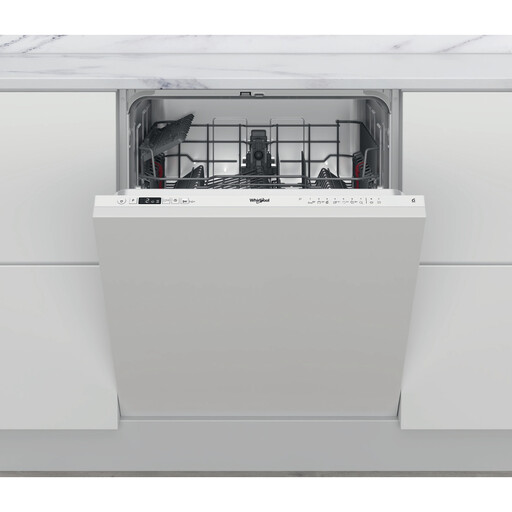 Image unavailable
Whirlpool W2I HD526 A, 60 cm, 14 place settings, white, energy rating E
If you’re installing it behind a kitchen door panel, check the height × width × depth measurements in the installation diagram before comparing this model with your housing.
The title lists 60 cm, 14 place settings, a white finish and energy rating E. Also confirm the hinge system and the clearance needed for the door to open near the plinth.
View on Joybuy
 Image unavailable
Samsung DW70H72WCB0U1, 60 cm, 13 place settings, energy rating C
If you’re keeping your kitchen door panel, check its fixing points and how it moves near the plinth against the installation diagram for this model.
The product title lists 60 cm, 13 place settings and energy rating C. Also measure the internal height and depth of the housing before choosing this model.
View on Joybuy
Frequently asked questions
What dimensions should I measure for a built-in dishwasher?
Measure the internal width, height and depth of the housing. Also note the plinth, the space behind the appliance for connections and the clearance needed for the door to open. A stated width of 45 or 60 cm alone doesn’t confirm that a particular model will fit in your kitchen.
Can an appliance of the same width replace my old built-in dishwasher?
Not necessarily: its height, hinge and door-panel fixings may differ. For example, Bosch lists the SMV4EVX36F at 815 mm high and the SBH4HVX14E XXL at 865 mm; both are presented as 60 cm models. Compare the replacement’s installation diagram with the housing and the panel you want to keep.
What difference does a visible control panel make?
On a semi-integrated model, the control panel remains visible above the door panel. On a fully integrated model, the panel conceals the appliance when the door is closed. Check the dimensions of the door panel required for your chosen model, as the two configurations cover the front differently.
What electrical supply is needed in a home in France?
Promotelec states that the dishwasher socket must be supplied by a dedicated circuit. Before creating or changing the location, have the electrical installation checked and coordinate the position of the socket with the water inlet and drainage.
How do I choose between two models that fit the housing?
Once you’ve confirmed the door panel, hinge and connections, compare their energy labels on a like-for-like basis. ADEME says these include information such as kWh per 100 cycles, water consumption for a reference cycle and noise information. These figures can help you compare models, but they don’t replace checking the installation requirements.


