Lunch with no cooking
If you don’t have an oven or time to prepare food, a ready-to-eat croissant fits the bill. Think separately about what else you’ll have for lunch.


For a lunch with no preparation, choose a ready-to-eat croissant. If you have an oven and freezer, a pack of frozen croissants to bake lets you plan your portions, but you’ll need time and space. To stick to your budget, compare the weight, number of croissants and how many you’re likely to eat. If you’d like a more varied lunch, don’t rely on a croissant as your only food.
If you don’t have an oven or time to prepare food, a ready-to-eat croissant fits the bill. Think separately about what else you’ll have for lunch.
If you have a freezer and an oven, you could consider a pack of croissants to bake. The total weight and number of croissants can help you choose a pack you’ll use.
To compare two products, read the ingredients, nutrition information per 100 g and declared allergens. If the packaging displays a Nutri-Score, it provides extra information, but it doesn’t tell you everything about the product or your lunch.
Start by deciding what part the croissant will play in your lunch, then check the pack size and how it needs to be prepared.
| What matters | What to check | Best for |
|---|---|---|
| What makes up your lunch | Plan what else you’ll eat; check the croissant’s ingredients and nutrition information. | If I want a more varied lunch, I don’t want a croissant to be my only food. Around 46% of consumers would put the make-up of their lunch first. |
| Budget and portions | Compare the net weight, number of croissants and how many you plan to eat. | When I’m buying for several lunches, I look for a pack I’ll use in full. For around 36% of consumers, keeping the cost per portion under control would be the top priority. |
| Preparation and allergens | Check whether the croissant is ready to eat or needs baking, as well as its storage instructions and allergens. | If I don’t have time to cook, or need to check the ingredients before eating, I need to know whether this croissant suits my needs. Preparation and allergen checks would come first for around 18% of consumers. |
Two packs may contain different numbers of croissants or have different weights. The best pack for you is also one with portions you’ll be able to use.
Compare the net weight, number of croissants and the weight of each one, if listed.
‘All-butter’ describes how the croissant is made, not the whole meal. Manger Bouger recommends, among other things, that adults choose wholemeal or wholegrain bread and cut down on foods that are high in fat, sugar and salt.
Read the croissant’s nutrition information and choose the other foods for your lunch separately.
A product that’s ready to bake won’t meet the same need as an already-baked croissant. Auchan’s product information recommends defrosting its frozen croissants before baking them in the oven.
Check the instructions on the pack you choose before deciding when to serve it.
Preparation time and freezer space also matter when you’re choosing.
Allergens vary from one product to another, and ‘may contain’ warnings can matter too. Service Public Entreprendre points out that allergen information applies to both prepacked and unpackaged foods.
Check the label or the information available in store before buying, especially if you need to avoid a particular ingredient.
Carrefour offers, among other options, a box of 10 all-butter croissants.
The Epi d'Or product described by E.Leclerc contains six frozen, ready-to-bake all-butter croissants and weighs 360 g.
Auchan describes a pack of six frozen, ready-to-bake all-butter croissants, weighing 360 g.
Lidl offers an already-baked all-butter croissant that’s ready to eat.
ALDI describes six frozen, ready-to-bake Mannapain all-butter croissants, weighing 360 g.
Bridor offers a 60 g frozen all-butter croissant for professional use.
These three products are croissants to bake: two packs of unfilled croissants and one pack filled with cocoa and hazelnut. To choose between them, check the portion size you want, the space in your freezer and the instructions on the product.
 Image unavailable
Worth considering if you can store the pack in your freezer and have time to bake the croissants. The six croissants weigh 420 g in total. Check the ingredients, allergens and product instructions before preparing them.
 Image unavailable
This pack suits a lunch you can prepare in the oven, rather than a meal you need straight away. It contains six croissants and weighs 360 g. Check the baking and storage instructions on the product.
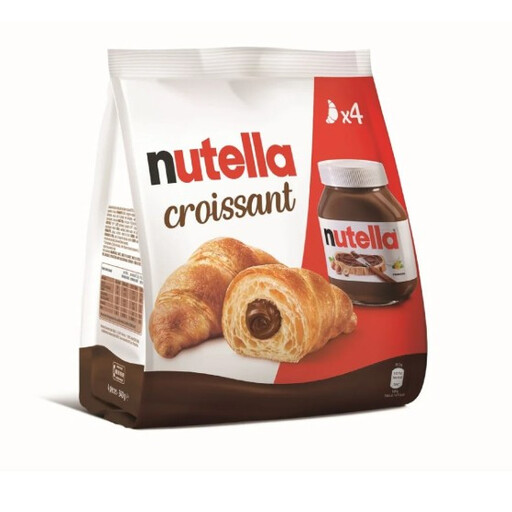 Image unavailable
Choose this product if you’re specifically looking for a filled croissant to bake, rather than a plain croissant. The pack contains four croissants and weighs 340 g. Check the ingredients and allergens, as well as the preparation instructions.
A croissant can be part of your lunch, but it doesn’t tell you everything about the meal. If you’d like a more varied lunch, choose other foods to have with it. Manger Bouger recommends, among other things, that adults choose wholemeal or wholegrain bread.
No. Also check the ingredients, nutrition information per 100 g, allergens and pack size. Santé publique France explains that producers choose whether to display the Nutri-Score, so its absence alone isn’t enough to judge a croissant.
Check the information available at the point of sale before buying. In France, Service Public Entreprendre says that allergens must be listed for both prepacked and unpackaged foods. Depending on the product, the croissants described here list allergens including wheat, milk and eggs. Don’t assume the list for one product applies to another.
For its frozen croissants, Auchan says never to refreeze a defrosted product. Follow the storage instructions on the pack you buy.