
Livraison le jour même ou le lendemain

Qualité garantie

Débloquez vos offres de bienvenue: Livraison GRATUITE | Jusqu'à -80 % | 30 jours d'essai gratuits à JoyPlus
Téléchargez l'application
Buckwheat soba noodles are popular for their subtle nutty flavour, firm texture and quick cooking time. However, the result can vary considerably from one product to another. Some contain barely any buckwheat, while others are better suited to soups, cold salads or stir-fries. Pack sizes and nutritional values also deserve a closer look.
Before you add anything to your basket, keep these three potential pitfalls in mind.
The ingredients list is still the best place to start. Chen Keming Buckwheat Noodles 800g contain at least 50% buckwheat flour, along with 3% yam flour. This proportion is suitable for anyone looking for a more pronounced flavour and a particularly firm texture.
By contrast, Chunsi Buckwheat Noodles 300g contain 15% buckwheat flour, as do J.B JAPON Japanese Soba Noodles 300 g. These products can be a good way to discover soba with a milder flavour, closer to noodles made mainly from wheat.
To compare products on a reliable basis, refer to the quantitative ingredient declaration, rather than relying solely on the name highlighted on the packaging.
Most of the buckwheat noodles available here combine wheat flour and buckwheat flour. They therefore contain gluten. This is particularly true of the Chen Keming, AYUKO, Chunsi, A+ and Ottogi products.
Anyone with a wheat allergy, gluten sensitivity or coeliac disease should read the entire label and check for any statements about cross-contamination. The presence of buckwheat flour alone is not enough to make a product suitable for a gluten-free diet: the recipe, manufacturing site and labelling must each be checked separately.
According to its product information, the Buckwheat Flour 500g is made from 100% buckwheat. It is a flour intended for making pasta, dumplings or homemade specialities. It is not a substitute for ready-to-cook noodles: you need to mix it with hot water and then shape the dough.
For one person, a 200 to 300 g pack helps prevent an opened product from being left unused in the cupboard. For a family or regular consumption, 800 g or 1 kg packs can reduce the cost per portion, provided you can store them in a dry place and an airtight container.
Nutritional values are generally given per 100 g of product. Chen Keming, for example, states 1.7 g of fat, 69.8 g of carbohydrates and 12 g of protein per 100 g. Ottogi, meanwhile, lists 0 g of fat and 4.5 g of fibre according to its product information, but also 3.05 g of salt per 100 g. For a meaningful comparison, you therefore need to consider fat, fibre, salt and the amount actually served.
If you are looking for buckwheat noodles that are particularly high in fibre, choose a product that clearly states its fibre content. The simple presence of buckwheat is not enough to draw any conclusions on this point.
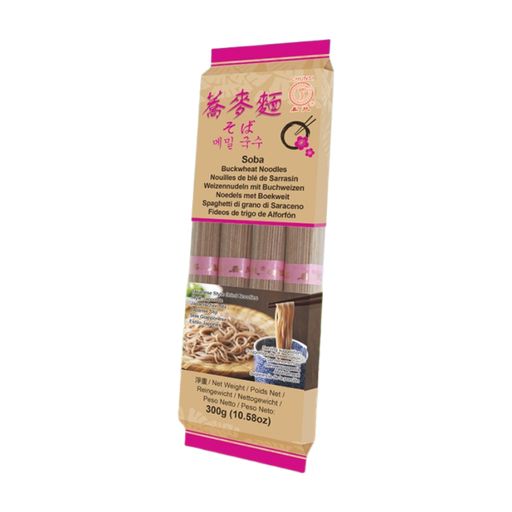
Why this product suits this profile: At 300 g, this pack is ideal for a first taste and for preparing several everyday dishes: soup, cold salad or stir-fried noodles.
The buckwheat flour content is clearly stated as 15 %. There are no vague claims that could suggest a recipe with a much higher proportion.
A stated cooking time of 4 to 5 minutes; 1.5 g of fat and 330 kcal per 100 g according to the product information.
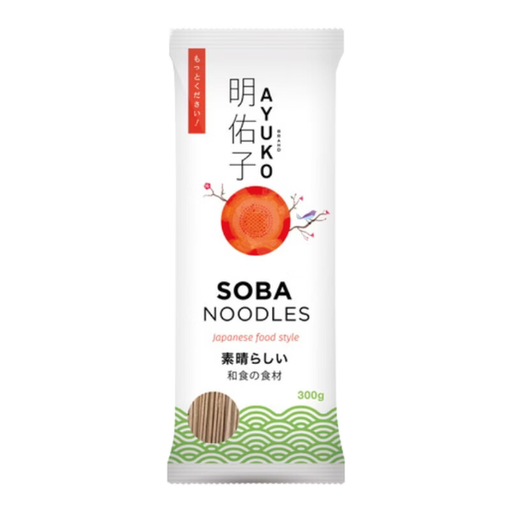
Why this product suits this profile: Inspired by Japanese cuisine, this product is designed to hold its shape well during cooking – a useful quality for cold soba served with dipping sauce.
The ingredients are listed in detail: wheat flour, buckwheat flour, water and salt. The presence of gluten is therefore easy to identify before buying.
A stated firm texture; 1.8 g of fat and 0.9 g of salt per 100 g according to the available information.

Why this product suits this profile: Its large pack size is ideal for households that regularly cook noodles in soup, salads or stir-fries.
The buckwheat proportion is stated as at least 50 %, providing a clear benchmark that distinguishes this recipe from products with much vaguer formulations.
800 g per pack, 1.7 g of fat and a cooking time suited to both hot and cold recipes according to the product information.
We have put together a complete, real-time-updated list of products that meet these demanding selection criteria and European safety regulations.
Use a large saucepan and plenty of boiling water. Follow the cooking time stated on the pack, generally 3 to 5 minutes, then taste a noodle before draining. For a cold preparation, rinse the noodles under cold water to remove excess starch and stop the cooking process.
Serve them with a sauce on the side, add them to a broth, mix them with vegetables or quickly stir-fry them in a pan. For a vegetarian recipe, they pair particularly well with tofu, mushrooms, cabbage and carrots. A soy-based sauce will work well, provided you use salt sparingly.
Store unopened packs in a dry place away from direct light. Once opened, reseal the pack carefully and follow the instructions in the product information. Instant or pre-cooked noodles require a little more care: they may already contain oil, soy and a seasoning high in salt.
No, but most products available combine buckwheat with wheat flour. Always check the ingredients list and allergen information. If you have coeliac disease, never rely solely on the word “soba” or “buckwheat”.
It depends on the instructions on the label. For dried noodles, reseal the pack securely and store it in a cool, dry place, observing the best-before date. Pre-cooked or refrigerated products generally need to be eaten more quickly after opening.
Yes. Drain them while they are still firm, rinse them if necessary, then add them towards the end of cooking with the vegetables and sauce. This will help prevent the noodles from becoming too soft or sticking together.