
Livraison le jour même ou le lendemain

Qualité garantie

Débloquez vos offres de bienvenue: Livraison GRATUITE | Jusqu'à -80 % | 30 jours d'essai gratuits à JoyPlus
Téléchargez l'application
The brush pen has it all: the fluidity of a paintbrush with the simplicity of a pen. For drawing, calligraphy, or colouring, it has become an essential tool for creatives. But with an overwhelming number of options on the market, the risk of ending up with a disappointing product is very real. Here, we'll give you the keys to cut through the noise and choose the right set, looking beyond the marketing hype.
Before you dive in, let's review the common disappointments that can quickly turn a promising purchase into a major frustration.
lettering project.To avoid these issues, a few technical points deserve your full attention.
The tip is everything. The quality of your experience depends directly on it. There are two main technologies available?:
The choice of ink is just as strategic?: it determines the colour output and your workflow.
bullet journaling, and adult colouring pen sets.The perfect brush pen doesn't exist. However, the one that perfectly suits your needs and budget certainly does! Here is our selection to help you find it.
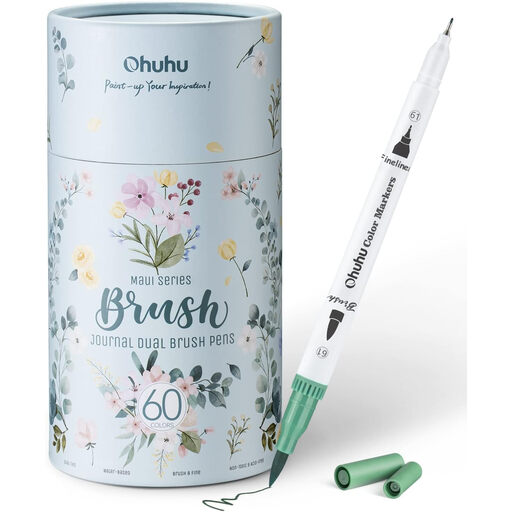
Why we chose it : An excellent starting point. This set offers a wide palette of 60 colours and the versatility of a dual tip (brush + fine) to explore different techniques without breaking the bank. The water-based ink is very easy to get the hang of for colouring and lettering.
The anti-fray solution : The set includes replacement tips, cleverly extending the lifespan of your most-used pens.
Dual tip for maximum versatility. DIY colour swatch card included for a 100% reliable colour reference.
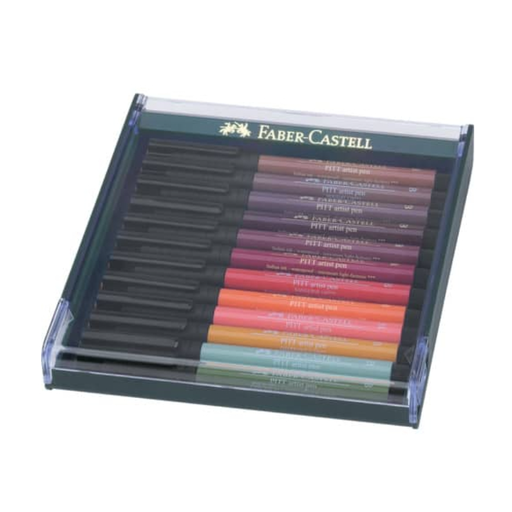
Why we chose it : Faber-Castell's Pitt pens are a gold standard for professionals. Their pigmented India ink is permanent once dry, allowing you to layer other media on top without any risk of smudging. The tip is renowned for its excellent durability.
Goodbye to “ bleeding ” : The high-quality pigmented ink won't bleed through suitable paper (like layout or Bristol board).
Permanent, light-resistant ink for long-lasting artwork. Sturdy brush tip that holds its shape.
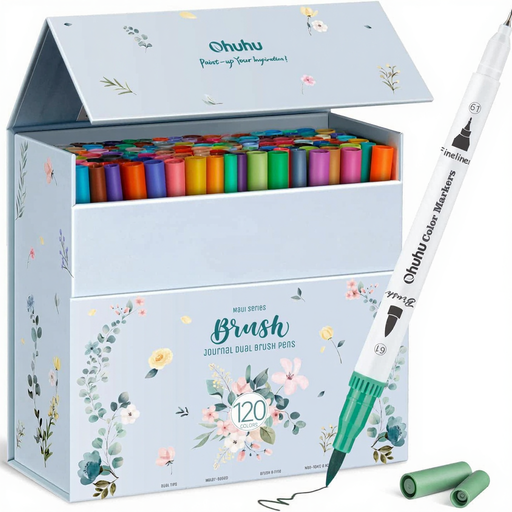
Why we chose it : For adult colouring, a rich palette is king. This 120-pen set offers a huge selection at an ultra-competitive price. The dual tip is perfect for filling large areas and refining details.
No more unpleasant surprises : The pens are numbered and come with a swatch card for you to fill in. This allows you to create your own 100% reliable colour reference.
Vast range of 120 colours. Comes in a practical carrying case to keep your collection neatly organised.
Explore our full selection of products that tick all the boxes in our buyer's guide.
Finally, here are the answers to a few questions you're probably asking.
To extend the life of your tips, adopt three simple habits?: always recap them after use, store them horizontally to ensure even ink distribution, and above all, don't press too hard. Let the tip do the work and glide across the paper.
To prevent the paper from buckling or the ink from bleeding through, opt for paper with a sufficient weight. Mixed media paper or watercolour paper (from 180 gsm) are safe bets. For simple sketching or lettering without water, a smooth drawing paper over 100 gsm will do the trick.
Yes, absolutely! To learn the basics of hand lettering, mastering your strokes and pressure is more important than the number of colours. A basic set with primary colours and a black pen is more than enough. The bonus?: with watercolour brush pens, you can even create new shades by blending them.