
Livraison le jour même ou le lendemain

Qualité garantie

Débloquez vos offres de bienvenue: Livraison GRATUITE | Jusqu'à -80 % | 30 jours d'essai gratuits à JoyPlus
Téléchargez l'application
Brush pens have won over the hearts (and desks) of creatives, from lettering enthusiasts to manga illustrators. Their promise is alluring: the fluidity of a paintbrush combined with the simplicity of a marker. However, buying your first brush pen set can quickly lead to disappointment. Faced with an overwhelming number of options, it's easy to fall into the classic traps and end up with a set that's unusable after just a few weeks.
My role, as Head of Product Recommendations at Joybuy, is to guide you through this jungle. Let's break down the mistakes to avoid and the essential criteria for making an informed choice that's perfectly suited to your projects.
Don't be dazzled by the vibrant color palettes highlighted in marketing materials. The true quality of a drawing marker lies in its technical details. Here are the three most critical flaws.
To make the right choice, three technical features must be examined closely. The performance and lifespan of your future pens depend on them.
The feel and performance of a marker depend entirely on its tip. There are two main technologies:
The choice of ink is crucial: it must match your intended use.
There's no need to aim for a huge set with redundant colors. It's better to choose a brush pen set with a coherent palette that's truly suited to your needs. For beginners, an assortment of 10 to 20 basic colors is more than enough. More experienced artists can then move on to more extensive ranges or themed sets (pastel, vintage, landscape tones, etc.).
To help you make your choice, here are three products that meet specific needs, all evaluated according to the criteria we've just discussed.
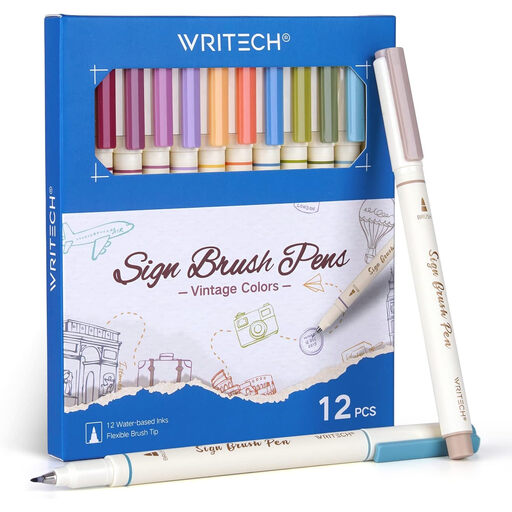
Why this choice? This set is an excellent entry point for getting started with *lettering* or *bullet journaling*. Its "vintage" color palette is very trendy, and its handling is designed for beginners.
The manufacturer highlights a "wear-resistant" felt tip, specifically designed to limit the rapid fraying that plagues entry-level models.
Its flexible, pressure-sensitive tip is ideal for learning to vary thick and thin strokes. Its water-based ink is blendable, perfect for creating gradients.
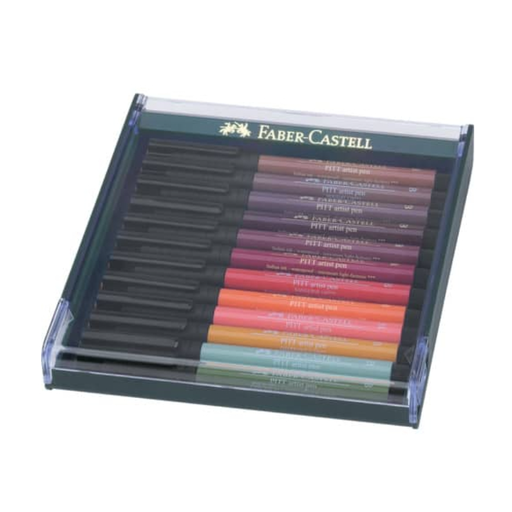
Why this choice? This set is for creators who demand permanence and professional quality. The pigmented India ink is the standard for work intended for preservation or display.
It checks all the boxes for durability: its pigmented ink is lightfast (it won't fade) and waterproof (it won't smudge when used with other media). The high-quality fibre tip is designed to hold its shape.
Archival-quality, permanent, and acid-free India ink. Its versatile brush tip can create everything from the finest lines to broad washes. The ink does not bleed through most papers.
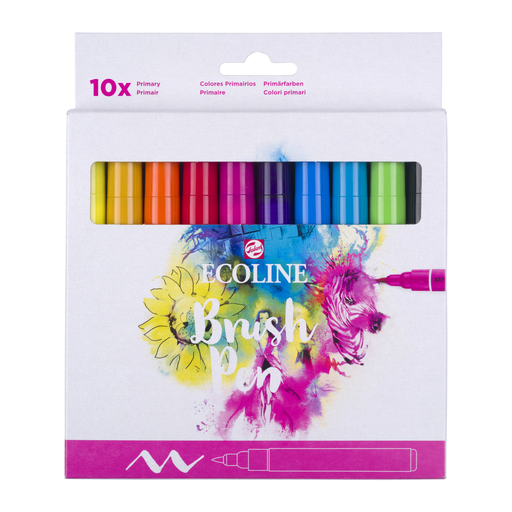
Why this choice? This set is made for those who want to experience the magic of liquid watercolour but with the simplicity of a marker. The colors are transparent, vibrant, and perfectly mixable.
It avoids the common trap of buying a standard marker and expecting watercolour effects. Its unique formula, based on dyes and gum arabic, is designed to be worked with water (on suitable paper), ensuring great results without any unpleasant surprises.
Intense, transparent colors that are fully water-soluble for smooth gradients and blends. The flexible tip offers a very expressive, brush-like feel.
We have curated a complete selection of products that meet our strict selection criteria and current standards.
The golden rule: always recap the pen tightly immediately after each use. An audible "click" is often a sign that it's securely closed. It's also advisable to store pens horizontally, especially water-based ones, to ensure the ink is evenly distributed and doesn't pool at one end.
Dye-based ink is a solution where the color is fully dissolved in the liquid. It is often more vibrant and transparent but also less resistant to light and water. In contrast, pigment-based ink contains tiny solid particles of color held in suspension. Once dry, it forms a layer on the paper, making it generally permanent, waterproof, and lightfast (more durable).
To minimize smudging and prevent ink from bleeding through, choose a smooth paper with a sufficient weight (at least 100 gsm for simple use). For watercolour markers, dedicated watercolour paper or mixed-media paper (over 200 gsm) is essential. It will allow you to work with water without the paper buckling or tearing.