
Livraison le jour même ou le lendemain

Qualité garantie

Débloquez vos offres de bienvenue: Livraison GRATUITE | Jusqu'à -80 % | 30 jours d'essai gratuits à JoyPlus
Téléchargez l'application
With its flexible tip and vibrant ink, the brush pen is a valuable tool for calligraphy, illustration, or simply the joy of drawing. Yet, faced with an overwhelming array of options, it's hard to know where to start. Between marketing hype and real-world performance, who hasn't cursed at markers with tips that fray after three strokes or colours that turn dull?
As the Head of Product Selection at Joybuy, my role is to guide you. Let's break down the pitfalls to avoid and the criteria that truly matter, so you can make an informed choice that perfectly suits your creative ambitions.
A poor choice can not only stifle your creativity but also cost you dearly in both time and money. Here are the three most common mistakes:
To avoid these mishaps, focus on a few key technical points. This is where the real difference between a good and a bad drawing pen lies.
This is the starting point, the factor that will determine how you can use your pens.
The tip is the heart of the brush pen. Its quality is measured by its resilience: its ability to return to its original shape after each press.
A good lettering kit should offer responsive tips that react instantly to the slightest variation in pressure from your hand.
Rather than searching for a one-size-fits-all solution, it's better to choose a tool tailored to your practice. Here are our targeted recommendations.
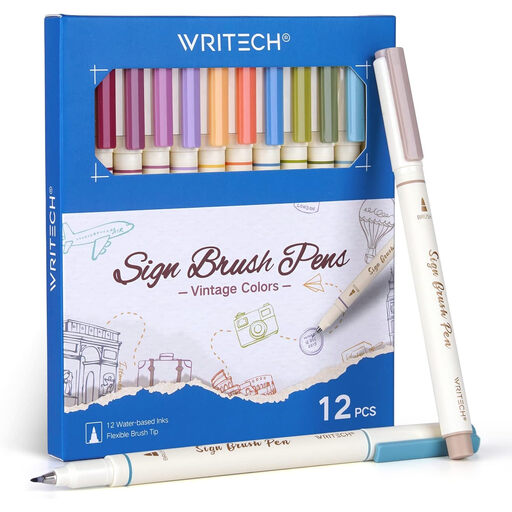
Why we chose it: Perfect for getting started in lettering or for your *bullet journal*. Its tip is designed to be easy to control, even for beginners, and its "vintage" colour palette is ideal for adding character to your projects.
The manufacturer highlights a wear-resistant felt tip, specifically designed to handle a beginner's pressure variations without fraying prematurely.
A flexible tip that responds well to pressure and a water-based ink that can be blended to create nuances. An excellent all-rounder to get you started.
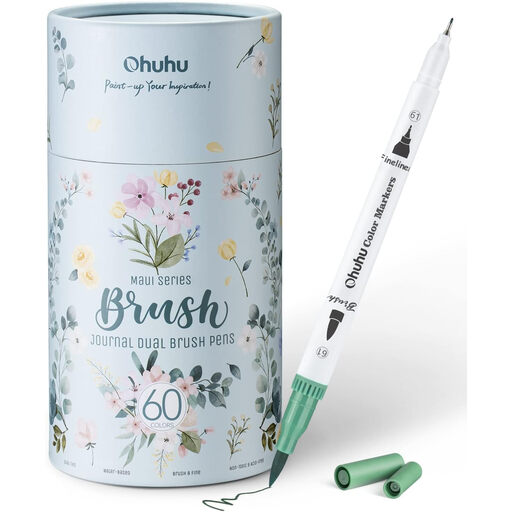
Why we chose it: For those who love to juggle different techniques, this set is the perfect compromise. Its dual tip (brush and fine) allows you to switch from colour blocking and gradients to the finest details without changing markers.
The kit includes replacement nibs (3 brush tips, 2 fine tips). A radical solution to the problem of wear and tear, which makes the investment more cost-effective in the long run.
Dual tip (1-6 mm brush and 0.4 mm fineliner) and a vast palette of 60 numbered colours for easy reference.
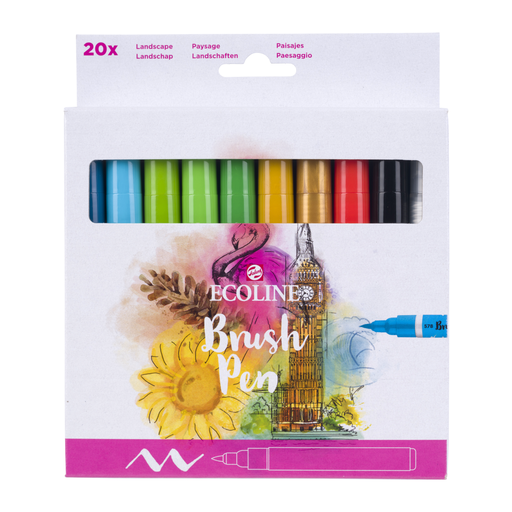
Why we chose it: Ecoline is an industry benchmark for its liquid watercolour ink. These pens pack the same intensity and blendability as bottled inks, with the added convenience of a pen. Ideal for outdoor sketching or achieving a watercolour effect without all the gear.
Their dye and gum arabic-based ink is designed to be rewettable with water. A slightly dry tip? A drop of water is often enough to revive it. No more waste!
Exceptional watercolour ink quality for effortless blending and gradients. The set includes a dedicated "Blender" pen for perfect transitions.
We have curated a complete selection of products that meet our strict specifications and current safety standards.
Paper choice is crucial. Use a very smooth paper (like Bristol, layout, or marker paper). A rough-grain paper (such as cold-press watercolour paper) will act like sandpaper on your tip. Also, avoid pressing too hard and remember to store your pens horizontally to ensure the ink is distributed evenly.
Dye-based ink is a solution where colour molecules are fully dissolved in the binder. It is very vibrant but light-sensitive. Pigment-based ink, on the other hand, contains fine solid particles of colour held in suspension. It is much more stable over time (lightfast and water-resistant), making it the preferred choice for art markers intended for long-lasting works.
Absolutely not, and this is a common beginner mistake. Standard paper (like printer paper) is too absorbent: the ink will feather and bleed, and may even soak through the sheet. For alcohol- or water-based inks, opt for a coated or semi-coated paper that prevents the ink from penetrating too quickly. For watercolour ink techniques, a mixed-media paper or a hot-press (smooth) watercolour paper will deliver incomparable results.