
Livraison le jour même ou le lendemain

Qualité garantie

Débloquez vos offres de bienvenue: Livraison GRATUITE | Jusqu'à -80 % | 30 jours d'essai gratuits à JoyPlus
Téléchargez l'application
Whether you're passionate about hand lettering, calligraphy, illustration, or simply looking for a relaxing adult coloring kit, choosing the right brush pens can quickly become overwhelming. Flexible or firm tip, water-based or alcohol-based ink, a set of 24 or 120 colors… it's hard to navigate the sheer number of options available.
Our mission: to guide you through this creative jungle. This guide provides our expert advice for choosing the ideal set of drawing pens, tailored to both your creative ambitions and your budget.
To make the right choice, here are the key points to check before you buy.
The tip is the heart of your pen. Its flexibility is what allows you to vary the thickness of your lines by adjusting the pressure.
The type of ink determines the color rendering, blendability, and behavior on paper.
Do you really need to splurge on a 120-color set to get started?
We've sifted through dozens of products to select three sets that stand out for their versatility and excellent value for money.
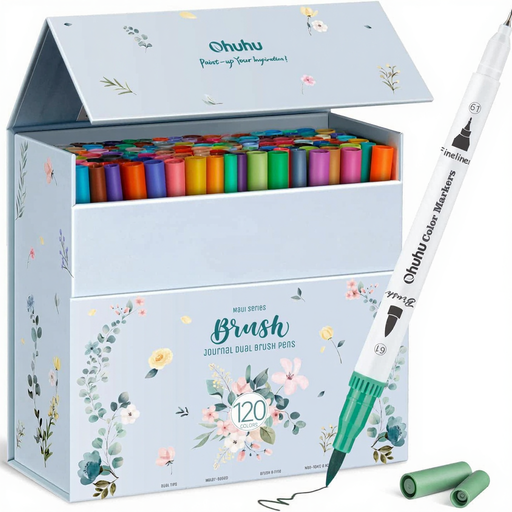
Why it stands out: This set is distinguished by its huge color palette and incredible versatility, thanks to its dual tips. Delivered in a storage case, it's a complete, ready-to-use kit for on-the-go creativity.
Advantages:
Who is it for? Artists, illustrators, and creative hobbyists who want an all-in-one solution with a maximum number of shades to never run out of ideas. Ideal for drawing, complex coloring, and hand lettering.
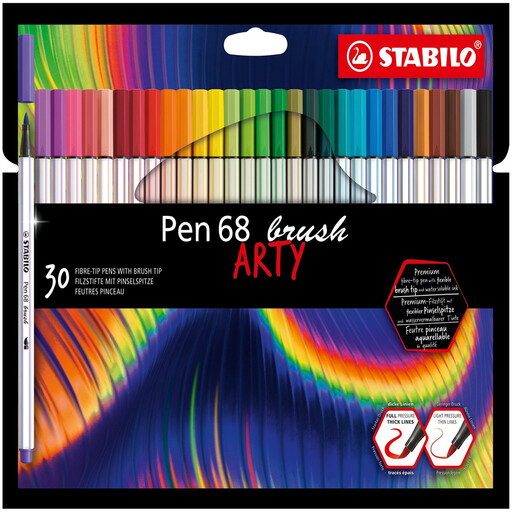
Why it stands out: Stabilo, an iconic brand, offers a brush version of its famous Pen 68. This set focuses on the quality of its single tip and more eco-friendly manufacturing.
Advantages:
Who is it for?Hand lettering and calligraphy enthusiasts who prioritize the sensitivity of a high-quality single tip. It's also a smart choice for those who value sustainability and prefer the reliability of a renowned brand.
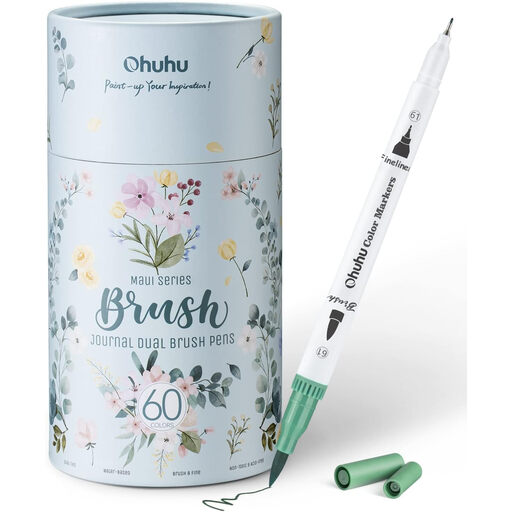
Why it stands out: This 60-pen version strikes the perfect balance between a diverse palette and an affordable price point. It retains all the strengths of the Ohuhu Maui range, starting with its dual tips and quality ink.
Advantages:
Who is it for? Beginners, art students, or bullet journal fans looking for a high-quality, versatile, and complete set without having to invest in a collection of over 100 shades right away.
Does our selection not cover all your needs? Are you looking for more specific tools like gel pens or alcohol markers? For a complete overview of all creative tools, explore our dedicated drawing pens category.
It's all in the tip! A regular marker has a rigid tip (fine or bullet) that produces a line of constant thickness. A brush pen has a long, conical, and flexible tip, made of nylon or felt, that mimics the behavior of a real paintbrush. By varying the pressure, you can create fine or very broad strokes, which is essential in calligraphy for expressive results.
For a successful watercolor effect, the secret is to use heavyweight paper (at least 180 g/m?), such as watercolor or mixed-media paper. Apply one or more colors to the paper, then use a clean, slightly damp brush to blend, mix the shades, and create gradients. Pro tip: scribble some ink onto a non-porous surface (a plastic palette, a plastic sleeve, etc.) to pick up the color with your wet brush, just like with a real paint palette.
Paper choice is crucial. To prevent water-based ink from bleeding through or causing the paper to buckle, opt for a smooth, thick paper. A weight of at least 120 g/m? is recommended for simple drawing, but for blending techniques or using water, a 180 g/m? to 300 g/m? paper (like Bristol, mixed-media, or watercolor paper) will yield far superior results.