
Livraison le jour même ou le lendemain

Qualité garantie

Débloquez vos offres de bienvenue: Livraison GRATUITE | Jusqu'à -80 % | 30 jours d'essai gratuits à JoyPlus
Téléchargez l'application
The brush pen has established itself as the go-to tool for artists, illustrators, and crafting enthusiasts. From calligraphy and manga art to colouring and bullet journaling, its versatility is undeniably appealing. The problem: the market is saturated with promises that often lead to disappointment, with tips that fray, colours that refuse to blend, or inks that bleed through the paper.
My role, as Head of Product Recommendations at Joybuy, is to guide you through this jungle. This guide breaks down the pitfalls to avoid and shares the secrets to finding the perfect set of brush pens for your projects and your budget.
To make the right choice, you first need to know how to spot a bad deal. Here are the most common mistakes—the ones that will cost you dearly in time and money.
To avoid falling into these traps, focus on three technical characteristics that will make all the difference.
The tip is the core component. Its performance depends on its composition and shape.
The type of ink defines what you can create.
Every project has its ideal pen.
Instead of an endless list, here are our targeted recommendations by user profile, all chosen for their excellent performance on our essential criteria.
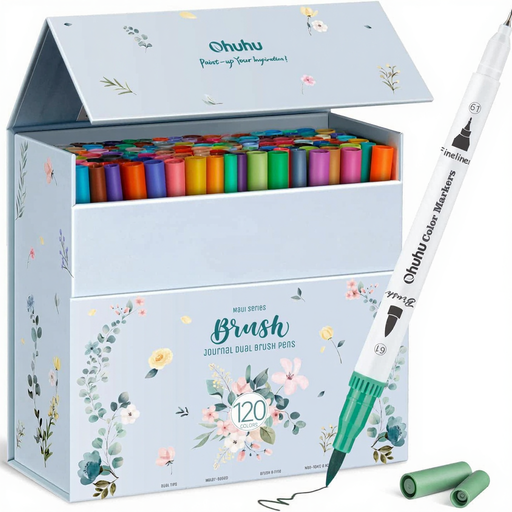
Why we love it: This set is an excellent entry point into the world of drawing. With 120 colours and a dual tip (brush + fine liner), it offers impressive versatility to explore illustration, lettering, and colouring without breaking the bank.
It bypasses the "universal" tip myth by offering two distinct and complementary nibs—one for broad strokes, the other for fine details.
Unbeatable value for its versatility. The set even includes replacement tips, a real bonus for longevity that is often lacking in this segment.
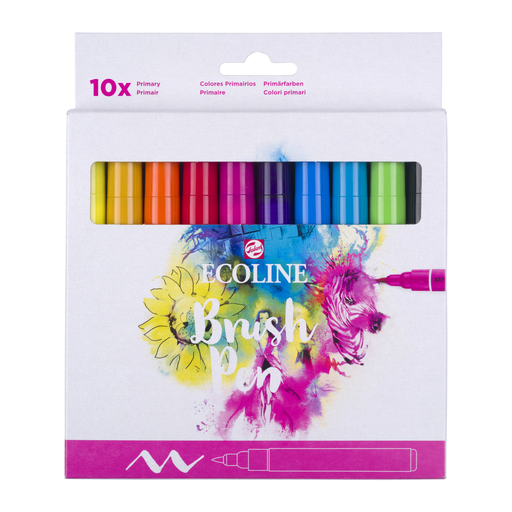
Why we love it: Ecoline pens are a true classic. Their dye-based ink offers the brilliance and transparency of liquid watercolour. The flexible and responsive brush tip is a delight for expressive lettering and fluid illustrations.
It ends the headache of "faux watercolour" ink with a formula that dilutes and blends perfectly with water, delivering professional-grade results.
Intense, perfectly blendable colours for a true watercolour effect. The flexible tip allows for maximum expressiveness in every stroke.
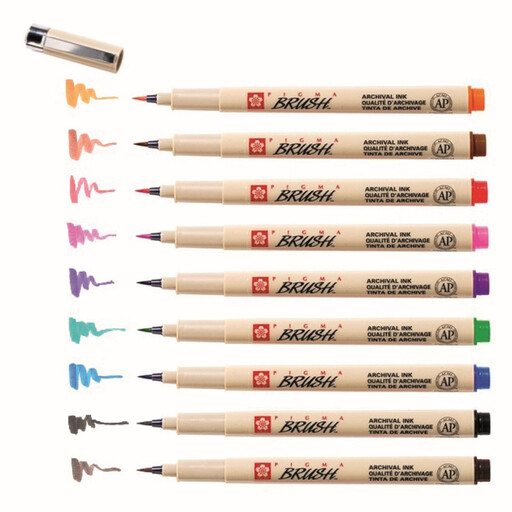
Why we love it: This set features the famous pigment-based Pigma ink. Once dry, it is permanent, waterproof, and lightfast. It's the go-to tool for creating crisp outlines that will never bleed when coloured with other media (watercolours, alcohol markers, etc.).
It meets the crucial need for a permanent, archival-quality ink, preventing the frustration of a drawing that smudges with water or fades over time.
Archival-quality pigmented ink that is permanent and fade-resistant. Perfect for artwork meant to stand the test of time and for mixed-media techniques.
Discover our complete selection of products that meet our demanding selection criteria and current standards.
Always use smooth paper (standard printer paper is too abrasive). Don't press too hard; let the flexibility of the tip do the work. Finally, always cap your pens immediately after use and store them horizontally to ensure perfect ink distribution.
To put it simply, dye-based ink is a solution where the colour is fully dissolved. The result: vibrant hues that blend beautifully but may fade over time. In contrast, pigment-based ink contains micro-particles of colour held in suspension. It is less transparent but much more stable, becoming waterproof and lightfast once dry.
Yes, and it's non-negotiable! To enjoy the watercolour effect, you need "mixed-media" paper or dedicated watercolour paper of at least 180 gsm. Standard office paper (80-90 gsm) will immediately buckle, pill, and let the ink bleed through the sheet upon contact with water. In short, it's a recipe for disaster.