
Livraison le jour même ou le lendemain

Qualité garantie

Débloquez vos offres de bienvenue: Livraison GRATUITE | Jusqu'à -80 % | 30 jours d'essai gratuits à JoyPlus
Téléchargez l'application
The brush pen has become the tool of choice for artists, illustrators, and crafting enthusiasts. Its versatility is stunning: with a single gesture, it can go from a fine line to a broad stroke, multiplying creative possibilities. The problem is, faced with a sea of available options, making the right choice can be a headache, and disappointment is common.
Between the flashy packaging and marketing promises, it's hard not to fall into certain traps. An investment, however modest, can quickly turn to frustration if the materials don't live up to expectations. Here are the three pitfalls to absolutely avoid?:
Once you're aware of these traps, you need to know which technical criteria to base your decision on to ensure a successful purchase.
To choose an art marker set that truly delivers, it's essential to look beyond the packaging and focus on objective technical features.
The quality of the tip determines the precision and expressiveness of your strokes. They are generally made of synthetic fibre or felt.
The choice of ink depends entirely on what you plan to do with it.
The dual-tip marker is the ultimate versatile tool. It combines a brush tip on one end and a fine tip (like a fineliner) on the other. This allows you to lay down blocks of colour, create gradients, and make expressive strokes with the brush tip, then add details, outlines, or text with the fine tip. All with a single marker. It's a format favoured for bullet journaling, sketching, and illustration markers.
To move from theory to practice, we've selected a few products from our catalogue that meet our criteria, matching them with typical user profiles.
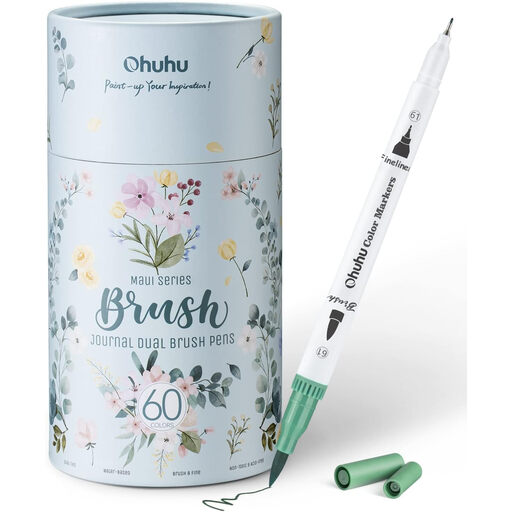
WHY IT'S A GREAT FIT : Perfect for those who like to dabble in everything (colouring, drawing, starting out with lettering). The dual-tip marker format is a true Swiss Army knife, and the 60-colour palette offers immense creative freedom without requiring mastery of complex blending techniques.
Its water-based ink is formulated to not bleed through most drawing papers. The kit includes replacement tips: an excellent safeguard against premature wear that extends the life of the set.
An unbeatable quality-to-quantity ratio with 60 colours and replacement tips included. The dual tip (brush + fine) maximises versatility for all projects.
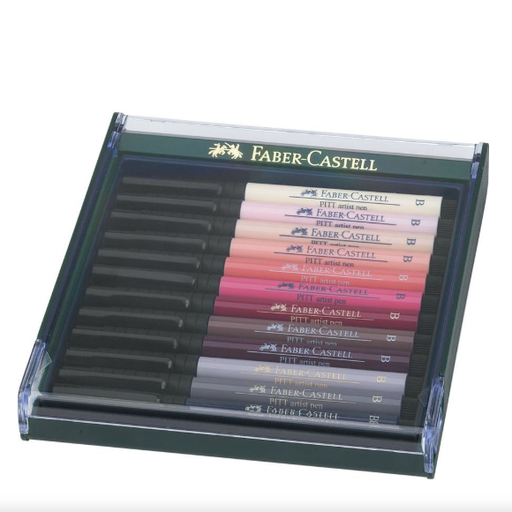
WHY IT'S A GREAT FIT : For artists whose work is meant to last, or even be sold. Here, archival quality is not an option. This set is tailor-made for professional drawing, with a palette of skin tones ideal for portraiture.
Its pigmented India ink is lightfast and waterproof, which solves the problem of fading colours. It doesn't bleed through paper, and its tip is renowned for its durability and ability to hold its shape.
Professional archival quality: permanent, acid-free, and pH-neutral ink. Its brush tip, both flexible and responsive, offers exceptional line control.
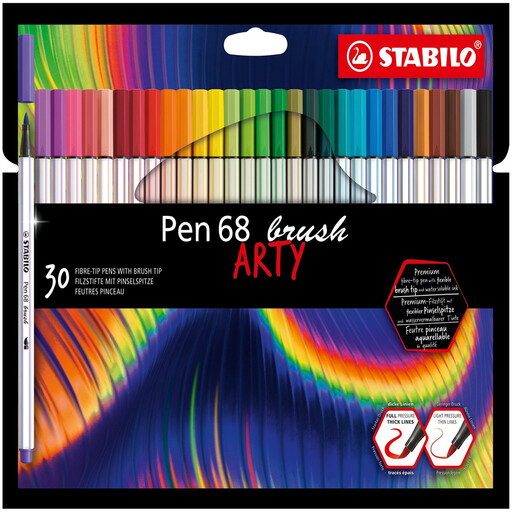
WHY IT'S A GREAT FIT :Brush lettering requires a tip that is ultra-responsive to pressure to form the thick downstrokes and thin upstrokes of modern calligraphy. The water-based ink is ideal for gradients and colour blends, which are highly popular in this practice.
The tip, designed for lettering, offers optimal control without fraying. Its water-soluble ink allows for controlled blends, thus avoiding the "paper warping" effect of lower-quality inks.
A flexible and highly pressure-sensitive brush tip, perfect for calligraphy. Its water-based ink makes it easy to create watercolour effects and colour gradients.
We've compiled a comprehensive list of products that meet our strict selection criteria.
The lifespan of a brush marker depends on how you take care of it. Always cap it immediately after use. Store your markers horizontally to ensure the ink is evenly distributed in the tip. Finally, choose a suitable paper: a surface that is too rough will prematurely wear out even the most durable tips.
The difference is crucial. Water-based ink (dyes) is perfect for blending and watercolour effects. On the downside, it remains water-soluble even when dry and can fade if exposed to light. Pigment-based ink, on the other hand, contains solid colour particles. Once dry, it is permanent, waterproof, and lightfast. It's the ideal choice for artwork meant to last.
To achieve successful gradients without damaging your surface, the right paper is simply essential. Paper that is too thin or too absorbent will start to warp and pill when it comes into contact with water. Opt for a smooth, heavy paper (at least 180?g/m?) or, for optimal results, watercolour or mixed-media paper.