
Livraison le jour même ou le lendemain

Qualité garantie

Débloquez vos offres de bienvenue: Livraison GRATUITE | Jusqu'à -80 % | 30 jours d'essai gratuits à JoyPlus
Téléchargez l'application
The brush pen is an essential tool for artists, illustrators, and crafting enthusiasts. Perfect for brush lettering, drawing, or adult colouring, the right brush pen can make all the difference and bring your ideas to life. But with an overwhelming number of options available, it can be hard to know where to start.
To help you make the right choice, we've broken down the key criteria and selected the best models on the market today. Follow our guide!
Before you buy, there are a few technical criteria to consider to ensure you make the perfect choice.
The ink is the heart of your pen. It defines the final look, its permanence, and the techniques you can use.
The tip is the real strength of a brush marker. Its flexibility allows you to vary your line width by adjusting the pressure, letting you switch from fine, delicate lines to broad, expressive strokes.
Some models take versatility even further with a dual tip: a brush tip on one end and a fine tip on the other. This is ideal for switching between filling large areas and working on details without changing tools.
Every project has its perfect pen.
Now for our recommendations! Here are three models that each excel in their category.
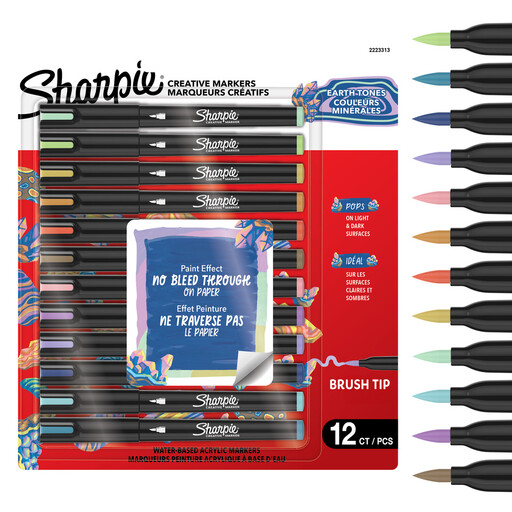
What sets it apart: Its water-based acrylic ink provides an opaque, paint-like finish without needing to be shaken. It works on a myriad of surfaces, both light and dark.
Key features:
Who is it for? For creatives who love to experiment on different materials and colouring fans looking for a vibrant, opaque paint-like finish.
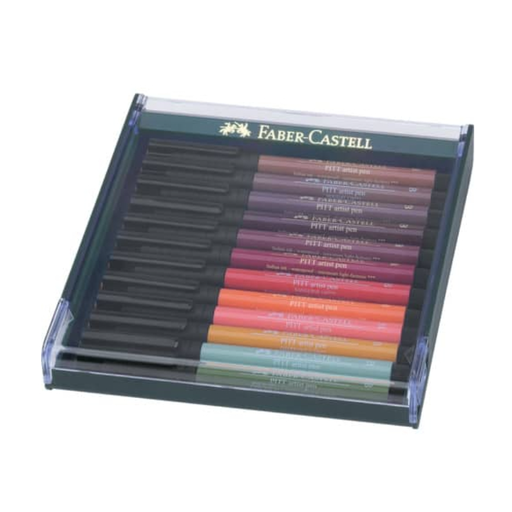
What sets it apart: The quality of its pigmented India ink, renowned for its permanence and excellent lightfastness.
Key features:
Who is it for? For illustrators, sketch artists, and calligraphy enthusiasts who demand reliable, long-lasting lines for their work.
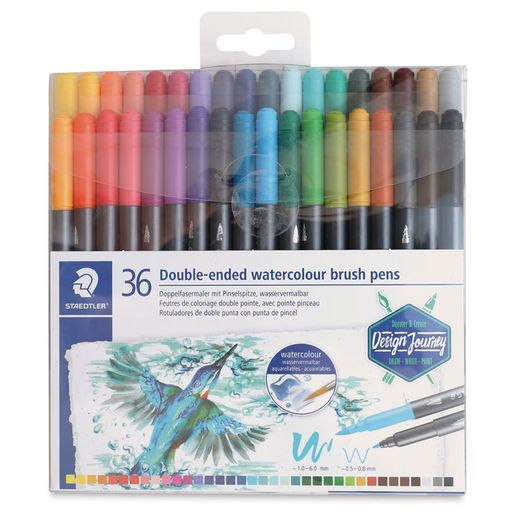
What sets it apart: The incredible versatility of this dual-tip set, combined with a very wide range of watercolour-ready colours.
Key features:
Who is it for? For artists and hobbyists looking for an all-in-one tool for illustration, brush lettering, and their most colourful creative projects.
Our selection is just a starting point. The world of brush markers is vast and full of hidden gems, with tips of varying firmness, unique colour palettes, and inks with surprising properties.
Explore our complete collection of brush tip markers to find the perfect match that will elevate your style.
It's all in the tip! While a regular marker has a rigid tip (bullet or chisel) for a consistent line width, a brush pen has a flexible, tapered tip, just like a real paintbrush. This allows you to create lines of varying thickness simply by adjusting the pressure.
To extend their lifespan, follow one simple rule: always cap them securely after each use. It's also recommended to store them horizontally, especially dual-tip models, to ensure the ink is distributed evenly to both ends.
With a watercolour brush pen, choose a smooth, heavy-weight paper (over 180?g/m?) to prevent the ink from bleeding through or the paper from pilling when you add water. Mixed-media paper or fine-grain watercolour paper are excellent options.