
Livraison le jour même ou le lendemain

Qualité garantie

Débloquez vos offres de bienvenue: Livraison GRATUITE | Jusqu'à -80 % | 30 jours d'essai gratuits à JoyPlus
Téléchargez l'application
The brush pen is the star of any creative toolkit, the go-to tool for illustration, hand lettering, and adult coloring. Its magic lies in combining the precision of a pen with the flexibility of a paintbrush, a feature that appeals to beginners and seasoned artists alike. The problem? The market is crowded, making it difficult to sort through the options. A poor choice can quickly lead to frustration, with colors that won't blend, tips that fray after a few strokes, or ink that bleeds right through the paper.
Before investing in a set of pens, it's crucial to know how to spot the poor performers. Here are the deal-breakers that should alert you and help you avoid a disappointing purchase:
To help you see more clearly, we've broken down the technical features that truly make a difference.
When choosing the right brush pen, don't just focus on the number of colors. Three technical parameters make all the difference in quality and user experience.
The quality of the flexible brush tip is the number one criterion. There are two main technologies:
The choice will therefore depend on your drawing style and the durability you're looking for.
The type of ink determines everything you can do with your pens.
To expand your creative possibilities without multiplying your pens, dual-tip models are a particularly smart solution. They usually combine:
This 2-in-1 configuration is a real asset for hand lettering, manga illustration, or keeping a bullet journal—disciplines where precision and expressiveness are key.
Because every creative has different needs, here is our hand-picked selection of brush pens, catering to all profiles and budgets.
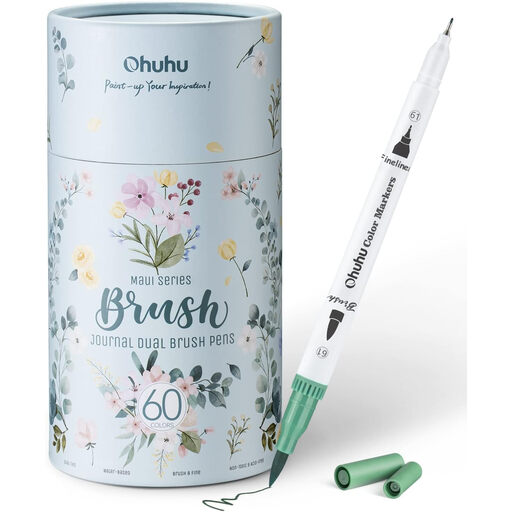
Why we chose it: This set is the ideal starting point. With 60 colors and a dual tip (brush and fine), it offers remarkable versatility to explore different techniques without breaking the bank. The water-based ink is easy to master for coloring and initial gradient attempts.
The included DIY color swatch card lets you know the exact shade of each pen, preventing unpleasant surprises. The dual tip provides an all-in-one solution that preserves the lifespan of each nib.
Excellent value for money and unbeatable versatility thanks to the dual tip (1-6 mm brush and 0.4 mm fine tip).
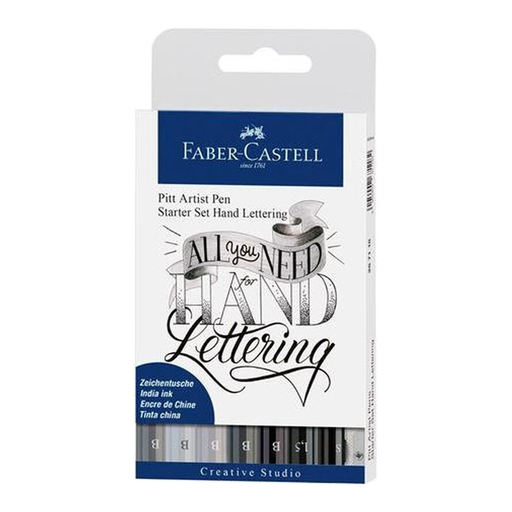
Why we chose it: This set is all about precision and durability. Its pigmented India ink is permanent and doesn't bleed, a critical feature for flawless calligraphy strokes. The selection of specialized tips allows for a variety of lettering styles.
The tips are designed to resist fraying, even with the strong pressure variations of lettering. The archival-quality India ink guarantees a permanent, bleed-free result on the right paper.
Pigmented India ink, resistant to water and light. An assortment of tips (brush, fine, etc.) for rich calligraphic expression.
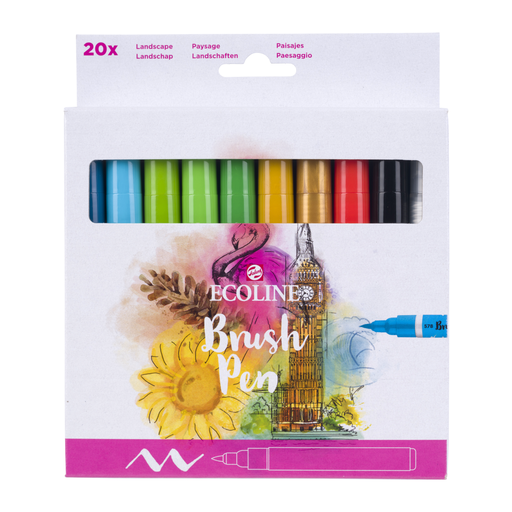
Why we chose it: Ecoline pens are a benchmark for their liquid, dye-based ink, which delivers transparent and vibrant colors. This set is perfect for those who want to achieve watercolor effects with the simplicity of a pen. The included blender is a real plus for creating smooth transitions.
The ink is specially formulated to be blendable and water-soluble, ensuring true colors and harmonious mixes. The synthetic brush tip, designed for wet techniques, retains its full flexibility.
Pure dye-based ink for luminous and transparent colors. Perfect blendability for fluid watercolor effects, with an included blender for gradients.
We've compiled a complete list of products that meet our demanding selection criteria for quality and durability.
The golden rule: always recap the pen tightly immediately after use. For models with liquid ink like Ecoline, storing them horizontally is recommended to ensure even ink distribution. If a tip has dried out slightly, you can try to rehydrate it by dipping it for a split second in clean water.
To prevent ink from bleeding through or the paper from buckling, using a suitable surface is essential. Opt for high-grammage paper (at least 200 gsm), watercolor paper, or mixed-media paper. These papers are designed to absorb moisture without warping, allowing you to work on colors and gradients with peace of mind.
The vast majority of brush pens on the market are single-use: once the ink is gone, you have to replace them. However, some professional brands, like Copic, offer refill systems. This is a more sustainable option, but it represents a larger initial investment. If this is an important criterion for you, be sure to check this information on the product page before buying.