
Livraison le jour même ou le lendemain

Qualité garantie

Débloquez vos offres de bienvenue: Livraison GRATUITE | Jusqu'à -80 % | 30 jours d'essai gratuits à JoyPlus
Téléchargez l'application
The brush pen has become the go-to tool for artists, hand lettering enthusiasts, and fans of adult colouring books. But with the overwhelming number of options available, it's easy to make the wrong choice and end up with a disappointing product and a case of buyer's remorse. As a product expert at Joybuy, my job is to help you avoid these pitfalls by breaking down the criteria that truly make a difference.
Before you dive in, watch out for these three common pitfalls:
To ensure you make the right choice, focus on a few key factors. These will tell you whether a drawing pen set is high-quality and, more importantly, if it's the right fit for you.
This is the starting point that will define how you use your pens.
The tip is the soul of a brush pen. Its quality directly impacts the variation in your strokes. A good tip must be:
A dual-tip marker typically combines a flexible brush tip with a fine tip (like a fineliner). This setup is especially useful for illustrators and bullet journal enthusiasts. It allows you to lay down broad strokes and fills with the brush tip, then add fine details, outlines, and text with the fine tip—all with a single tool. Ohuhu pens, for example, are renowned for this versatility.
Instead of an endless list, we've selected a few tried-and-true options for different needs to help you find the perfect set for your projects.
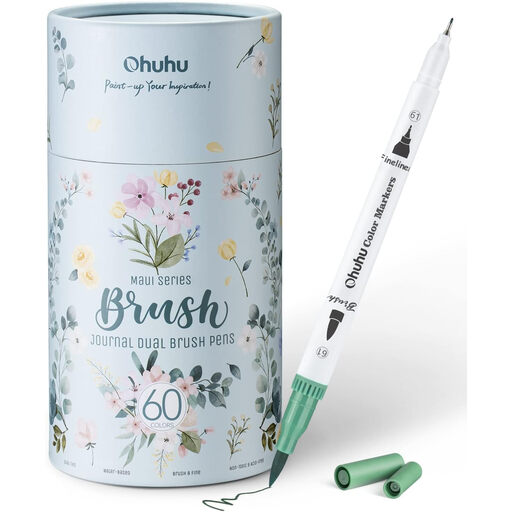
Why we chose it: This set is the ideal starting point. It offers a wide palette of 60 colours and the advantage of a dual tip (brush + fine), allowing you to try your hand at colouring, drawing, and calligraphy without needing to buy multiple types of pens.
It tackles the problem of wear and tear and uneven dual tips head-on by including replacement nibs (3 brush, 2 fine). This significantly extends the life of the set.
Value for versatility: With 60 colours and two tips per pen, you get a huge creative playground for a very reasonable price.
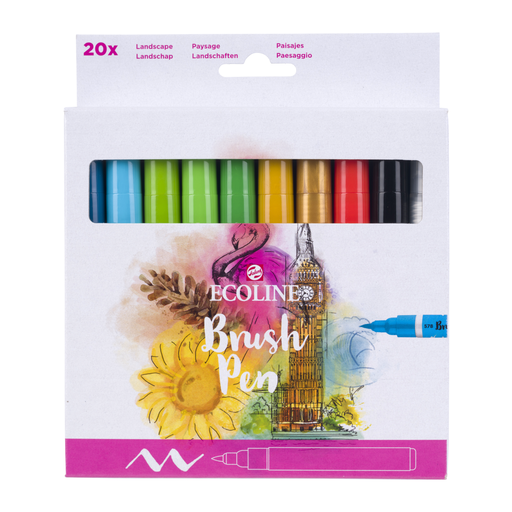
Why we chose it: For those who want a true watercolour effect, the Ecoline range is the gold standard. The dye-based ink is extremely vibrant, transparent, and blends perfectly with water directly on the paper.
It solves the problem of inks that refuse to blend. The Ecoline formula is designed for diluting and fusing colours, ensuring smooth gradients with no harsh lines.
The watercolour effect: The intensity and transparency of the colours, combined with perfect blendability (the set includes a "Blender" pen), let you recreate the feel of traditional watercolour.
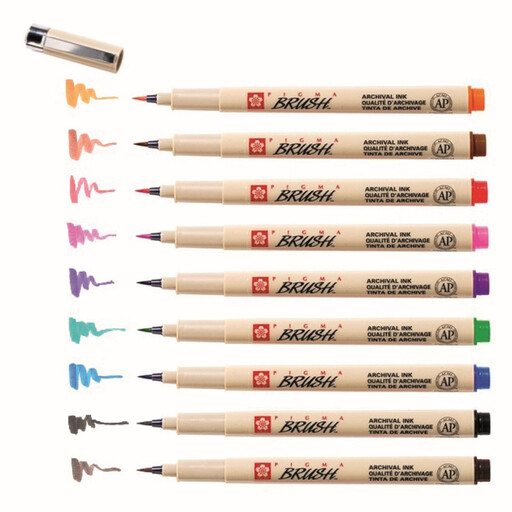
Why we chose it: When the longevity of your artwork is paramount, pigment-based ink is non-negotiable. This Pigma Brush set is designed for artists who need permanent, waterproof, and fade-resistant lines for their illustrations or calligraphy.
It gets straight to the point. By focusing on a single, high-calibre brush tip and archival-quality ink, it avoids the "all-in-one" trap that often sacrifices performance.
Ink that lasts a lifetime: Pigma ink is permanent, pH-neutral, and won't bleed through most papers. Your creations are made to last and will stand the test of time and light.
Discover our complete selection of pens and markers, all tested and approved by our experts for their quality and durability.
The golden rule is to always cap them tightly immediately after use. For dye-based ink pens like Ecoline, it's best to store them horizontally to ensure even ink distribution. If a tip seems dry, you can often revive it by dipping it very lightly in a little water.
To get the most out of water-soluble pens, using the right paper is essential. A mixed-media paper or a watercolour paper (hot-pressed for a smooth finish, or cold-pressed for more texture) of at least 200 gsm is ideal. Paper that is too thin (like printer paper) will buckle or warp when it comes into contact with water, and the ink is likely to bleed through.
Yes, but it requires the right technique and materials. The effect is most convincing with pens whose ink is specifically designed to be reactivated with water. Apply the colour to your watercolour paper, then use a clean, damp brush or a "Blender" pen to pull and blend the colours. You can also dab ink onto a plastic palette and pick it up like traditional paint. The result is often easier to control and less diffuse than with pan watercolours.