
Livraison le jour même ou le lendemain

Qualité garantie

Débloquez vos offres de bienvenue: Livraison GRATUITE | Jusqu'à -80 % | 30 jours d'essai gratuits à JoyPlus
Téléchargez l'application
A hair dye for brown or brunette hair can bring a dull colour back to life, darken a lighter base or cover your first grey hairs. The trouble is that the boxes can look very similar, and marketing claims don’t always make it easy to tell the formulas apart. Before you place an order, it’s worth checking the type of dye, your starting shade and the directions for use.
A semi-permanent hair dye, such as L’Oréal Casting Crème Gloss, gradually fades with each wash. It’s a good choice for refreshing the lengths, trying a chocolate brown or adding highlights without a long-term commitment.
Permanent hair dye changes the hair fibre for longer and generally means you’ll need to touch up your roots. It may be more suitable for covering grey hair, provided you follow the manufacturer’s recommendations.
An ammonia-free permanent hair dye may contain other colouring agents as well as a developer containing hydrogen peroxide. So, even if there’s no ammonia, you still need to do an allergy alert test. Several product listings recommend doing this test 48 hours before each application, even if you’ve used the brand before.
Also avoid applying dye to an irritated or damaged scalp. Hair dye should never be used on eyebrows or eyelashes.
The result depends on your natural colour, any previous dye, your hair’s porosity and the proportion of grey hairs. Dark brown may look almost black on an already dark base, while a cool-toned brown can look different depending on the light.
Shade codes such as 4.0, 4.15, 5.0 or 6.0 help you identify the depth of the colour and its undertones. Check the shade chart and instructions rather than relying on the photo printed on the box.
Claims such as “up to 8 weeks” or “up to 32 washes” are estimates based on the conditions of use. They don’t guarantee the same results on every head of hair.
Claims such as vegan, silicone-free, with oils or 90% ingredients of natural origin describe certain features of a formula, but they don’t guarantee the same result for everyone. Check the ingredients list on the packaging, as it may change over time.
For example, Garnier Good highlights an ammonia-free, vegan formula made with 90% ingredients of natural origin, alongside a shea butter conditioner. Garnier Olia, meanwhile, says its colouring cream contains a high proportion of oils. These details can help guide your choice, but they don’t replace the patch test.
A kit is usually enough for one application. If your hair is long, thick or particularly full, the instructions may recommend using two boxes. Creamy or drip-resistant textures make it easier to apply dye at home, but you’ll still need to protect your clothes, wear the gloves provided and follow the development time carefully.
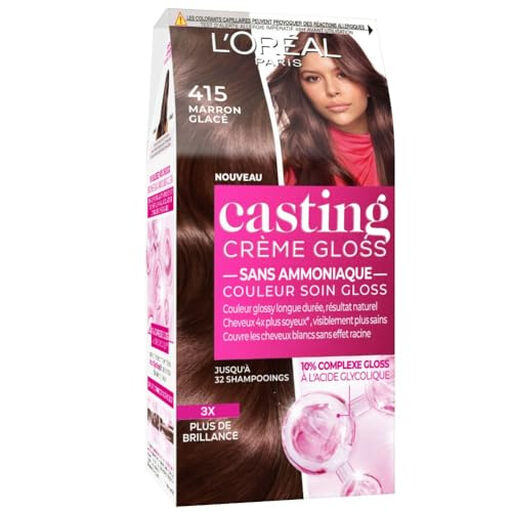
Why it suits this profile: Its ammonia-free semi-permanent formula and 20-minute development time make it a reassuring option for your first dye or a gentle change.
It means you don’t have to go straight to a permanent dye. It fades gradually, as stated in the product information.
A 4.15 shade with cool brown undertones, a conditioner included and a claimed colour life of up to 32 washes.
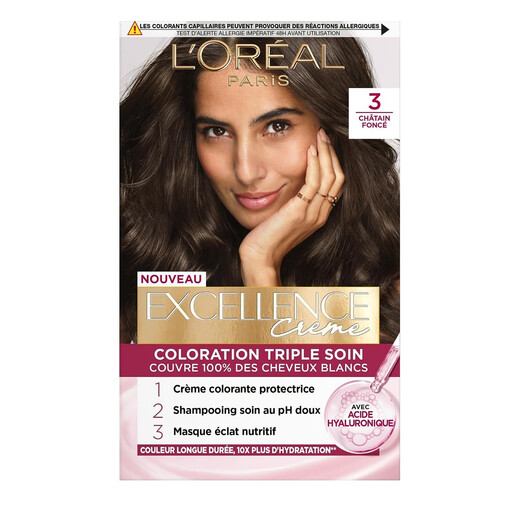
Why it suits this profile: The kit includes a pre-colour serum, colouring cream, shampoo and conditioner for a more complete at-home routine.
The different steps help you avoid choosing a kit without any extra conditioning care, while the instructions guide you through the application.
A dark brown shade, a cream texture described as drip-resistant and grey coverage claimed by the brand.
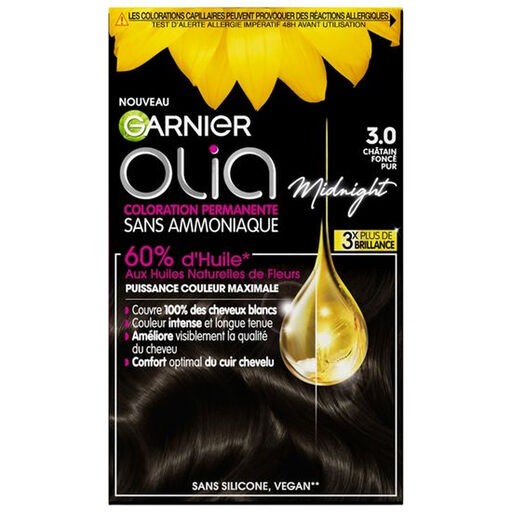
Why it suits this profile: Its ammonia-free permanent formula and dark brown shade are ideal if you want long-lasting colour in a complete kit.
The product information confirms that it contains a developer and explains the precautions to take: an allergy test is still essential, even though the formula is ammonia-free.
A cream described as drip-resistant, oils in the formula and grey coverage of up to 100% claimed by the brand.
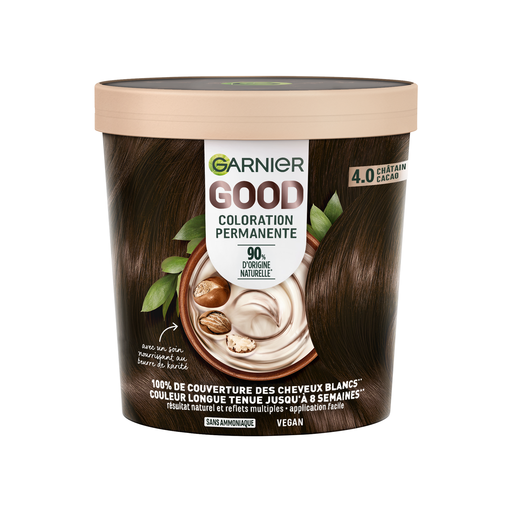
Why it suits this profile: Its creamy texture can be applied with the gloves like a mask, making at-home colouring simpler and more intuitive.
The shade and level of coverage are clearly stated, while the drip-resistant texture helps prevent drips during application.
A formula described as vegan and ammonia-free, made with 90% ingredients of natural origin, with a shea butter conditioner.
Permanent hair dye generally claims to provide more coverage than a semi-permanent formula. Garnier Olia, Garnier Good and L’Oréal Excellence Crème state that they can provide up to 100% coverage, according to their product information. However, the result depends on the proportion of grey hair and your starting colour.
Chocolate brown usually has warm undertones, while cool brown leans towards cooler undertones. Dark brown sits between some brunette and brown bases. Check the shade number and shade chart, as names can vary from one brand to another.
How long the colour lasts depends on the type of formula, how often you wash your hair, heat exposure and the condition of your hair. Semi-permanent dye fades gradually, while permanent dye mainly needs root touch-ups as regrowth becomes visible. The lasting times stated on the packaging are estimates specific to each product.