Households dealing with a breakdown
If your washing machine, dishwasher or fridge has broken down, a diagnosis can help you find out whether it can be repaired before you compare replacement appliances.


Before replacing a large appliance that has broken down, check its warranty and ask for a diagnosis. As ADEME points out, the problem may sometimes be caused by just one part. If replacement is necessary, compare new, second-hand and refurbished options based on the appliance’s condition, documented energy consumption, suitability for your home and the durability information available for its category.
If your washing machine, dishwasher or fridge has broken down, a diagnosis can help you find out whether it can be repaired before you compare replacement appliances.
If the capacity or features no longer suit you, compare models that fit your home and check their energy-use information, as well as durability or repairability details where available for that category.
For a second-hand or refurbished appliance, check the condition of the item being sold, its exact model reference, the information provided by the seller and what protections apply.
Start by finding out whether the appliance can be repaired or no longer meets your needs. Then compare the information available for the category and appliance you’re considering.
| Priority | What to check | Your needs |
|---|---|---|
| Breakdown and repair | Check whether the appliance is still under warranty, then ask for a diagnosis and quote. According to ecosystem, the Repair Bonus is available for certain out-of-warranty appliances and eligible breakdowns. Check the conditions with a QualiRépar repairer. | My appliance has broken down; I want to find out whether a part can be repaired before replacing the whole appliance. |
| Durability and spare parts | Compare the relevant index and its details where it applies to the model. According to the French Ministry of the Economy, the durability index has applied to front- and top-loading washing machines since 2025, while the repairability index applies to dishwashers, among other appliances. Also find out about spare parts. | If I buy another appliance, I want to be able to assess how repairable it is rather than judge it by its appearance alone. |
| Energy consumption | For a new appliance covered by energy labelling, check the energy label for the exact model and compare appliances in the same category with a suitable capacity. For a second-hand appliance, look up the model reference and any energy-use documentation. A refurbished appliance may be exempt from labelling under the conditions set out by the DGCCRF. | I’d like to compare the energy needed to run an appliance without applying data from a different model to a second-hand one. |
| Condition and seller | Check the model reference, condition and accessories included with the item. According to the DGCCRF, an item described as refurbished must have undergone functional testing. Also check who is selling it and the written terms of the offer. | I’m interested in a second-hand option if I can understand what I’ll receive and who to contact if there’s a problem. |
| Capacity and installation | Check the dimensions, required clearance and door opening direction against the space available. Choose a capacity that suits your household’s needs. | I need an appliance that fits the available space and has a capacity that works for my day-to-day needs. |
A breakdown may only affect one part, as ADEME points out. The age of an appliance alone doesn’t tell you what repair it needs.
Get a diagnosis and a quote, then weigh them against the appliance’s condition, the availability of parts and what a replacement suited to your needs would offer.
According to the DGCCRF, a refurbished product must have undergone functional testing. A description of a new model doesn’t tell you the condition of the specific item on offer.
Check how the item is described, its model reference, actual condition, accessories, any tests carried out and the seller’s identity.
The energy label for applicable new appliances can’t be used to assume the energy consumption of a different, second-hand item. The DGCCRF explains that some refurbished products may be exempt from labelling, subject to certain conditions.
Look for documentation that matches the exact model reference, and only compare data when the model and conditions of use are clear.
The DGCCRF points out that when you buy a new appliance, the seller must offer free “one-for-one” take-back of an equivalent used appliance. A safety recall may also include instructions for a specific appliance.
Confirm the practical arrangements for taking away your old appliance before delivery. Before using, repairing or buying a second-hand appliance, search for its brand and model reference on RappelConso and follow any applicable recall instructions.
These four models are options to consider if you’re replacing a fridge or fridge-freezer. Compare their capacity, installation requirements and energy documentation for the exact model against your needs.
 Image unavailable
Worth considering if you’re looking for a 262 L fridge-freezer. The product title states a 70/30 split, a width of 54 cm and a height of 176 cm. Check the space required and installation conditions for your chosen location, then consult the energy documentation and warranty terms for the exact model.
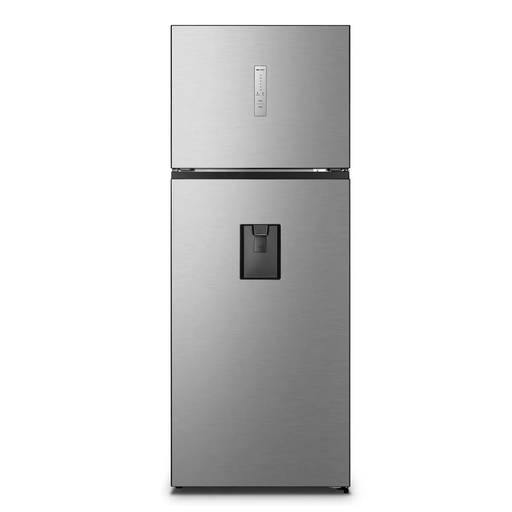 Image unavailable
Its stated capacity of 467 L makes it an option if you need plenty of space. The product title mentions Total No Frost and an E energy rating. Before choosing, check the overall dimensions, which way the door opens, the energy documentation and the warranty terms for the model.
 Image unavailable
This 444 L model is described as frost-free and has an E energy rating. Check its dimensions and required clearances before deciding where to put it. Also consult the energy documentation, information about spare parts and warranty terms for this specific model reference.
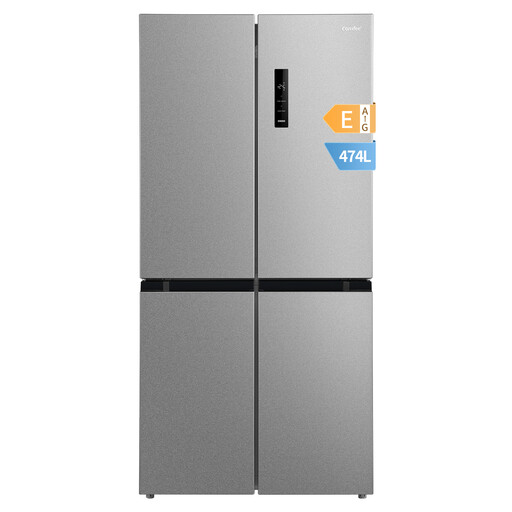 Image unavailable
Its stated capacity of 474 L and four-door design may suit a household looking for this type of layout. The product title gives it an E energy rating. Check the dimensions, installation requirements and annual energy consumption in the documentation for the exact model before comparing offers.
No. According to ADEME, the problem may be caused by a part or component that can be repaired. Ask for a diagnosis or quote before comparing the cost of a repair with a replacement. The right choice depends on the breakdown and the condition of your appliance.
According to ecosystem, a QualiRépar-accredited repairer may deduct the bonus from your bill if the appliance is no longer covered by a warranty and the fault is eligible. Check that both your appliance and the repair qualify before the work begins.
According to the French Ministry of the Economy, the durability index replaced the repairability index for front- and top-loading washing machines in 2025. The repairability index still applies to dishwashers, among other appliances. Check the index and its details for the specific model rather than expecting the same indicator across all categories.
The energy label for applicable new appliances does not automatically apply to second-hand products. According to the DGCCRF, a refurbished product that has already been placed on the European market may also be exempt if the refurbishment hasn’t changed its performance, intended use or original type. To compare energy consumption, look for information that matches the exact model reference.
In France, the statutory guarantee of conformity applies to second-hand or refurbished goods sold by a business to a private individual, as explained by the French Ministry of the Economy. Identify the seller and keep the listing, receipt and description of the appliance’s condition. Check separately the terms of any commercial warranty offered.