People hosting a dessert or brunch
If you’re planning to slice, fill or turn your brioche into French toast, consider both the format and the recipe. Brioche Pasquier and Carrefour product pages offer options to compare against these criteria.


For a dessert where the brioche will be sliced and presented, choose a format that lets you decide how thick to cut the slices, then compare the ingredients of the specific product. Pre-sliced brioche is more convenient for toasting and serving quickly. In either case, check the allergens and nutritional values per 100 g rather than relying on the word ‘premium’ alone.
If you’re planning to slice, fill or turn your brioche into French toast, consider both the format and the recipe. Brioche Pasquier and Carrefour product pages offer options to compare against these criteria.
If you plan to toast or fill slices without cutting them first, pre-sliced brioche is worth considering. Check its ingredients and the weight of the portions you’ll use.
Check the packaging for the exact product before using it in a recipe, particularly for wheat, eggs, milk and any stated traces.
Start by thinking about how you’d like to cut or serve the brioche, then compare the recipes and information on the packaging.
| Criteria | What to check | Who is it for? |
|---|---|---|
| Recipe and presentation | Declared ingredients, particularly eggs and butter; whether the brioche can be cut to suit the dessert. | When putting together a dessert to share, I want to choose the size of the pieces and know the recipe for the brioche I’m using. Around 42% of consumers prioritise the presentation and ingredients of the brioche. |
| Format and preparation | Whole or pre-sliced brioche; a weight that suits the quantity you need. | When I need to serve quickly, slices ready to toast or fill make preparation easier. This is the main priority for around 33% of consumers. |
| Ingredients and allergens | Ingredient list, allergens and any stated traces; nutritional values per 100 g. | Before cooking for a group, I need to know which ingredients and allergens are in the recipe. Around 25% of consumers put these checks first. |
Harry’s explains that, for the pre-sliced brioche in question, this claim doesn’t rule out ingredients that serve a similar purpose. So it doesn’t tell you everything about the recipe on its own.
Read the full ingredients list if their nature matters for your preparation.
These claims don’t address requirements relating to wheat, eggs or milk. The French Directorate General for Competition Policy, Consumer Affairs and Fraud Control states that allergenic ingredients must be clearly highlighted on the label.
Check the allergens and any ‘may contain’ information on the packaging of the product you buy.
A slice won’t necessarily weigh the same from one product to another. Comparing sugar or fat content is misleading if the quantities differ.
First compare the nutritional values per 100 g, then consider how much you’ll actually use in your recipe.
Brioche Pasquier’s braided brioche is an option to consider if you’re preparing something to slice and share.
The Harry’s pre-sliced brioche in question is suited to occasions when evenly sized portions make toasting or serving easier.
Carrefour Bio pre-sliced brioche and Reflets de France Nanterre offer two pure-butter formats to compare for different uses.
The Marque Repère/Epi d'Or range includes braided and pre-sliced brioches.
Auchan offers an 800 g La Boulangère pure-butter braided brioche, a format to consider for a dessert to share.
This selection features a 280 g brioche to consider if you’d like to make a homemade dessert and choose how to slice it yourself.
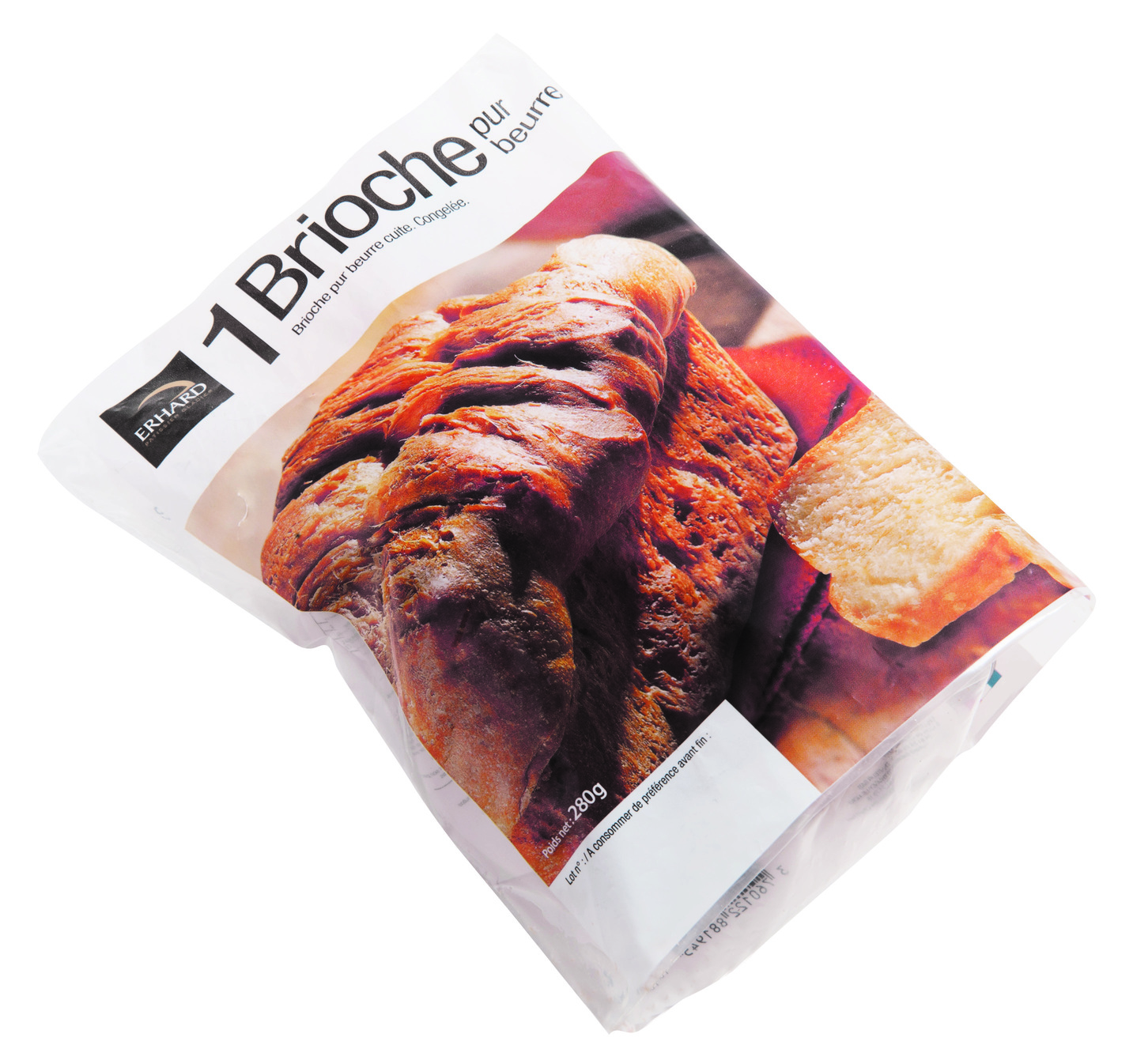 Image unavailable
If your recipe calls for pieces cut to order, check that this brioche’s shape and texture are suitable. It weighs 280 g; check the packaging for ingredients and allergens.
Check the allergens for the exact brioche you’re using, along with any traces stated on its packaging. Depending on the recipe, ingredients to look out for include wheat, eggs and milk. A general description of the brioche isn’t a substitute for checking the label.
Compare their nutritional values per 100 g before looking at the values per portion. A slice or portion may weigh more or less depending on the product, so you’ll also need to take account of the amount you use in your recipe.
No. For the Harry’s pre-sliced brioche in question, the brand says this claim doesn’t rule out ingredients that serve a similar purpose. Check the full ingredients list if the recipe is important to your choice.