Students who need to prepare lunch quickly
Pre-sliced brioche can be easier to portion and fill between lectures. Brioche Pasquier, for example, describes its plain sliced brioche as ready to use.


For lunch on the go, choose pre-sliced brioche if you want to fill it quickly. If the recipe matters more, check the ingredients of a brioche made with pure butter, organic ingredients or a recognised quality mark. These labels relate to different things, so compare the nutritional values per 100 g too, and check the allergens for the product you choose.
Pre-sliced brioche can be easier to portion and fill between lectures. Brioche Pasquier, for example, describes its plain sliced brioche as ready to use.
Looking for ingredients or origin details on the packaging? Carrefour Bio and E.Leclerc product pages give examples of brioches that state the proportion or origin of certain ingredients. Check these details on the product you plan to take with you.
If you’re choosing between different recipes, sugar, fat and ingredient details can help you tell them apart. The DGCCRF says that nutrition information per 100 g makes it easier to compare prepacked foods.
Start with the factor that will really decide your purchase: preparing lunch quickly, choosing a particular recipe, comparing ingredients and nutrition, or finding the product near your university.
| Criteria | What to check | Who is it for? |
|---|---|---|
| Convenient format | Pre-sliced portions and storage instructions after opening. | Between lectures, I want to be able to fill a slice without any extra preparation. Around 31% of consumers put convenience first. |
| Recipe and origin | Ingredients, their proportions where shown on the label, and any quality mark. | For a lunch I want to share, I prefer to choose a recipe with clearly listed ingredients. This is a priority for around 25% of consumers. |
| Nutritional information | Sugars and fat per 100 g; the basis for comparing a “less sugar” claim. The DGCCRF says that information per 100 g makes comparison easier. | If I buy brioche regularly, I want to compare the nutritional information for the products I’m interested in. Around 25% of consumers prioritise this. |
| Availability near university | Whether the chosen shop stocks the product and the validity period of any advertised offer. | When I shop near campus, I need to be able to find the brioche I’ve chosen. Availability is the main criterion for around 19% of consumers. |
“Made with pure butter”, organic and PGI describe different characteristics; none replaces the nutrition table. For example, the Carrefour Bio sliced brioche product page lists 11.9 g of added sugars per 100 g.
Choose the recipe features that matter to you, then compare the nutritional values for the exact product.
Harrys compares its lower-sugar brioche with an average of 13.8 g of sugars per 100 g in plain sliced brioche. It’s a comparative claim, not a promise that the brioche contains no sugar.
Check the sugar content per 100 g and the comparison basis stated on the packaging.
Recipes aren’t interchangeable. Brioche Pasquier’s plain sliced brioche lists wheat, eggs and butter, among other ingredients. The DGCCRF says allergenic ingredients must be highlighted in the ingredients list.
Before you buy, read the label for the exact product and format you’re planning to share.
These examples show different ways to choose packaged brioche. A product’s features don’t necessarily apply to a brand’s entire range.
Worth considering if you’re after slices ready to fill: the brand describes its plain sliced brioche as already cut.
A brand to look at if you want to compare sliced brioches by recipe and sugar content.
Carrefour Bio sliced brioche gives you the chance to look at a pure-butter recipe with some ingredients quantified.
The Nos Régions ont du Talent range’s PGI Vendée sliced brioche is worth considering if a quality mark and declared ingredient origins matter to you.
Auchan’s brioche range lets you compare sliced options and gâches, which may not be suited to the same uses.
An option to consider if you shop near campus and spot a brioche in store or in the catalogue.
This butter brioche could be part of a lunch to take to university. If you need slices that are ready to fill, check the format before choosing it.
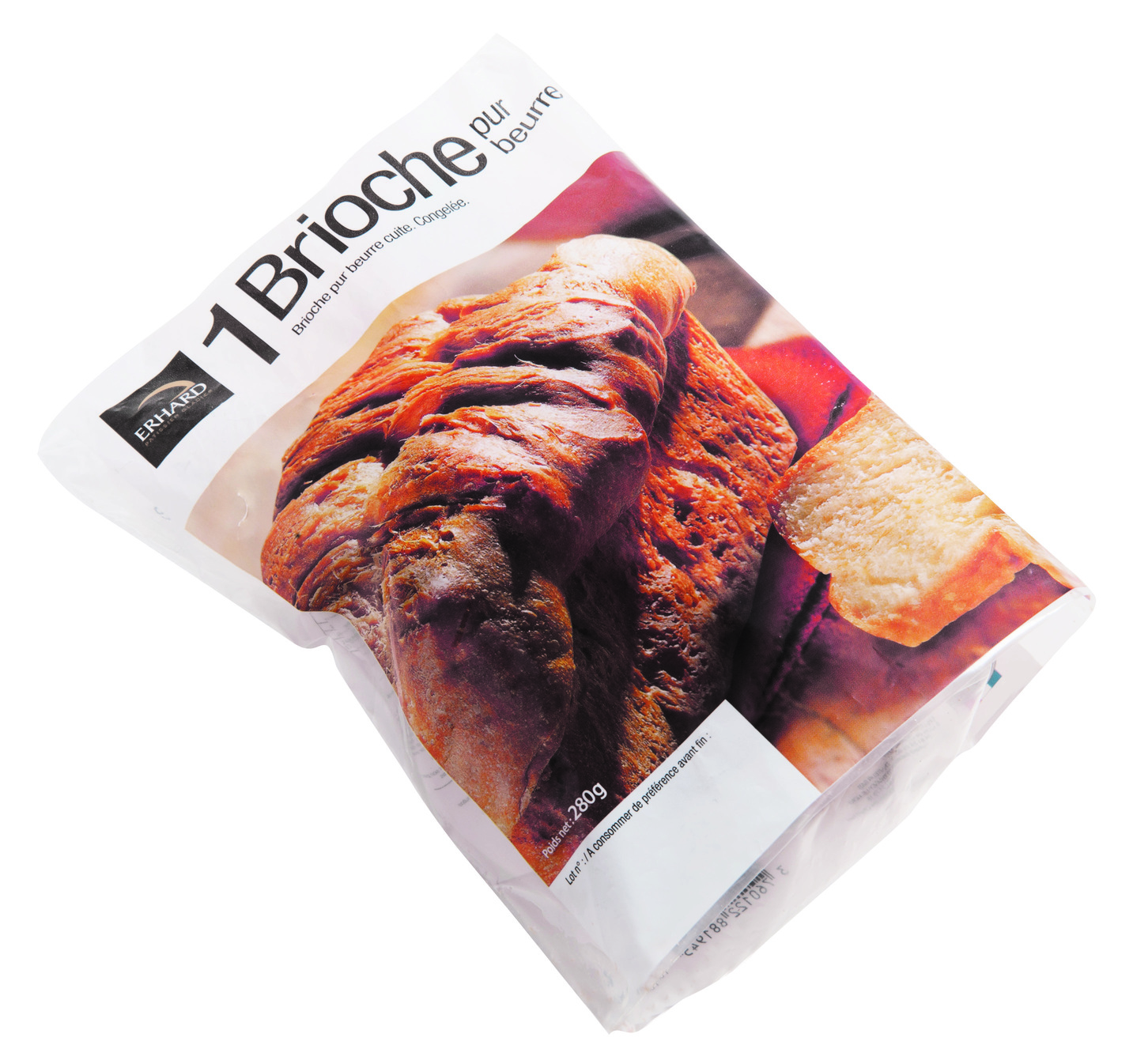 Image unavailable
If you’re putting together lunch with a butter brioche, check that its format suits how you want to slice and carry it. This product weighs 280 g; check the label for ingredients, allergens and storage instructions.
Start with the nutritional values per 100 g, then check the net quantity and ingredients list. The DGCCRF says that nutrition information per 100 g makes it easier to compare prepacked foods.
No: “less sugar” is a comparison, not a claim that the product contains no sugar. For the brioche in question, Harrys compares it with an average of 13.8 g of sugars per 100 g in plain sliced brioches. Check the value shown on the product you choose.
Read the ingredients list and allergen information for the exact product before sharing it. Brioche Pasquier’s plain sliced brioche lists wheat, eggs and butter, among other ingredients. The DGCCRF says allergenic ingredients must be highlighted on the label.
Follow the instructions on the packaging, as they can vary between products. For Maline Thomas brioche sold at Auchan, the product page says to store it in a cool, dry place and to reseal the bag with its clip after use.