Fans of less-sweet savoury toast
If you want soft brioche beneath a savoury topping, the total sugars per 100 g make it easier to compare products without confusing their nutritional content with a ‘no added sugars’ claim.


To make savoury toast with soft brioche, compare the ‘of which sugars’ figures rather than relying solely on claims such as ‘no added sugars’ or ‘less sugar’. Of the three brioches reviewed, Auchan’s product page for La Boulangère lists 5.4 g of sugars per 100 g, compared with 9.3 g on Harrys’ page for its sliced brioche and 10 g on Auchan’s page for Harrys’ braided brioche. A crispbread can also work as a base, but it won’t have the texture of brioche.
If you want soft brioche beneath a savoury topping, the total sugars per 100 g make it easier to compare products without confusing their nutritional content with a ‘no added sugars’ claim.
If you want to prepare toast quickly, compare pre-sliced brioches. The format doesn’t mean you can skip checking the sugars, fibre, salt and allergens on the pack you choose.
If a soft texture isn’t essential, crispbread can make a good base for a savoury topping. However, Brioche Pasquier’s No Added Sugars Wheat Crispbread is a different product from brioche.
Start by comparing sugars on the same basis, then choose the format you want to top and check the rest of the label.
| What matters | What to check | Who it matters to |
|---|---|---|
| Total sugars | Compare the ‘of which sugars’ figure per 100 g; distinguish it from a ‘no added sugars’ claim. | When choosing brioche for toast, I want to know the actual sugars listed on the label rather than relying on the claim on the front of the pack. Around 46% of consumers prioritise total sugar content. |
| Format and texture | Choose between ready-to-top slices, a brioche loaf to cut yourself and a crunchy base. | When breakfast needs to be quick to prepare or shared, I look first for a format that suits the toast I have in mind. Convenience comes first for around 27% of consumers. |
| Other label information | Read the ingredients and allergen information, then compare salt, fibre and storage instructions. | If I’m adding a savoury topping or need to avoid certain ingredients, I have to look beyond the sugars before making my choice. For around 27% of consumers, this other information is their main concern. |
Auchan’s product page for La Boulangère’s no added sugars sliced brioche still lists 5.4 g of sugars per 100 g.
Check the ‘of which sugars’ figure and compare it per 100 g before choosing how much to use for your toast.
Harrys uses this claim in comparison with reference brioches; it doesn’t mean its sliced brioche contains no sugar. Harrys’ product page lists 9.3 g of sugars per 100 g.
Check both the stated basis for comparison and the total sugars shown in the nutrition information.
The products featured contain cereals with gluten; other ingredients and possible traces vary by recipe. A savoury topping also changes the nutritional content of the whole slice.
Check the allergens and possible traces on the pack, as well as the salt per 100 g if it matters to you.
Brioche Pasquier’s No Added Sugars Wheat Crispbread gives you a crunchy base, not the soft texture of brioche.
Decide which texture you want first, then compare the information for each individual product.
The brand offers, among other products, sliced and braided brioches carrying a ‘less sugar’ claim.
Its 450 g no added sugars sliced brioche is a product to consider for savoury toast.
No Added Sugars Wheat Crispbread is worth considering if you’d prefer crunchy toast to brioche.
This selection features a no added sugars crunchy base for savoury toast, rather than soft brioche.
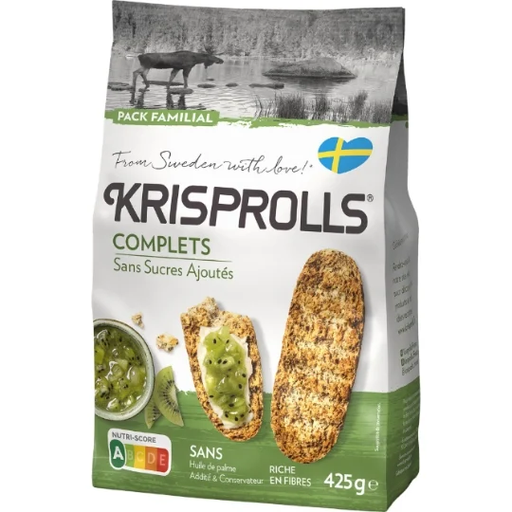 Image unavailable
Worth considering if you’d like to top a crunchy base rather than soft brioche. The pack shown is 425 g; check its label for ingredients, allergens and salt before pairing it with your topping.
No. Auchan’s product page for La Boulangère’s no added sugars sliced brioche lists 5.4 g of sugars per 100 g. To find the declared total sugar content, check the ‘of which sugars’ figure in the nutrition information.
Of the three brioches reviewed here, La Boulangère’s no added sugars sliced brioche has the lowest figure: 5.4 g per 100 g according to Auchan, compared with 9.3 g for Harrys’ sliced brioche according to Harrys and 10 g for its braided brioche according to Auchan. Check the label on the pack you choose.
Check the information for the specific product, particularly cereals containing gluten and, depending on the recipe, eggs or dairy ingredients. Also read the possible traces listed on the pack rather than assuming they’re the same as those for another product from the brand.
Follow the instructions on the packaging. For the Harrys braided brioche featured here, Auchan advises storing it at room temperature, away from a heat source, and closing the bag after use.
This makes it possible to compare packs of different sizes and serving amounts. The Directorate General for Competition Policy, Consumer Affairs and Fraud Control states that nutrition information for prepacked foods is given per 100 g or 100 ml; the amount you serve can then be different.