For those avoiding added sugars
You’d like to keep brioche on the menu with your tea, but choose a recipe with no added sugars. This doesn’t rule out sugars naturally present in the product.


If you’re looking for a brioche that’s “sugar-free”, the claims “no added sugars” and “30% less sugar” aren’t enough: Anses associates the claim “sugar-free” with a sugar content of less than 0.5 g per 100 g. La Boulangère sliced brioche meets the no-added-sugars criterion, while the Pasquier and Harrys brioches marketed as lower in sugar contain sugar in their ingredients lists. If you’d rather have something crisp than soft with your tea, a crispbread with no added sugars is another option, but it isn’t a brioche.
You’d like to keep brioche on the menu with your tea, but choose a recipe with no added sugars. This doesn’t rule out sugars naturally present in the product.
You want to keep that soft texture and are looking for a product that claims to contain less sugar than a reference recipe, without requiring it to have no added sugar.
With your tea, you’d rather have crispbread or crunchy toast, even if that means choosing something other than brioche.
First decide whether you want to keep the soft texture of brioche. If so, the difference between “no added sugars” and “less sugar” will help you narrow down your options.
| Criterion | What to check | Who is it for? |
|---|---|---|
| No added sugars | Read the exact claim and ingredients list, then compare the “of which sugars” figure per 100 g. Anses distinguishes between “no added sugars” and “sugar-free”. | I want to enjoy brioche with my tea without choosing a recipe with added sugar; I also check its total sugar content. Around 42% of consumers prioritise no added sugars. |
| Relative reduction in sugar | Check which product is used as the basis for the claimed reduction and read the ingredients: “30% less” doesn’t mean the same sugar content across all brioches. | If I want a soft texture but am looking for a recipe claimed to contain less sugar than a reference product, a reduced-sugar brioche fits the bill. Around 33% of consumers prioritise a relative reduction. |
| Crunchy texture | Choose between brioche and crispbread, then compare the nutritional information per 100 g and the allergens in the product you’re considering. | With my tea, I prefer something crunchy, even if that means looking beyond brioche. Around 25% of consumers prioritise this texture above all. |
These claims don’t mean the same thing. According to the Carrefour product listing, La Boulangère sliced brioche with no added sugars contains 5.4 g of sugars per 100 g; Anses sets the “sugar-free” threshold at less than 0.5 g per 100 g.
If total sugar content is your priority, check the “of which sugars” figure per 100 g rather than relying on the claim on the front of the pack.
The ingredients lists for the Pasquier and Harrys sliced brioches featured by Carrefour include sugar. Their claimed reduction is a comparison with a reference product, not a promise that no sugar has been added.
Check the stated basis for comparison and read the ingredients if you want to avoid added sugars.
A sugar-related claim tells you nothing about allergens. The La Boulangère brioche described by Carrefour contains wheat, eggs and butter, among other ingredients.
If you have an allergy or intolerance, read the allergen declaration on the specific pack you’re buying, including when choosing a crunchy alternative.
Its 450 g sliced brioche carries a “no added sugars” claim, making it an option if you want to enjoy brioche without added sugar.
The brand offers a sliced brioche labelled “30% less sugar” and, in a different category, crispbreads with no added sugars.
The “less sugar” sliced and braided brioches are presented as recipes with a relative reduction in sugar.
Its 450 g reduced-sugar sliced brioche is a reduced-sugar option, not a no-added-sugars one.
If you find a crunchy snack goes better with your tea than soft brioche, this selection features a wholemeal Swedish crispbread with no added sugars, rather than brioche.
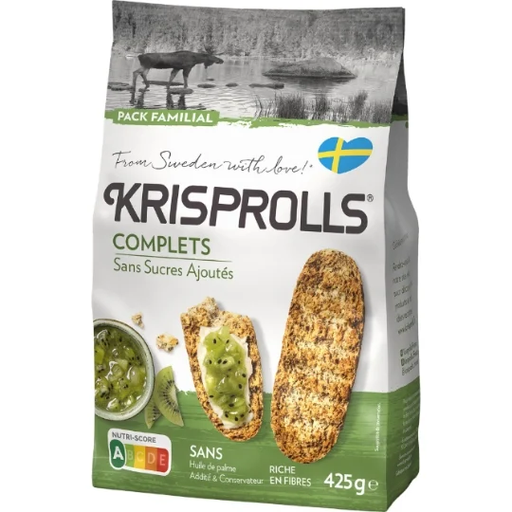 Image unavailable
Worth considering with tea if you prefer a crunchy crispbread to soft brioche. 425 g pack; “no added sugars” doesn’t mean “sugar-free”.
No. It can contain naturally occurring sugars: the Carrefour product listing for La Boulangère sliced brioche with no added sugars gives its sugar content as 5.4 g per 100 g. Anses states that “sugar-free” means less than 0.5 g per 100 g.
It means a relative reduction compared with a reference product, not a promise that the brioche contains no sugar. The ingredients lists for the Pasquier and Harrys brioches featured by Carrefour include sugar; also check the basis for comparison stated for each product.
Check the pack you’ve chosen rather than making assumptions based on its sugar claim. The La Boulangère brioche with no added sugars featured by Carrefour contains wheat, eggs and butter, among other ingredients.
For the “less sugar” braided brioche featured by Auchan, the storage advice is to keep it at room temperature and reseal the bag securely after use. Follow the instructions on the pack you buy.