If you’re looking for brioche with no sugars at all, the claim ‘no added sugars’ isn’t enough: according to Auchan, La Boulangère sliced brioche carrying this claim still contains 5.4 g of sugars per 100 g. To cut down on sugars without giving up brioche at brunch, compare the ‘of which sugars’ figures per 100 g, then check the ingredients, slice size and toppings you plan to serve.
Who are these options for?
Anyone looking for a product with no sugars
If ‘no sugar’ means a product containing no sugars at all to you, don’t rely on the ‘no added sugars’ claim alone. According to Auchan, La Boulangère brioche carrying this claim still contains sugars, as shown in its nutrition information.
Hosts looking to serve a lower-sugar brioche
If you’d like to keep brioche on the table to share on a Sunday, compare the sugars per 100 g in the recipes you’re considering. A claim that sugars have been reduced compared with a reference product and a claim that no sugars have been added are two different things.
Hosts who pay close attention to ingredients
If your guests have dietary requirements relating to ingredients, keep the packet handy so you can check the recipe and allergen information before serving. Your choice of toppings also matters if you want to limit the sugars in your brunch.
What should you look for in a brunch brioche?
First, distinguish between no added sugars and a comparative reduction in sugars. Then choose the texture and format that best suit how you plan to serve it.
| What to consider |
What to check |
Who is it for? |
| Sugars in the product |
Read the exact claim and check the ‘of which sugars’ figure per 100 g. Auchan lists 5.4 g for La Boulangère brioche with no added sugars and 9.3 g for Harrys lower-sugar sliced brioche. |
If you’re genuinely looking for zero sugar, a claim on the front of the pack isn’t enough to decide. Around 36% of consumers prioritise no sugars or the lowest possible sugar content. |
| Brioche to share |
Compare the sugars per 100 g and the serving format, rather than relying solely on the claimed reduction compared with another brioche. |
If you want to keep brioche on the table while cutting down on sugars, the recipe and portion size matter. Around 29% of consumers prioritise this balance. |
| Ingredients and allergens |
Check the ingredients and any ‘may contain’ warnings on the packet you buy, especially if a guest has an allergy. |
When several guests are sharing brunch, you need to be able to identify what each product contains before serving it. Around 21% of consumers put this check first. |
| Serving and toppings |
Choose between sliced brioche and crisp toast depending on the texture you want, and take any added toppings into account. |
If everyone is making their own toast, a base that’s easy to serve may matter more than the softness of brioche. Ease of serving is the top priority for around 14% of consumers. |
Common pitfalls to avoid
-
Assuming ‘no added sugars’ means ‘no sugars’
La Boulangère sliced brioche carries the first claim, but Auchan lists 5.4 g of sugars per 100 g. On that basis, it isn’t suitable if you’re looking for a product with zero sugar.
Check both the claim on the packet and the ‘of which sugars’ figure in the nutrition information.
-
Comparing only the claims on the packets
Harrys claims a reduction in sugars compared with a specific reference product for its sliced brioche. This comparison alone doesn’t tell you how much sugar it contains compared with another recipe. Auchan lists 9.3 g of sugars per 100 g for this Harrys brioche, compared with 5.4 g for La Boulangère brioche with no added sugars.
Compare products on the same per-100 g basis, then consider the portion you’ll serve.
-
Overlooking ingredients when sharing brunch
The recipes mentioned may contain several types of cereal and, depending on the product, eggs or butter. A sugar content that suits you doesn’t answer the question of whether the product is safe for guests with allergies.
Keep the packaging so everyone can check the ingredients and any ‘may contain’ warnings for the product you’re actually serving.
-
Looking only at the sugars in the brioche
The brioche’s nutrition information doesn’t include any toppings added at brunch.
Serve toppings separately so everyone can choose what to add to their slice.
Brands and retailers to consider
Harrys
A ‘lower-sugar’ sliced brioche to consider if you’d like to keep this format on the brunch menu.
- Harrys claims a 30% reduction in sugars for this recipe compared with its reference product. Auchan’s listing for the sliced brioche shows 9.3 g of sugars per 100 g.
- The claimed reduction doesn’t mean it contains no sugars. Check the ingredients and allergen information on the packet you choose, too.
La Boulangère
A sliced brioche to consider if you’re looking for a recipe with no added sugars.
- Auchan lists the no-added-sugars version in a 450 g pack containing 15 slices, with 5.4 g of sugars per 100 g.
- It still contains sugars. The recipe includes wheat, eggs, rye, barley and butter, among other ingredients.
Brioche Pasquier
Its no-added-sugars crispbreads make a crunchy base for toast if you don’t need the texture of brioche.
- Auchan’s listing for the crispbreads shows 2.5 g of sugars per 100 g.
- These are crispbreads, not brioche, and include wheat and rye, among other ingredients. Check the packet for other allergen information.
Carrefour
The retailer has a listing for La Boulangère sliced brioche with no added sugars.
- The listing helps you identify the product before checking what’s available at your local shop.
- A listing doesn’t guarantee that the brioche will be available in every shop or for every collection option.
Auchan
The retailer has detailed listings for the Harrys, La Boulangère and Pasquier products mentioned here.
- The nutrition information lets you compare the ‘of which sugars’ figures per 100 g.
- Before brunch, check the listing against the label on the product you’ve bought, particularly for ingredients and allergens.
A toast option on Joybuy
If crunchy toast could take the place of brioche at your table, this Joybuy selection features Swedish crispbreads labelled ‘no added sugars’.
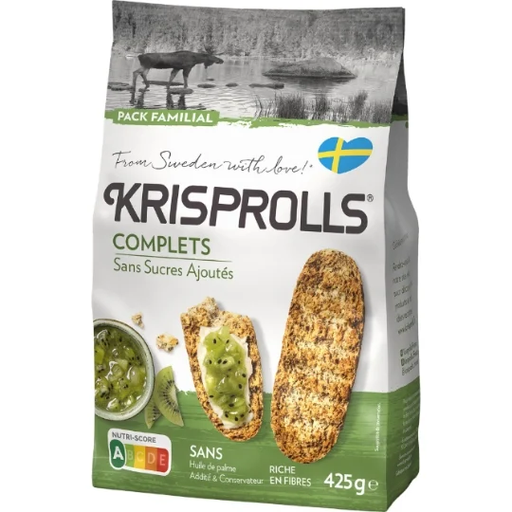 Image unavailable
KRISPROLLS wholemeal Swedish crispbreads with no added sugars, 425 g
A great way to serve crunchy toast at brunch if you’re not looking for the soft texture of brioche. The pack is listed as 425 g and the product name says ‘no added sugars’, which doesn’t mean it contains no sugars. Check the nutrition information and allergen details on the packaging before serving.
View on Joybuy
Frequently asked questions
Does ‘no added sugars’ mean ‘no sugars’?
No. Auchan lists 5.4 g of sugars per 100 g for La Boulangère brioche with no added sugars. If you’re concerned about the sugars in the product itself, check the ‘of which sugars’ figure in the nutrition information, not just the claim on the front of the pack.
Does ‘lower-sugar’ brioche contain less sugar than brioche with ‘no added sugars’?
Not necessarily: the claims describe different things. In Auchan’s listings for the products mentioned here, Harrys ‘lower-sugar’ sliced brioche contains 9.3 g of sugars per 100 g, compared with 5.4 g for La Boulangère sliced brioche with no added sugars. Always compare the exact products on the same basis.
What should you check before serving brioche to guests with allergies?
Check the ingredients and allergen information on the packet you’re going to serve. Depending on the recipe, the products mentioned here may contain cereals with gluten, eggs or butter. Don’t assume a product is suitable just because of its sugar content.
How should you store sliced brioche after brunch?
Follow the instructions on the packet you’ve bought. For the Harrys lower-sugar sliced brioche listed by Auchan, the advice is to store it at room temperature, away from heat, and reseal the bag securely after opening.


