For a quick service, start with pre-sliced brioche and check its recipe, allergens and storage instructions. An organic, all-butter recipe, a PGI speciality, a wholemeal brioche or a less sweet version each meets different priorities. None of these features guarantees that the slices will hold up with your filling.
Who is this choice for?
Sandwich makers focused on the recipe
You want to be able to describe the brioche you serve accurately: butter, eggs, sourdough starter, organic ingredients or a geographical indication, depending on the product. These features tell you about the recipe, but you should test the slices with your chosen filling before using them in service.
Shoppers who care about ingredients
You compare ingredients, allergens and nutritional information before choosing a brioche. A wholemeal or less sweet version may be worth considering, but check its figures per 100 g and read the full label.
Professionals making several sandwiches
Pre-sliced brioche and a pack suited to the pace of service mean you won’t need to slice each loaf to order. The number of slices, storage instructions after opening and the composition of the pack you buy matter just as much as the stated format.
What should you look for?
For a bakery sandwich, check the format first and test it with the actual filling. Then compare recipes and nutritional information according to what matters most for your offering.
| Criteria |
What to check |
Who is it for? |
| Slices and assembly |
Check that it is sliced and confirm the thickness, then try the brioche with your filling. |
For made-to-order sandwiches, I want slices that are easy to handle, without assuming they’ll stand up to a sauce. Around 33% of consumers put this convenience first. |
| Recipe highlights |
Read the ingredients list and any stated percentages for butter or eggs; check for an organic or PGI label on the product you choose. |
When describing a specific recipe on a menu, I look for ingredients and claims I can verify on the packaging. This is a priority for around 27% of consumers. |
| Nutritional information |
Compare sugars, fibre, salt and saturated fat per 100 g across similar products. |
If I offer wholemeal or less sweet brioche, I want to compare its nutritional values rather than judge the whole sandwich on the basis of a single claim. Around 20% of consumers prioritise this information. |
| Pack size and storage |
Check the number of slices, the date and the storage instructions on the pack you buy. |
For an irregular service, I prefer a pack I can use in line with the instructions after opening. Managing the pack is the main concern for around 20% of consumers. |
Mistakes to avoid
-
Assuming a premium recipe means the sandwich will hold together
Claims such as “all butter”, “organic” and “PGI” tell you about specific features of that product. They don’t tell you how a slice will hold up with a hot, moist or pressed filling.
Test the sandwich using the amount of filling, temperature and waiting time you expect during service.
-
Taking “no additives” at face value
Harrys explains that, for the products concerned, this claim can appear alongside ingredients that serve a similar purpose. It doesn’t replace checking the ingredients list.
Check the ingredients list and allergens, then compare the nutritional information that matters to you.
-
Choosing a large pack without planning how you’ll use it
A pack with lots of slices suits regular service, but needs particular care once opened.
Choose a pack size that matches the number of sandwiches you prepare, and follow the instructions for closing and storing the product you buy.
-
Relying on an online product listing without checking the pack
Auchan says the ingredients in its sliced brioche may vary depending on the store’s drive collection service and the date of purchase. For some E.Leclerc products, availability must be checked with the relevant store.
Before telling customers about a recipe or allergens, check the label on the batch you’ll actually be serving.
Brands to consider
These examples let you compare specific products; the features of one brioche won’t necessarily apply to other products from the same brand.
Brioche Pasquier
The brand offers a pre-sliced plain brioche and a “30% less sugar” version.
- The product listing for the plain version includes wheat flour, fresh eggs, sourdough starter, rapeseed oil and pastry butter.
- For the “30% less sugar” version, compare the figures on the label of the pack you buy; the recipe name doesn’t tell you how well it will hold together in a sandwich.
Harrys
The wholemeal and less sweet sliced versions have different ingredients, so check each one separately.
- According to Harrys, its less sweet brioche contains 9.3 g of sugars per 100 g.
- For the products concerned, Harrys explains that the “no additives” claim doesn’t rule out ingredients with a similar purpose.
Carrefour
Carrefour Bio’s sliced, all-butter brioche is an example of a recipe with specified quantities of organic ingredients.
- Its product listing states that a 400 g pack contains 15% organic fresh eggs and 12% organic butter.
- These percentages describe the ingredients, not how well the slices hold up once filled.
E.Leclerc
The products listed include a large-format Epi d’Or brioche and a sliced Brioche Vendéenne PGI from Nos Régions ont du Talent.
- The Epi d’Or listing states that a 700 g pack contains 27 slices; the Brioche Vendéenne carries a PGI designation.
- Check availability of the Brioche Vendéenne in question with your chosen E.Leclerc store.
Auchan
Auchan offers a large-format sliced brioche as well as a sliced Auchan Gourmet gâche, which is a distinct category.
- The brioche contains 26 slices in a 700 g pack; the gâche listing states that it contains 10% concentrated butter and 5% crème fraîche.
- The ingredients in the sliced brioche may vary depending on the store’s drive collection service and the date of purchase, so check the pack.
A brioche available on Joybuy
This brioche could suit a sandwich recipe where the ingredients take centre stage. If your service needs slices ready to fill, check the format before choosing it.
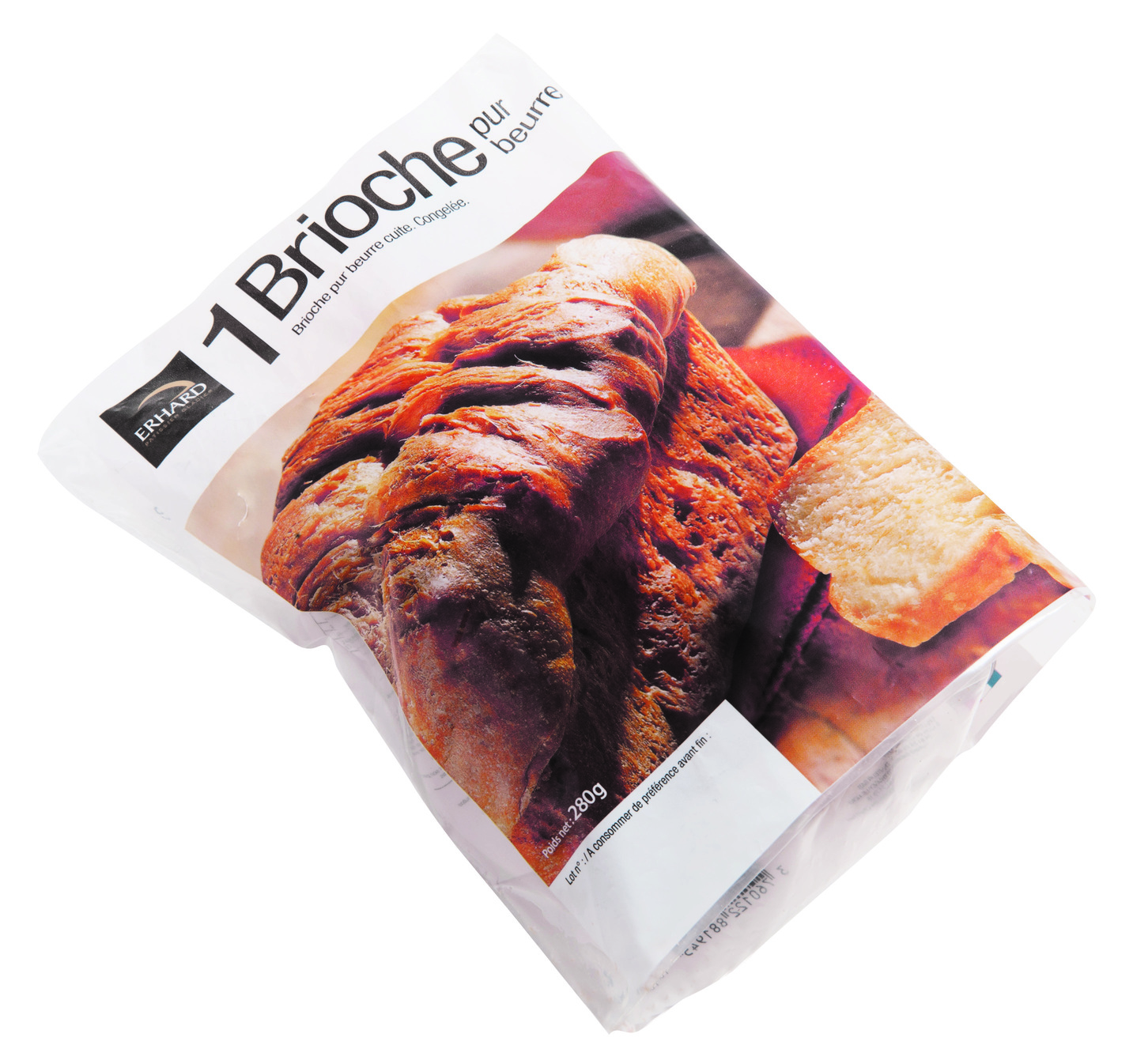 Image unavailable
ERHARD Pure Butter Brioche 280 g
If you want the brioche recipe to stand out in your sandwich, check whether this 280 g pack is right for the number of portions you plan to make. Confirm whether it is sliced and check the thickness before planning a quick service; also try it with your chosen filling. Check the pack label for allergens and storage instructions.
View on Joybuy
Frequently asked questions
Do I need to provide allergen information for a brioche sandwich sold in a bakery?
Yes. Service Public Entreprendre says allergen information is also required for non-prepacked food, including sandwiches sold in bakeries. For prepacked brioche, any allergens present are highlighted in the ingredients list. Check this list before preparing the information for your customers.
Can I choose a brioche without checking for wheat, milk or eggs?
No. Check the allergens for each product against the label on the batch you’re using. The recipes mentioned contain different ingredients, and an online product listing is no substitute for checking the pack you’ll be serving.
How can I use Nutri-Score to compare two brioches?
Compare similar products and check their nutritional information per 100 g too. Manger Bouger explains that Nutri-Score is calculated on this basis; the DGCCRF also notes that displaying it is voluntary. On its own, it doesn’t describe the portion served or the sandwich filling.
How should I store sliced brioche during service?
Follow the instructions on the pack you’re using, especially after opening. For the Auchan sliced brioche in question, the product listing advises protecting it from heat and moisture and resealing the bag. Choose a pack size that suits the pace of your preparation.


