People eating on the go
If you want to open a snack or share it without a knife, look for individually portioned brioches. Then check the allergens on the packaging of the product you buy.


To eat or share brioche on the go without having to cut it up, start by looking at the portion sizes: a pack of individual brioches is ideal for this. A Vendée IGP brioche or a Nanterre pur-beurre brioche is better suited to a break where you can prepare the portions in advance. In either case, check the ingredients, allergens and weight of the product you choose: “organic”, “IGP” and “made with pure butter” mean different things.
If you want to open a snack or share it without a knife, look for individually portioned brioches. Then check the allergens on the packaging of the product you buy.
If you have time to serve several portions during your break, Vendée IGP brioche is a speciality worth considering. The National Institute of Origin and Quality describes it as a viennoiserie traditionally made in Vendée. Take something to portion it with if you don’t want to carry a partly eaten brioche.
Made with pure butter, organic and additive-free describe different characteristics. When choosing between two products, read their ingredients and nutritional information rather than relying on a single claim on the front of the pack.
For a journey, first decide whether you need to eat without cutting anything up or can prepare portions before you set off. Then compare the recipes and labels of the formats that suit your situation.
| Criteria | What to check | Who is it for ? |
|---|---|---|
| Format for the journey | Number of pieces, pack weight and whether it is whole, sliced or individually portioned. | If I want to eat or share without a knife, ready-separated portions matter more than the recipe. Around 36 % of consumers prioritise this ease of serving. |
| Clearly identified recipe | What the IGP, organic or made-with-pure-butter claim means, as well as the ingredients and any flavourings in the product. | For a shared break, I can prioritise a regional speciality or a recipe with ingredients I’m happy with, even if I need to prepare the portions. This is thought to be a priority for around 29 % of consumers. |
| Ingredients and allergens | Ingredients list, declared allergens and any specific warnings for the product you buy. | If I need to avoid certain ingredients, I read the label before choosing based on taste or format. Around 21 % of consumers put this check first. |
| How much you need | Total weight, the number of portions you expect to need and nutritional values per 100 g. | If I’m travelling alone, I’d rather plan how much to take than open a large pack without knowing what I’ll do with the rest. Around 14 % of consumers put this planning ahead of other criteria. |
“Made with pure butter” tells you about the recipe, “organic” about the production method, and “IGP” about a speciality linked to a particular origin. None of these claims tells you the portion size or gives you the full list of allergens on its own.
Choose the characteristic that matters to you, then check the ingredients, weight and nutritional information for the specific product.
A whole brioche takes more organising than a pack of individual brioches if you want to eat while travelling. The Vendée IGP product listed by E.Leclerc weighs 650 g, while the pack of individual brioches listed by Carrefour contains ten pieces.
If you’re eating alone, choose a portion or cut the brioche up before you set off.
Once opened, you’ll also need to carry and store the rest according to the instructions on the packaging.
The ingredients lists for the Carrefour brioches we checked include wheat, eggs and butter, which contains milk. An enticing name or well-known brand is no substitute for checking the label of the product you buy.
Read the ingredients list and any allergen warnings on every pack, even if you’ve already bought a different product from the same brand.
Storage instructions for plain brioche don’t automatically apply to brioche with a filling. Anses points out that keeping food at a low temperature slows the growth of micro-organisms.
If the filling needs to stay chilled, follow its storage instructions during the journey and assemble the portions when you’re ready to eat.
Depending on the filling and the length of your journey, you may need insulated or refrigerated transport equipment.
These products give you some formats and recipes to compare. Check the exact packaging before choosing one for your journey.
The Auchan range we checked includes a 500 g sliced gâche made with crème fraîche and a 450 g sliced brioche.
The Auchan range we checked includes a Harry's sliced brioche whose product listing says it is made without additives and has reduced sugar.
The Carrefour listings we checked include a 350 g organic brioche made with pure butter, a pack of ten individual brioches made with pure butter, and a 400 g Nanterre brioche made with pure butter from its Reflets de France range.
E.Leclerc lists a 650 g Vendée IGP brioche from its Nos Régions ont du Talent range, worth considering for a break where you’ll be serving several portions.
The Auchan range we checked brings together sliced brioches from several brands, as well as own-brand products.
These products suit different needs on a journey: savoury bites to prepare, a butter brioche to portion, and a small chocolate product whose exact category is worth checking. Choose based on what you can prepare before you set off, not just the weight of the pack.
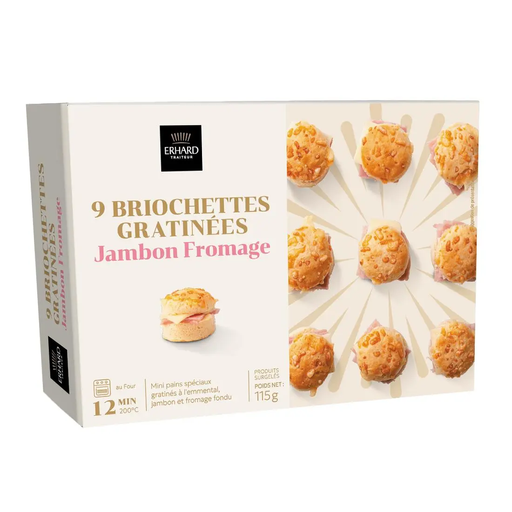 Image unavailable
Worth considering if you want savoury bites to share without cutting them up, as long as you can prepare them before you set off. The product is frozen and must be thoroughly cooked before eating. If you plan to eat it later during your journey, check the storage and transport instructions after cooking. It contains wheat, milk, eggs and pork ham, among other ingredients.
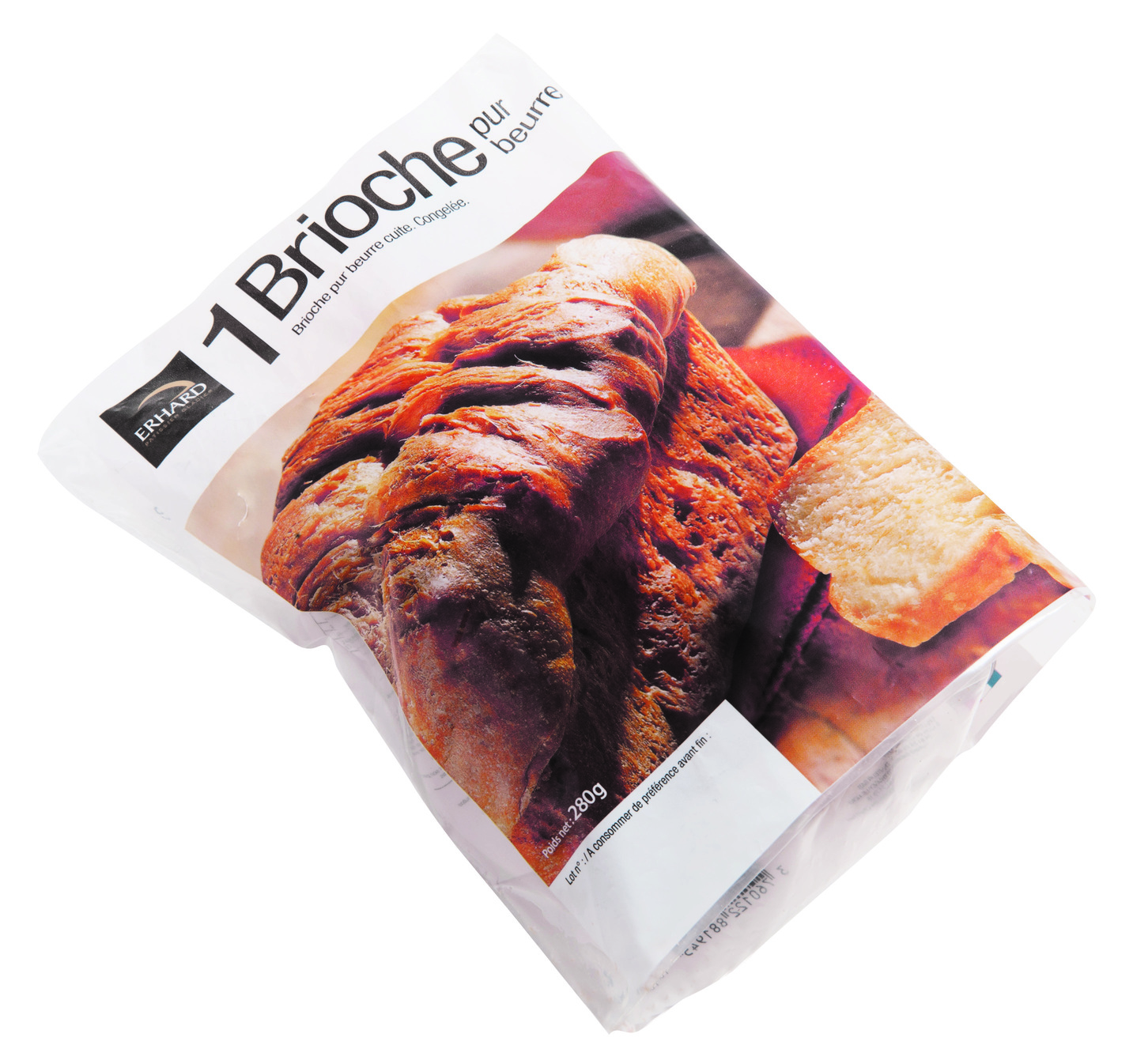 Image unavailable
This format may suit a break where you plan to portion it yourself. Check whether it is sliced and how many portions you want to take: 280 g is not an individual serving. The information provided lists wheat, eggs and milk, as well as possible traces of soya, nuts and sesame. Check the packaging of the product you buy.
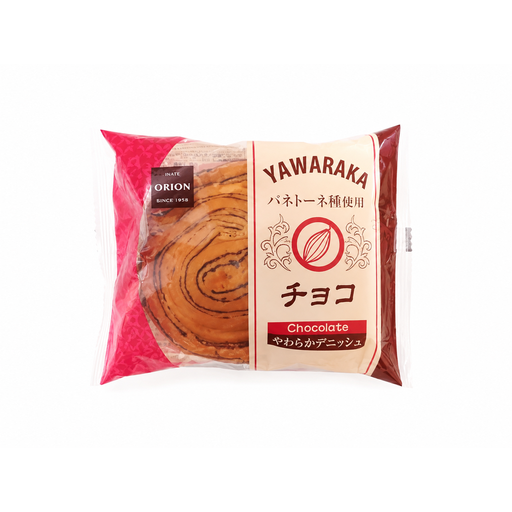 Image unavailable
The individual pack is handy if you want to take a snack without having to keep a large pack open. Before buying it as brioche, check the product name and ingredients on the packaging: the descriptions provided use both “brioche” and “chocolate bread”. The information provided lists wheat and soya, with possible traces of milk and eggs.
Check the allergens for the product you buy, paying particular attention to wheat, eggs and milk. These ingredients appear in the listings for the Carrefour brioches we reviewed. Also check any warnings on the packaging, rather than guessing the ingredients from the recipe name alone.
No. On its own, it doesn’t tell you about the portion size, ingredients or nutritional values. Compare the ingredients lists and nutritional information for products in the format you’re looking for. The DGCCRF notes that pre-packed food labels include, among other things, an ingredients list and a nutrition declaration.
Yes, if you can prepare the amount you want before setting off. The Vendée IGP brioche listed by E.Leclerc weighs 650 g. If you want to eat a single portion on the road without cutting it up, individually portioned brioche will be easier to serve.
Follow the storage instructions on the packaging. For example, the listing for an Auchan plain brioche says to store it at room temperature. If you add a filling that needs to stay chilled, follow its specific storage instructions during transport too.