Households that buy brioche regularly
Whether it’s for breakfast or a snack, the pack weight and number of slices can help you work out how much to buy.


For your regular shop, choose an amount of brioche your household can eat within the storage period stated on the packaging. A larger pack may be suitable for several breakfasts; if you only eat brioche occasionally, a smaller pack will be easier to finish. Also check the recipe and allergens for the specific product you choose.
Whether it’s for breakfast or a snack, the pack weight and number of slices can help you work out how much to buy.
A larger pack of sliced brioche can be enjoyed over several occasions, provided you can finish it by the date on the pack and follow the storage instructions.
If ingredients, allergens or a claim on the packaging influence your choice, check the exact product rather than relying on the brand name alone.
Start by considering how much you’ll use, then compare the recipe of each brioche you’re considering.
| Criteria | What to check | Who is it for? |
|---|---|---|
| Amount you buy | Compare the net weight and, where stated, the number of slices in similar brioche products. | If brioche is a regular part of your breakfast, you’ll want to know how much each pack contains to plan your shop. Around 42 % of consumers prioritise comparing pack sizes. |
| Pack size to suit you | Choose a pack that fits how often you eat brioche; check the date and storage instructions. | If you only eat brioche occasionally, you’ll probably prefer a pack you can finish. Finding a pack size that suits your eating habits is the top priority for around 25 % of consumers. |
| Recipe and label | Read the ingredients list, check which allergens are highlighted and review the nutritional information for the specific product. | If you need to take a particular ingredient or claim into account, the product’s composition will guide your choice. This is the top priority for around 33 % of consumers. |
The products considered here include pack sizes from 450 g to 700 g. A large pack may not be the best choice if you only eat brioche occasionally.
Before choosing, consider the pack weight alongside your habits, and check the date and storage instructions.
A claim such as “no additives” or “no added sugars” applies to a specific product; it doesn’t describe the entire range or its allergens.
Check the ingredients and nutritional information for the product you choose. The Directorate-General for Competition, Consumer Affairs and Fraud Control reminds shoppers that allergenic ingredients must be highlighted on the label.
These ranges include sliced brioche in several pack sizes.
One 680 g sliced brioche carries a “no additives” claim.
The products listed include a 450 g sliced brioche and another labelled “30% less sugar”.
The Auchan category includes several own-brand sliced brioches.
One 450 g sliced brioche is labelled “no added sugars”.
This 280 g brioche may suit you for breakfast or a snack. Compare the pack size with your usual needs before choosing.
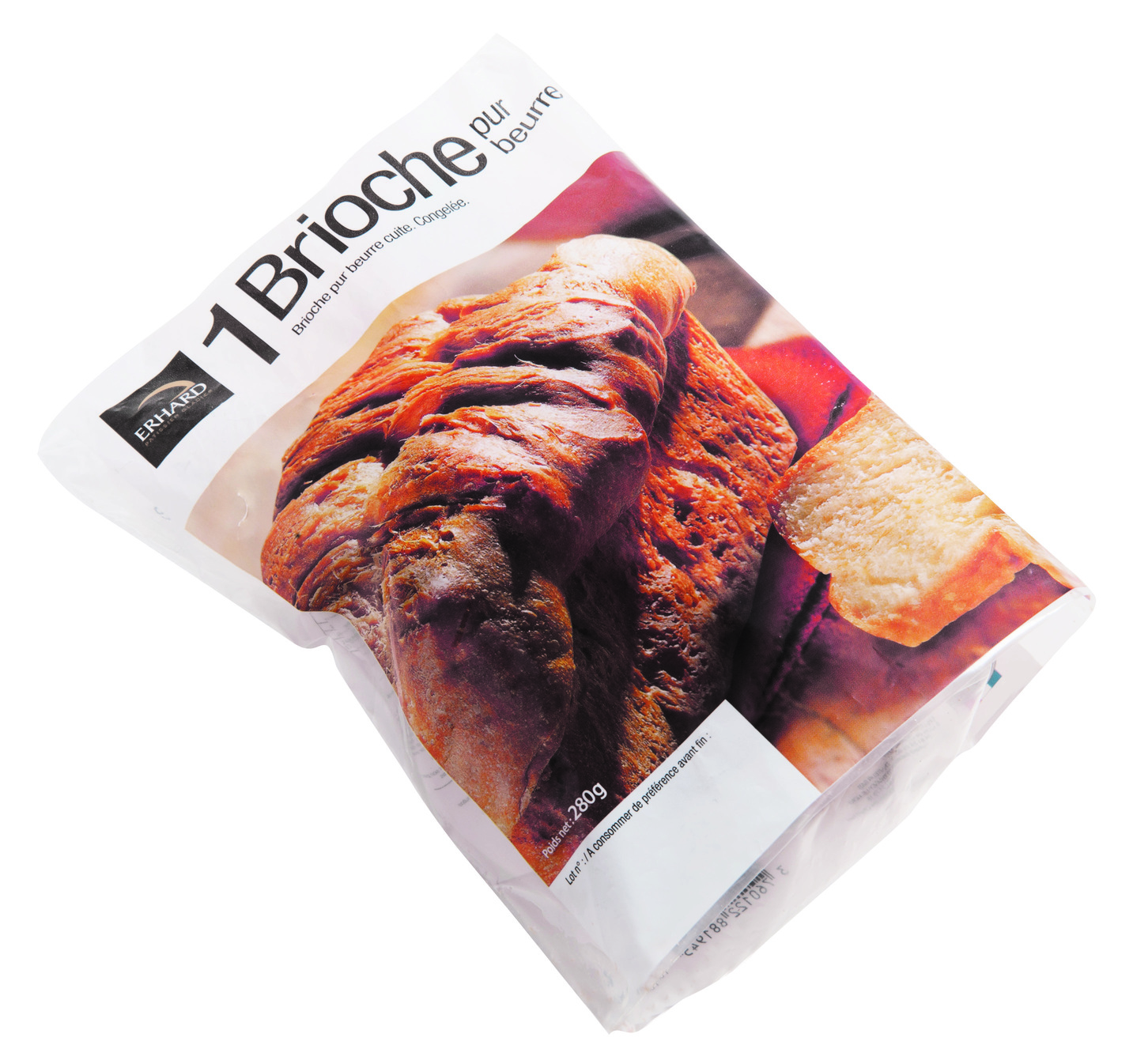 Image unavailable
This 280 g pack may be a good option for breakfast or a snack. Check the ingredients, allergens and storage instructions on the packaging.
Read the ingredients list for the product you’re buying. The Directorate-General for Competition, Consumer Affairs and Fraud Control says allergenic ingredients must be highlighted there. Don’t assume a brioche has the same ingredients as another product from the same brand.
No. Check whether the packaging shows a use-by date (DLC) or a best-before date (DDM), then follow the storage instructions. The Ministry of the Economy states that a use-by date is a strict deadline.
No. This claim applies to a specific product, so check its ingredients list, allergens and nutritional information too. It doesn’t automatically describe other brioches from the same brand.