People avoiding added sugars
You’d like to keep brioche on the breakfast menu, but are looking for a recipe described as having ‘no added sugars’. This claim is different from the total sugars shown in the nutrition information.


When doing your food shop in retirement, choose a brioche labelled ‘no added sugars’ if your priority is avoiding added sugar in the recipe. If you’re more interested in comparing sugar content, check the ‘of which sugars’ line per 100 g. A brioche labelled ‘no added sugars’ may still contain sugars: according to the National Consumer Institute, the claim ‘sugar-free’ means a maximum of 0.5 g of sugars per 100 g for a solid food. The two Harrys ‘less sugar’ brioches mentioned here contain 9.3 g and 10 g of sugars per 100 g respectively, according to Harrys and Auchan.
You’d like to keep brioche on the breakfast menu, but are looking for a recipe described as having ‘no added sugars’. This claim is different from the total sugars shown in the nutrition information.
You’d prefer a soft brioche and want to compare products on a like-for-like basis. The ‘of which sugars’ values per 100 g let you compare the figures given by Harrys for its sliced brioche and by Auchan for its braided brioche.
A claim about sugars won’t tell you whether a product is suitable for your dietary requirements. Check the ingredients list and allergens for the product you’re buying, as well as its format and nutritional values.
When choosing breakfast as part of your food shop in retirement, start with what matters most to you: added sugar in the recipe, total sugar content or how convenient the product is to use.
| Criteria | What to check | Who is it for? |
|---|---|---|
| Added sugars | Look for the exact claim, then check ‘of which sugars’ per 100 g: the two details answer different questions. | If I want to keep brioche in my diet without added sugar in the recipe, I should also bear in mind that it may contain naturally occurring sugars. Around 46% of consumers prioritise avoiding added sugar. |
| Total sugars | Compare ‘of which sugars’ per 100 g across the products you’re considering, then take into account the portion you serve. | I’d like to keep eating soft brioche, but the sugar content on the label is what guides my choice. Around 36% of consumers share this priority. |
| Format and label | Check whether the product is sliced or needs portioning, along with its ingredients and allergen information. | For my usual breakfast, I want a convenient format and to be able to check the ingredients and allergens first. Around 18% of consumers prioritise these factors. |
The first claim is about adding sugars to the recipe; it doesn’t necessarily mean there are no sugars in the finished product. The National Consumer Institute says that a solid food labelled ‘sugar-free’ must contain no more than 0.5 g of sugars per 100 g.
Check the claim on the packaging alongside the ‘of which sugars’ line per 100 g, especially if you’re looking for this specific threshold.
A reduction compared with a reference product doesn’t, by itself, tell you how much sugar is in the brioche you’ve chosen. Harrys states that its ‘less sugar’ sliced brioche contains 9.3 g of sugars per 100 g; the Auchan product page gives 10 g per 100 g for the braided version.
Compare the values per 100 g first, then take into account the portion you plan to serve.
A claim about sugars doesn’t describe the other ingredients. The brioches listed by the manufacturers and retailers mentioned contain wheat and eggs, among other ingredients; precautionary ‘may contain’ statements vary by product.
Check the ingredients list and allergen information on the pack you’re actually buying.
These products illustrate different options: a brioche with no added sugars, brioches with less sugar and a rusk, which is only a substitute for brioche if you’re happy with its texture.
Carrefour lists a 450 g pack of La Boulangère sliced brioche with no added sugar. It’s worth considering if avoiding added sugars is your priority and you’d like pre-sliced brioche.
Harrys offers ‘less sugar’ brioche in both sliced and braided formats. These products advertise a reduction; they are not ‘sugar-free’ brioches.
Brioche Pasquier makes wheat rusks with no added sugars. They may be an option for breakfast if you’re happy to swap brioche for something crunchy.
If you’re happy to choose something crunchy instead of brioche, these wholemeal Swedish crispbreads offer another way to put together your breakfast. They won’t meet your needs if you want to keep the soft texture of brioche.
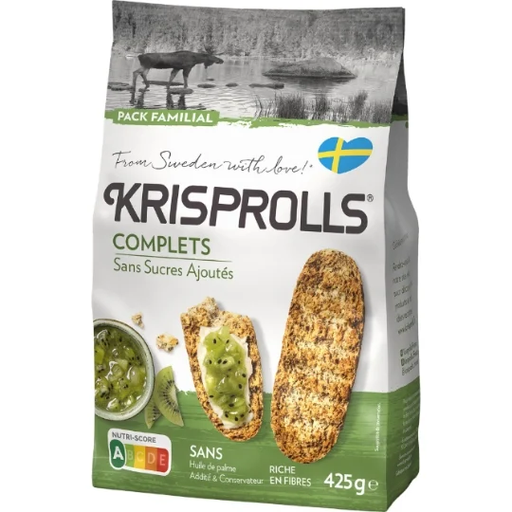 Image unavailable
Worth considering if you prefer a crunchy option and aren’t looking for the texture of brioche. The pack is listed as 425 g; the ‘no added sugars’ claim doesn’t replace checking ‘of which sugars’ and the allergens on the packaging.
No. Sugars that occur naturally in the ingredients may still appear in the ‘of which sugars’ value. According to the National Consumer Institute, the ‘sugar-free’ claim means a maximum of 0.5 g of sugars per 100 g for a solid food, so check the nutritional information for the brioche you’re considering.
No, not the two products mentioned here: Harrys states that its ‘less sugar’ sliced brioche contains 9.3 g of sugars per 100 g, while Auchan gives 10 g per 100 g for the braided version. These values help you compare the products, but they exceed the threshold for the ‘sugar-free’ claim given by the National Consumer Institute.
Read the ingredients list and allergen information for the exact product before buying. Don’t assume you know the ingredients in a brioche or rusks based only on a claim about sugars.