Households planning a breakfast to share
For a back-to-school breakfast or a family meal, you could choose a recipe with a clearly listed set of ingredients, or look for the Label Rouge mark on the product you choose.


For a back-to-school breakfast to share, choose according to what matters most to you: a Label Rouge brioche if you’re looking for an official mark of superior quality, or a recipe made with pure butter whose ingredients you can check. If brioche is a regular afternoon treat, compare the sugar, fibre and portion sizes instead. Manger Bouger recommends limiting pastries as an everyday choice and varying your snacks.
For a back-to-school breakfast or a family meal, you could choose a recipe with a clearly listed set of ingredients, or look for the Label Rouge mark on the product you choose.
A pre-sliced loaf makes serving easier. Compare the nutritional information per 100 g, then consider how much you’ll serve. A claim such as ‘wholemeal’ or ‘less sugar’ doesn’t tell you everything about the recipe.
The exact recipe matters more than the packaging. The DGCCRF reminds consumers that allergens must be highlighted in the ingredients list of prepacked foods. Also check the packaging of the product you buy for any ‘may contain’ information.
For back to school, first decide whether the brioche is for an occasional shared breakfast or something you’ll serve more regularly. This will help you weigh up quality marks, ingredients and format.
| What to consider | What to check | Who is it for? |
|---|---|---|
| Quality mark | Check whether the specific product carries the Label Rouge mark and confirm its exact name. According to the French Ministry of Agriculture, this official mark distinguishes products with a higher level of quality than similar everyday products. | For a back-to-school breakfast to share, I want a clear quality mark on the packaging; around 30% of consumers prioritise this. |
| What’s in your afternoon snack? | Check the sugar, fibre and fat per 100 g, then the amount per slice if this is shown. | If brioche is a regular afternoon snack, I want to compare recipes rather than rely on their names alone; around 30% of consumers put this need first. |
| Serving at back-to-school time | Is the product pre-sliced? Also check the number of pieces and storage instructions after opening. | On busy mornings, I’d rather serve brioche without having to slice it; around 20% of consumers prioritise this convenience. |
| How much to share | Check the total weight and how many people you need to serve, bearing in mind how to store the product after opening. | For a small household, I want an amount that matches the portions we’ll actually eat; around 20% of consumers put this first. |
‘Pure butter’ describes the type of fat used, not the amount of sugar. A wholemeal or lower-sugar sliced brioche should also be judged by the nutritional information for that specific recipe.
Compare the sugar, fat, fibre and salt per 100 g, then check the amount in one slice.
Product information for some varieties lists wheat, eggs and milk, among other ingredients; it may also warn that other allergens could be present. The word ‘premium’ doesn’t tell you what ingredients are in the product.
Read the ingredients list and any ‘may contain’ information on the packaging of the brioche you buy.
A family-sized brioche can work well for a meal to share, but you may have portions left over if only a few people are eating.
Match the weight and number of portions to your needs, then follow the storage instructions after opening.
Organic production and nutritional values describe different aspects of a product. An organic label doesn’t mean you can skip checking the ingredients of a particular brioche.
If organic production is your priority, also check the sugar, fat, allergens and portion size.
The range includes sliced brioches, including wholemeal and lower-sugar recipes highlighted by Harrys. Their format can make serving an afternoon snack easier.
The pure butter Nanterre brioche listed by Carrefour is worth considering for a breakfast to share.
The 500 g pure butter Vendée brioche listed by E.Leclerc carries the Label Rouge, an official French mark of superior quality described by the Ministry of Agriculture.
The 800 g pure butter braided brioche listed by Auchan is a large format for a family breakfast.
For a back-to-school breakfast to share, this selection features a 280 g pure butter brioche. Check its ingredients and packaging against your household’s needs.
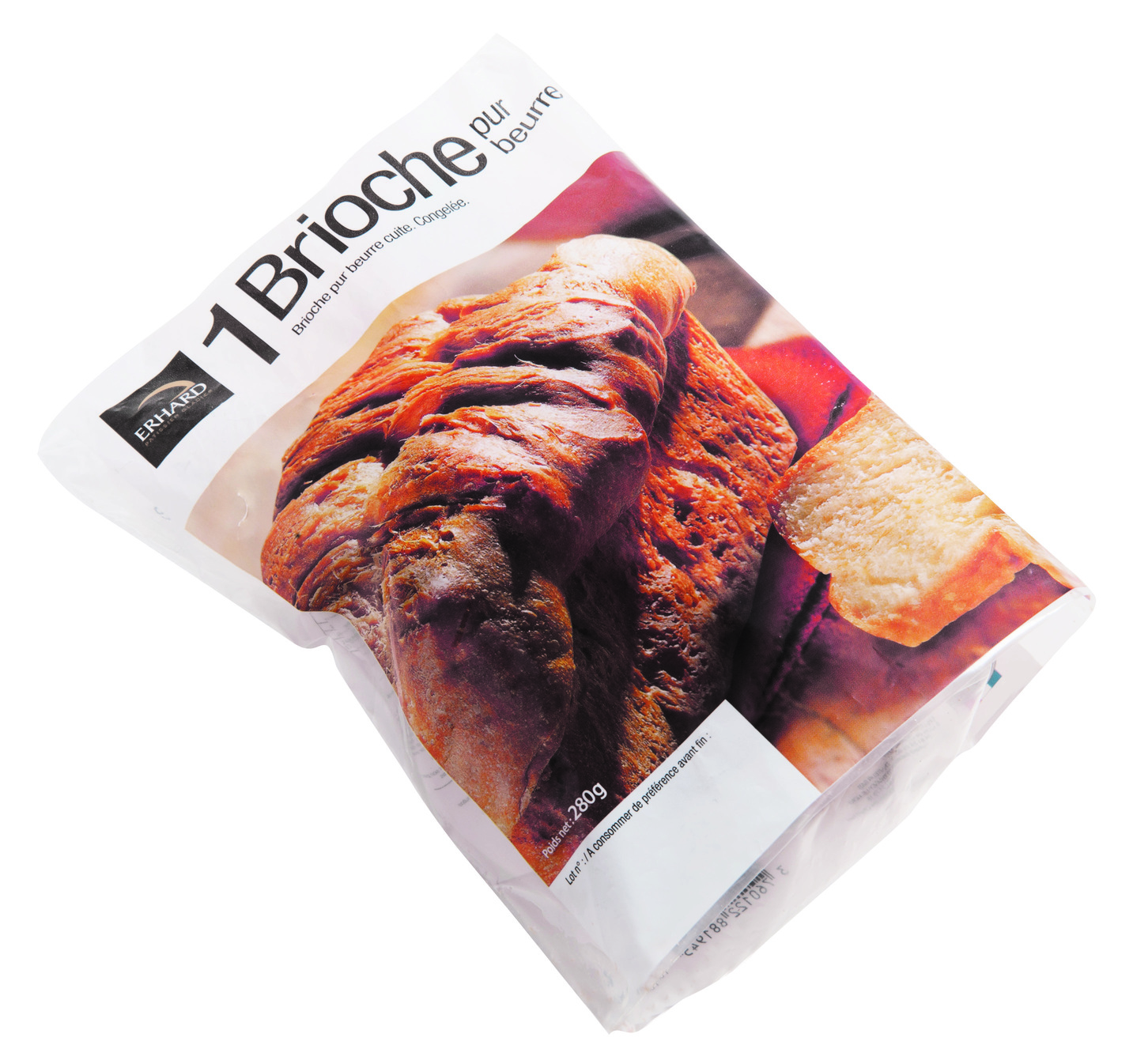 Image unavailable
Consider this for a breakfast to share if you’re looking for a 280 g pure butter brioche. If you have an allergy, check the packaging for wheat/gluten, egg and milk, as well as any possible traces of soya, nuts and sesame listed for this product.
The word ‘premium’ isn’t enough to answer that. Manger Bouger recommends limiting pastries and other fatty or sugary foods as everyday choices, and varying your snacks. Consider how often you serve brioche and the portion size you offer.
According to the French Ministry of Agriculture, the Label Rouge is an official French mark that distinguishes products with a higher level of quality than similar everyday products. On its own, it doesn’t tell you about the sugar, allergens or portion size that’s right for you.
Read the packaging for the product you’ve bought. The recipes featured here may list wheat/gluten, eggs or milk, among other ingredients, and may also include warnings about traces. The DGCCRF states that allergens must be highlighted in the ingredients list of prepacked foods.
No: ‘pure butter’ doesn’t tell you how much sugar the brioche contains. To compare two recipes, check their nutritional information per 100 g, then look at the figures per slice or portion if these are shown on the packaging.
Sliced brioche makes serving easier if you regularly prepare portions. A large format is better suited to sharing, provided there’s enough for everyone. In either case, check the packaging for storage instructions after opening.