If you’re entertaining
For brunch, afternoon tea or another occasion to share, you might look for a Vendée brioche with IGP status or a product carrying the Label Rouge mark, then choose a pack size that suits your table.


For brunch or a gathering, choose a Vendée brioche with IGP status if its regional identity matters to you, or one that carries the Label Rouge mark if you’re looking for this official quality label. If the recipe is your priority, look for a pure butter brioche; for quick, easy toast, a pre-sliced loaf may be more practical. In every case, check the ingredients and pack weight before confirming your click-and-collect order.
For brunch, afternoon tea or another occasion to share, you might look for a Vendée brioche with IGP status or a product carrying the Label Rouge mark, then choose a pack size that suits your table.
If the brioche needs to be spread or popped in the toaster quickly, a pre-sliced loaf saves you the job of cutting it. Just make sure the recipe and pack size suit your needs.
The ingredients list, allergen information and nutritional values will help you compare two products more effectively than the word “premium” on the packaging alone.
When choosing a brioche for a special occasion or a more indulgent breakfast through click and collect, start with what matters most to you, then check the details for the exact product.
| Criteria | What to check | Who is it for? |
|---|---|---|
| Official quality mark and regional identity | Look for the IGP Brioche vendéenne or Label Rouge mark on the specific product, and check its weight too. | When I’m entertaining, I want to be able to identify an origin or official quality mark rather than rely on the look of the pack alone. Around 36% of consumers put this first among their needs. |
| Serving and slicing | Check whether the brioche is pre-sliced and whether the pack size provides enough portions for your guests. | When you need toast ready quickly, slicing a whole brioche adds an extra step. Ease of serving is the main consideration for around 29% of consumers. |
| Recipe and ingredients | Read the ingredients and allergen information; compare the nutritional values per 100 g. | If I need to check what each portion contains, the recipe matters more than the product’s presentation. It’s the top priority for around 21% of consumers. |
| How much to serve | Match the net weight to the number of guests and how long you expect the pack to last. | For a small gathering, a large pack may leave you with leftovers; for a crowd, a small one may not be enough. Around 14% of consumers put getting the right quantity first. |
The words “pure butter” describe the recipe; they don’t mean that the brioche has IGP status or carries the Label Rouge mark.
If an official quality mark is important to you, look for it explicitly on the product details and packaging. Otherwise, compare the ingredients directly.
The recipes listed by Brioche Pasquier, Carrefour and E.Leclerc contain different ingredients, including wheat, eggs or butter depending on the product. A photo won’t tell you which allergens are present.
Read the ingredients list for the brioche you’ve chosen before ordering, then check the label on the pack you receive if you need to avoid a particular ingredient.
The products mentioned include 400 g, 600 g and 650 g packs, for example; they won’t provide the same number of portions.
Estimate how much you’ll need and check the net weight as well as the date shown on the pack.
A pack that’s too small may mean another trip to the shops; one that’s too large may leave you with leftovers.
Harrys describes its braided brioche as “no additives”, while also noting that it contains ingredients with a similar function. This claim alone doesn’t tell you about its sugar, fat or allergens.
Check the full ingredients list and compare the nutritional information per 100 g.
Its Brioche Tranchée Nature is a handy option if you need toast or portions ready to serve quickly.
Its braided brioche is worth considering if you’d prefer to slice it at the table.
Carrefour lists a 600 g Reflets de France pure butter Vendée brioche, ideal for sharing.
The range includes a 650 g Vendée brioche with IGP status, as well as a separate Vendée gâche.
Its online bakery range separates brioche and gâche from milk rolls and mini brioches.
The retailer can be a useful point of comparison when buying pastries in store.
This 280 g product is a good match if you’re looking for a pure butter brioche. If you want one with IGP status or the Label Rouge mark, check separately that the specific product you choose carries it.
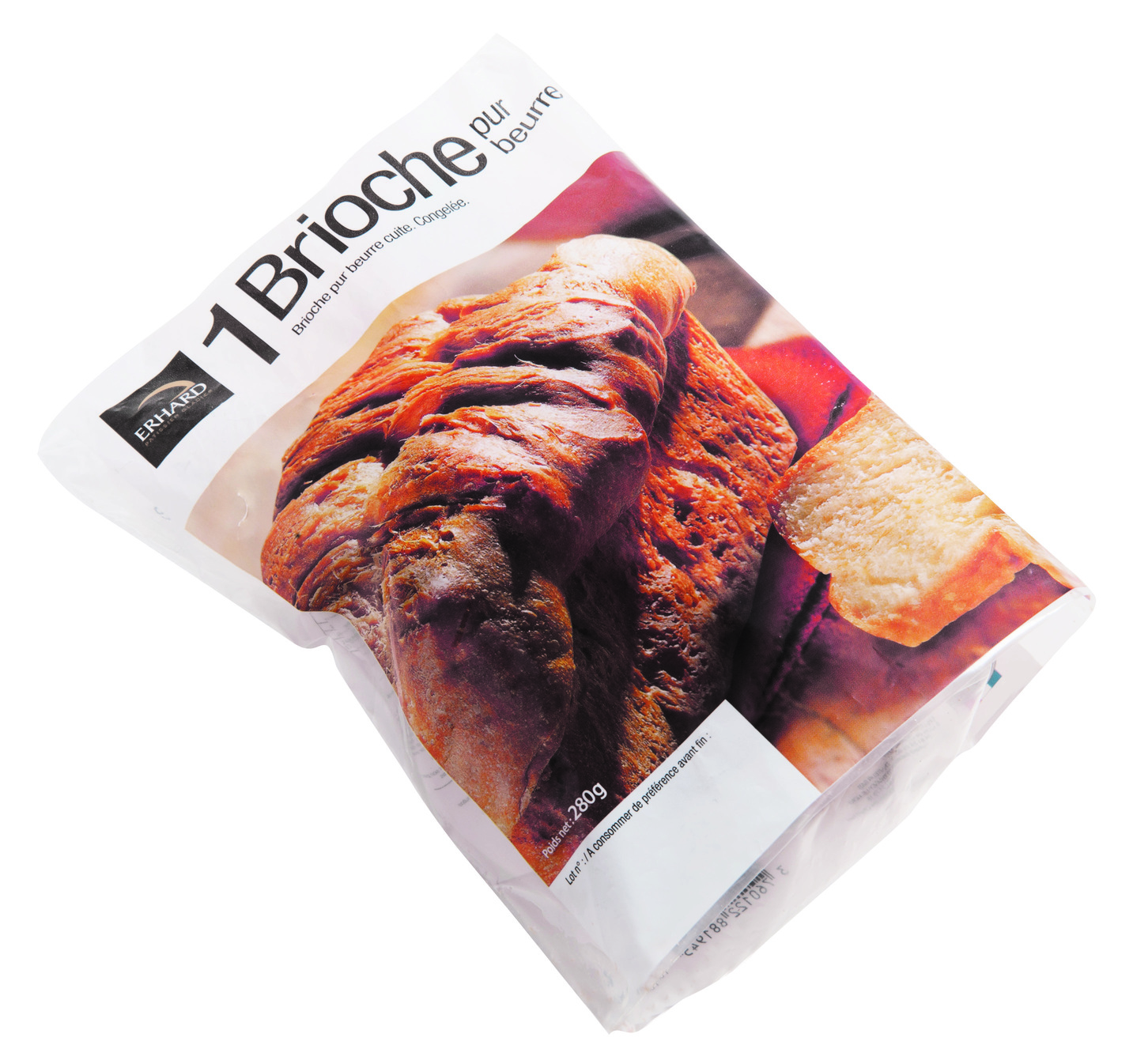 Image unavailable
For a small gathering, check whether the pack provides enough portions for everyone. This pure butter brioche weighs 280 g; check the product details and packaging for the ingredients, allergens and any official quality mark.
The French National Institute of Origin and Quality describes Brioche vendéenne IGP as a pastry traditionally made in Vendée. This mark identifies the product’s geographical indication; it doesn’t replace checking the ingredients or allergen information.
No. “Pure butter” describes an aspect of the recipe, whereas Label Rouge is an official quality mark linked to a set of specifications. Look for the Label Rouge mark on the specific brioche you’re thinking of ordering.
Compare the nutritional values per 100 g, then check the net weight and the portion you plan to serve separately. The DGCCRF states that nutritional information for pre-packed foods is given per 100 g or 100 ml to make comparisons easier.
Check the allergen information for the exact product on its listing, then check the packaging when it arrives. The brioches listed by Brioche Pasquier and E.Leclerc contain ingredients such as wheat, eggs or butter, depending on the recipe; don’t assume another brioche has the same ingredients.