What should you look for?
First decide how you’ll serve the brioche, then check the quantity and the label of the product you choose.
| Criteria |
What to check |
Who is it for? |
| Presentation and sharing |
Whole or plaited shape, weight and stated number of servings. |
I want to bring a brioche to the table and let everyone take a slice, even if I need to cut it first. Around 42% of consumers put sharing first. |
| Ease of serving |
Pre-sliced or individual portions; total quantity in the pack. |
If I’m making toast or want to avoid slicing the brioche during coffee, the format comes first. This convenience is the top priority for around 33% of consumers. |
| Ingredients and dietary restrictions |
Ingredients list, allergens and nutritional information per 100 g. |
Before serving, I need to make sure the recipe suits any known dietary restrictions my guests have. For around 25% of consumers, ingredients come first. |
When comparing the recipes of two pre-packed brioches in different sizes, the nutritional values per 100 g give you a consistent basis for comparison. The DGCCRF states that this is the standard basis for presenting nutrition information when it is required. It doesn’t replace checking the ingredients and allergens.
Brands to consider
These examples can help you compare formats and recipes. The details mentioned apply to the specific products listed, not every brioche from that brand.
Brioche Pasquier
An option for serving toast: the brand describes its Brioche Tranchée Nature as ready sliced.
- Carrefour also lists a 650 g family-sized Brioche Pasquier sliced brioche.
- Check the ingredients of the product you choose: a pre-sliced format doesn’t tell you what’s in the recipe.
Harrys
Harrys’ range includes plaited and sliced brioches, as well as other varieties, giving you different serving options to compare.
- The range of shapes lets you choose between a brioche to share and portions that are easy to hand out.
- Read the label for each variety: a feature advertised for one product may not apply to the others.
Carrefour Traiteur
An option for serving brioche at the table: Carrefour Traiteur advertises a 500 g pre-sliced, pure butter plaited brioche as serving six.
- The stated weight and number of servings give you useful details for planning how to serve it.
- Check the ordering terms and ingredients of the product you choose before your get-together.
Epi d’Or, Marque Repère
E.Leclerc’s range includes sliced brioches and other formats to compare, depending on how you plan to serve them.
- E.Leclerc lists a 500 g sliced Epi d’Or brioche among its products.
- Check the weight, ingredients and allergens for each product individually.
La Boulangère
Auchan lists an 800 g pure butter plaited brioche that you could consider for coffee with a larger group.
- Knowing the weight makes it easier to compare this family-sized format with other products.
- The recipe and storage instructions are specific to this brioche, so check the packaging before serving.
A brioche to consider on Joybuy
If you want to start by comparing ingredients, this 280 g brioche gives you a specific product to consider. Check the packaging to see whether its format is right for the coffee get-together you have in mind.
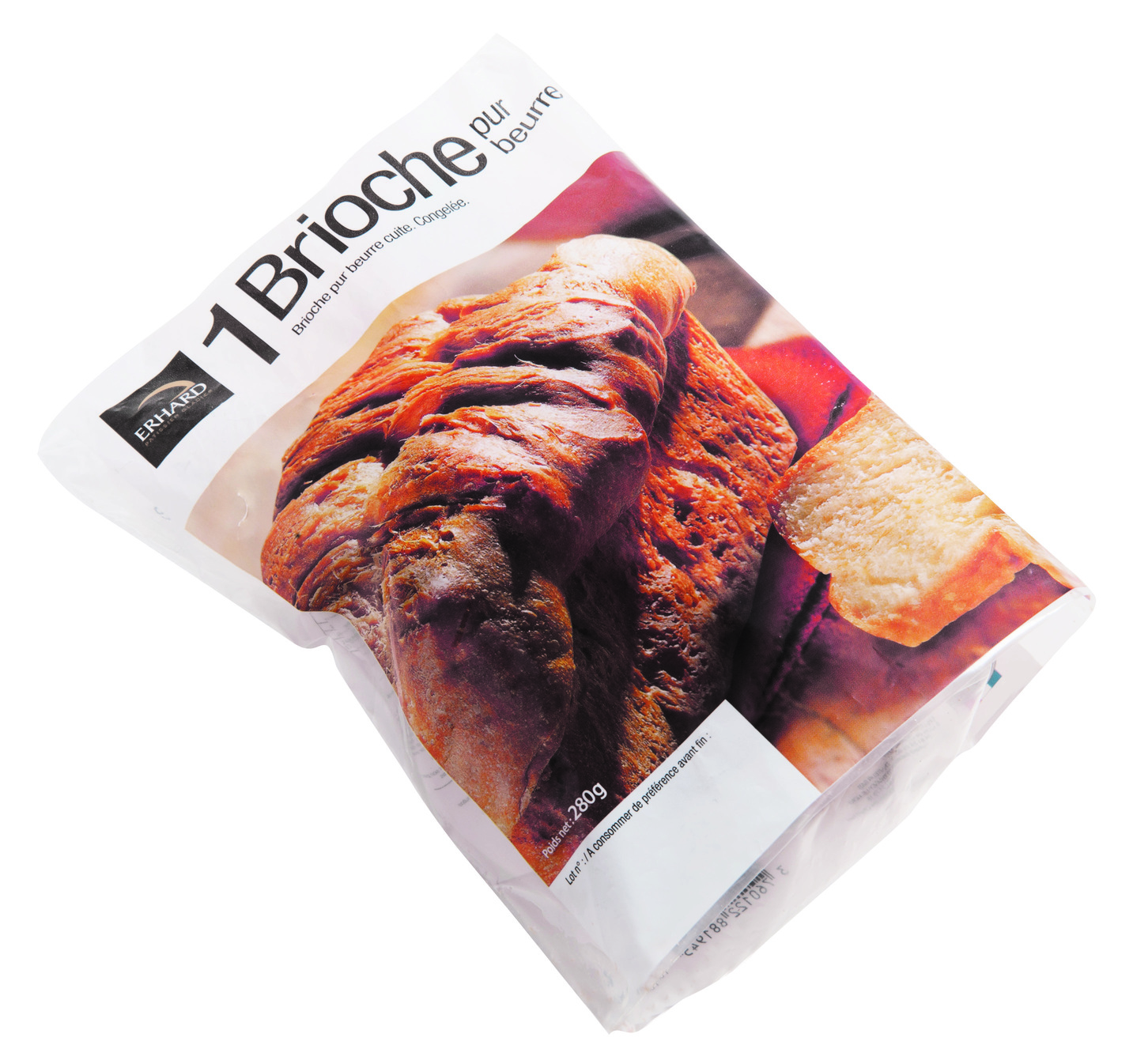 Image unavailable
ERHARD Pure Butter Brioche 280 g
Worth considering if the recipe is your main priority when choosing a brioche for coffee with friends. The pack weighs 280 g. Check its ingredients list and allergens before serving, along with how it’s presented and how many portions you can get if you’d rather not slice it yourself.
View on Joybuy
Frequently asked questions
What should I check on a pack of brioche before guests arrive?
Check the net weight, date, ingredients and allergens on the pack you’ve chosen. If you’re comparing two recipes, look at their nutritional values per 100 g rather than comparing portions of different sizes.
Is a pure butter brioche necessarily a better choice for coffee with friends?
Not necessarily: the format and number of portions also matter when it comes to serving. To find out more about a recipe advertised as pure butter, check the ingredients and, if stated, the proportion of butter in that specific product. Don’t assume the same details apply to other brioches.
Is ‘no additives’ enough to help me choose a brioche?
No. This claim doesn’t tell you about all the ingredients or the full nutritional information. If these details matter to you or your guests, check the ingredients list, allergens and values per 100 g for the specific brioche.
How should I store a packaged brioche until coffee time?
Follow the date and storage instructions on its packaging. Don’t automatically apply the instructions for one packaged brioche to a fresh brioche or another product.
Where can I find the allergens in a pre-packed brioche?
Check the product’s ingredients list: the DGCCRF says that allergenic ingredients must be highlighted there. Also check the packaging of the exact product you’ll serve for any ‘may contain’ warnings.


