People eating shortly before a session
A brioche that’s easy to portion lets you factor in how long you have before exercising. The recipe and portion size you choose will also depend on what you usually tolerate well.


When choosing brioche as a pre-workout snack, compare the carbohydrate content per 100 g, then calculate how much you’ll get from the portion you plan to eat and consider how long you have before your session. Also check the fat content, ingredients and allergens. Sourdough tells you something about the recipe, but it doesn’t prove that the brioche is artisan-made or easier to digest.
A brioche that’s easy to portion lets you factor in how long you have before exercising. The recipe and portion size you choose will also depend on what you usually tolerate well.
If sourdough is one of your criteria, check the ingredients list rather than judging by the brioche’s appearance. Brioche Pasquier says its Brioche Tranchée Nature contains 8% sourdough starter; the recipe also contains yeast.
The Brioche Pasquier and Carrefour Traiteur products described here contain wheat, eggs and butter or milk, among other ingredients. Check the allergen information for the specific product and pack size you’re buying.
If you’re considering brioche before physical activity, start with your portion size and how long you have before your session, then check the exact recipe.
| What matters | What to check | Who is this for? |
|---|---|---|
| Carbohydrates and portion size | Carbohydrates per 100 g; weight of the portion you’ll eat. | If I want to know how many carbohydrates are in my snack, the weight of the whole brioche isn’t enough to work out how much is in my slices. Around 33% of shoppers put portion size at the top of their list. |
| How well it sits before a session | Fat per 100 g; portion size in relation to how much time you have. | When my session is coming up soon, I prefer to choose a recipe and portion size I already know I tolerate well. This pre-exercise comfort is the priority for around 25% of shoppers. |
| Sourdough and ingredients | Whether sourdough appears in the ingredients; any other raising agents and additives listed. | If I’m specifically looking for sourdough, I want to be able to spot it in the recipe without assuming the brioche is artisan-made. It’s the main criterion for around 25% of shoppers. |
| Allergens and labelling | Allergens in the specific product; storage instructions on the packaging. | If I need to avoid an ingredient, the brand name doesn’t replace checking the label on the product I’m buying. Around 17% of shoppers prioritise this check. |
Brioche Pasquier’s Brioche Tranchée Nature combines sourdough starter with yeast and an emulsifier. So, the presence of sourdough alone doesn’t tell you everything about how the brioche is made or how well you’ll tolerate it.
Read the ingredients for the specific product and choose according to what matters to you. Don’t assume that ‘sourdough’ means it will be easier to digest.
The weight of a pack or a claim such as ‘less sugar’ doesn’t tell you how many carbohydrates are in your portion. To compare two recipes, use the nutrition information per 100 g, then factor in the weight you plan to eat.
Check the nutrition information and ingredients for each product rather than assuming they’re the same as another brioche in the range.
The examples listed by Brioche Pasquier and Carrefour Traiteur contain wheat, eggs and butter or milk. You should check the ingredients for each product.
Read the highlighted allergen information on the packaging when you buy it, even if you’re already familiar with the brand.
Worth considering if you’re looking for sliced brioche with sourdough starter in the ingredients.
A range to explore if you’re more interested in the ingredients in sliced brioche than in whether it contains sourdough.
Its sliced, braided, butter-rich brioche gives you a recipe made with butter to compare with others.
E.Leclerc lists a 500 g loaf of sliced Epi d'Or brioche, which may suit you if you’re looking for this pack size.
This product may suit you if you’re looking for butter-rich brioche to portion out as a snack before a session. If sourdough is your main criterion, check the ingredients for this specific product before choosing it.
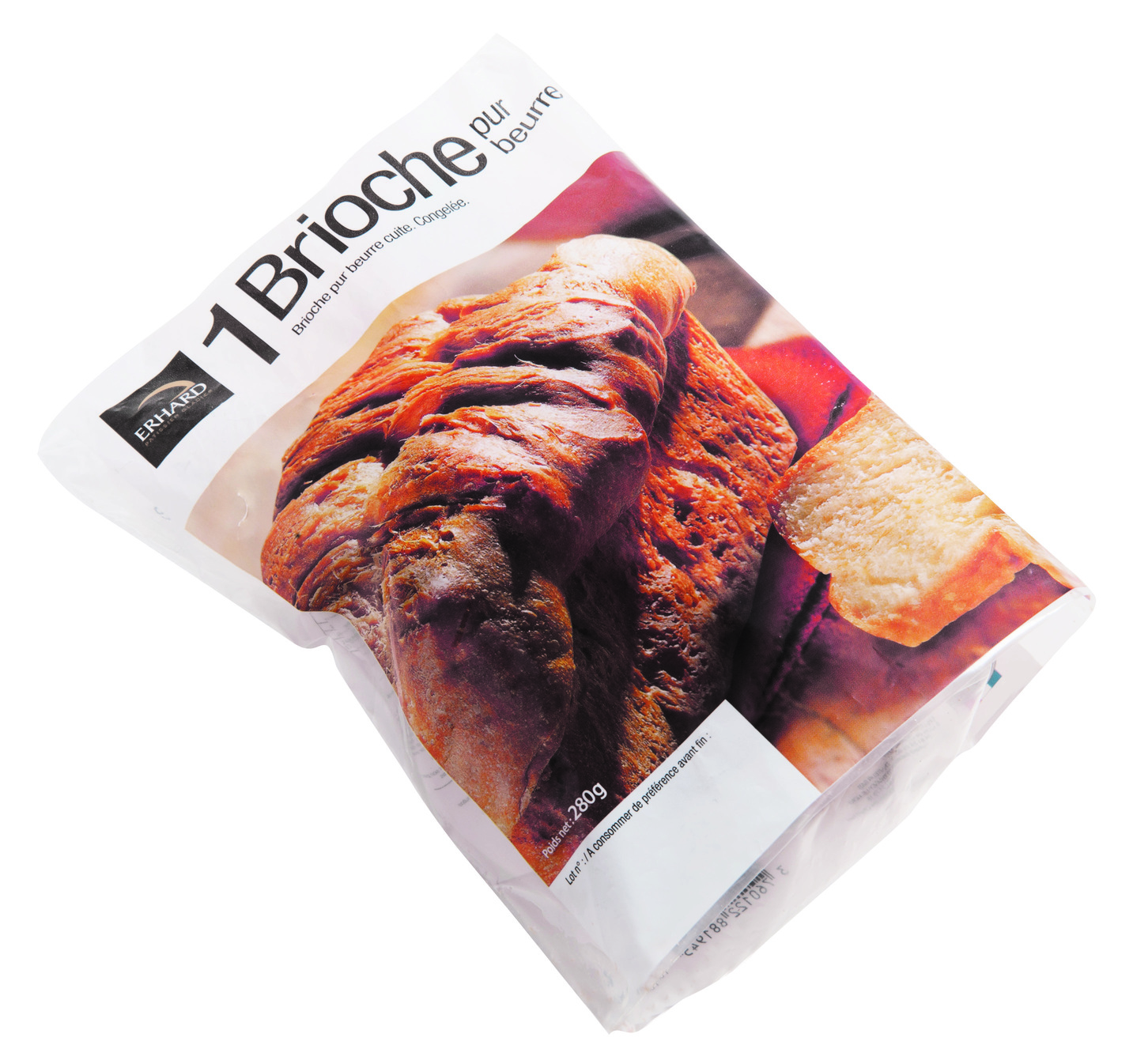 Image unavailable
A 280 g pack to consider if you want to choose your own snack portion. To calculate how many carbohydrates you’ll eat, check the values per 100 g and weigh your portion. Also check the allergens and whether sourdough is listed in the ingredients for this specific product.
No. Brioche Pasquier’s Brioche Tranchée Nature contains 8% sourdough starter, but also includes yeast and an emulsifier. Check the ingredients for the product you choose: the presence of sourdough alone doesn’t prove that it’s artisan-made.
Compare carbohydrates, sugars and fat per 100 g, then calculate these values for the weight of your portion. The ingredients list and allergen information can help you choose between recipes with similar names.
Not necessarily: the values per 100 g don’t tell you how much you’ll actually eat. Think about your portion size, how long you have before your session and how well you tolerate the recipe, particularly if it contains more fat.
Follow the instructions on the packaging. For the Pasquier organic sourdough braided brioche it lists, Auchan advises storing the product in a cool, dry place and closing the bag securely after use.
Read the ingredients list for the product you’re buying. According to the DGCCRF, allergenic ingredients must be highlighted on the labels of pre-packed foods. Don’t assume a product has the same ingredients as another brioche from the same brand.