
Livraison le jour même ou le lendemain

Qualité garantie

Débloquez vos offres de bienvenue: Livraison GRATUITE | Jusqu'à -80 % | 30 jours d'essai gratuits à JoyPlus
Téléchargez l'application
Choosing a bridge camera? It can feel overwhelming. Between the technical jargon on spec sheets and the lure of marketing, it's easy to feel lost or end up with buyer's remorse. Yet, the concept is simple: a versatile camera with a powerful zoom, but without the complexity (or the cost) of a DSLR or mirrorless model. Unfortunately, many buyers fall into common traps and end up disappointed.
As a product expert at Joybuy, I'm here to cut through the noise. Let's review the mistakes to avoid and the criteria that truly matter to help you make the right choice.
To choose the right bridge camera for you, focus on these three pillars.
The whole point of a bridge camera is its zoom. Check the power of the optical zoom, expressed as a multiplier (e.g., 25x, 40x, 52x). For a travel camera or for nature photography, a 25x zoom is an excellent starting point. For more specialised needs like wildlife photography, a 40x zoom or higher will offer more flexibility.
Always pair this criterion with the presence of optical image stabilisation (OIS). This system compensates for the photographer's micro-movements to ensure sharp shots, even when shooting handheld at maximum zoom.
Beyond megapixels, the sensor technology (CMOS or BSI-CMOS, for example) plays a key role in handling digital noise when light is scarce. Another crucial point is the lens's minimum focal length. A lens that starts at 24mm (wide-angle) is ideal for landscapes, group photos, or architecture, and will give you far greater versatility.
A good bridge camera for beginners must, above all, offer excellent handling with a deep grip that ensures stability. Essential controls (zoom, shutter, mode dial) should be within easy reach. A good-sized (3-inch) LCD screen that is readable even in bright sunlight is a significant comfort for framing and reviewing your photos.
Rather than an exhaustive list, here are a few models that cater to specific user profiles while avoiding the pitfalls we've discussed.
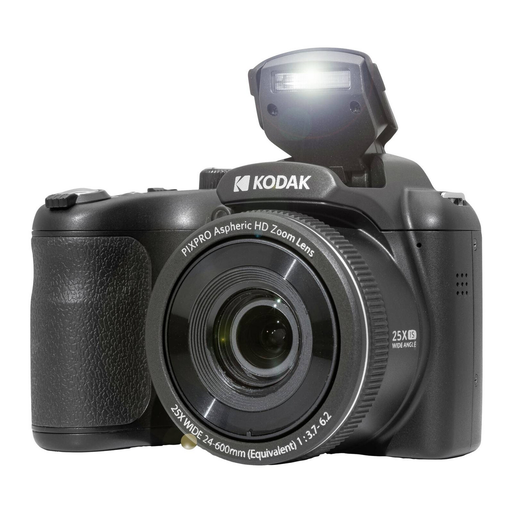
The ideal user: Perfect for those wanting to upgrade from a smartphone to a real camera without breaking the bank. It offers the ergonomics and zoom power of a bridge camera at an accessible price, making it a great companion for family photos, holidays, or local events.
This model focuses on the essentials: a very respectable 25x optical zoom, backed by optical stabilisation. It avoids the superfluous megapixel trap with its 16 MP sensor, which is more than enough for amateur use.
Its sheer simplicity, with 22 automatic scene modes, makes it an excellent bridge camera for beginners. Its 24mm wide-angle lens is a real bonus for landscapes.
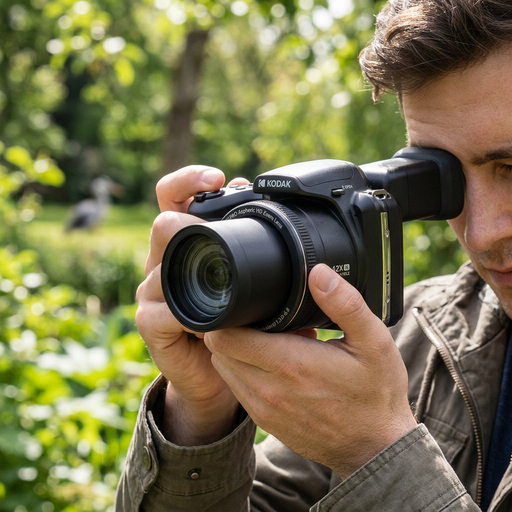
The ideal user: For those looking for a do-it-all travel companion, capable of capturing everything from vast landscapes to distant architectural details. It offers an excellent compromise between zoom power and image quality, without the bulk of multiple lenses.
The Kodak AZ425 combines a powerful 42x optical zoom with effective optical image stabilisation (OIS), making this long focal length genuinely usable. Its 20 MP BSI-CMOS sensor is a balanced choice for good performance.
Its rechargeable Li-ion battery is far more convenient for travel than disposable batteries. The combination of a 24mm wide-angle and 42x zoom covers almost any situation, making it an excellent travel camera.
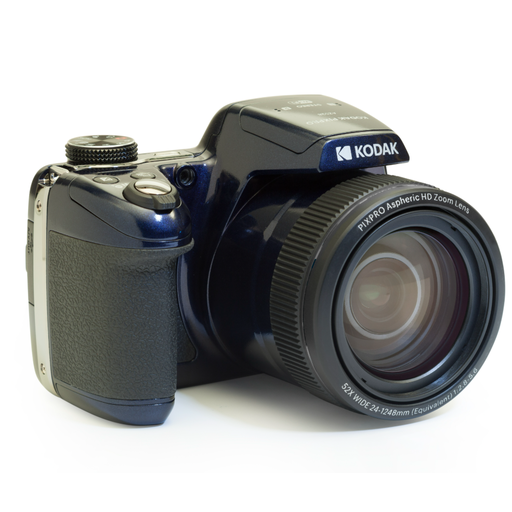
The ideal user: Designed for those whose priority is getting as close to the action as possible. Perfect for wildlife photography at the park, capturing your kids' sporting achievements from the stands, or isolating details on very distant subjects.
This model from the Kodak Astro Zoom range doesn't sacrifice quality for power. Its 52x optical zoom is its knockout feature, but it's supported by the necessary technology to make it effective. The 16 MP CMOS sensor is a smart choice for this purpose.
The 52x optical zoom is simply one of the most powerful in its class. The Wi-Fi connectivity, which allows you to transfer and share photos in an instant, is a real plus for connected photographers.
We have curated a full range of products that meet our quality standards.
A bridge camera is a fairly robust electronic device. Its lifespan primarily depends on how you care for it. By protecting it from moisture, impacts, and dust, and by taking care of its battery (avoid leaving it discharged for months), it can easily last for many years. The most sensitive part is the zoom mechanism: you should avoid forcing it.
Absolutely! A powerful zoom opens up a whole new world of creative possibilities. It will allow you to photograph birds in your garden without scaring them, take a tight portrait of your child on a sports field, or capture an architectural detail while travelling. As we've discussed, the key is to ensure the camera has good optical stabilisation to make that zoom truly usable.
It all depends on your ambitions. The bridge camera is the ultimate all-in-one solution: simple, versatile, and hassle-free. Its fixed lens covers a huge focal range, making it ideal for those who don't want the clutter or expense of a collection of lenses. A DSLR (or mirrorless camera) offers potentially superior image quality and the flexibility of interchangeable lenses, but it requires a larger budget and a steeper learning curve. For a smooth transition from a smartphone, the bridge camera is often the most logical choice.