Fans of all-butter biscuits
You’re looking for a crumbly texture and buttery flavour rather than a wholegrain biscuit. The Breton biscuits listed by Auchan, Carrefour, E.Leclerc and St Michel typically combine wheat flour, butter, sugar and eggs.


Choose a Breton shortbread biscuit if what you’re after is a buttery, crumbly biscuit; opt for a Digestive-style biscuit if you prioritise a recipe containing wholewheat. To compare them for breakfast, check the ingredients, nutritional information, allergens and portion size: the name “Digestive” does not prove that a biscuit aids digestion. If you need to avoid gluten or lactose, look for a product specifically labelled as suitable for your needs.
You’re looking for a crumbly texture and buttery flavour rather than a wholegrain biscuit. The Breton biscuits listed by Auchan, Carrefour, E.Leclerc and St Michel typically combine wheat flour, butter, sugar and eggs.
You want to compare a recipe containing wholewheat with a Breton shortbread biscuit. Carrefour’s listing for McVitie’s includes wholewheat; the name “Digestive” alone does not promise an effect on digestion.
You need to check for wheat, milk or eggs, as well as any traces listed on the packaging. If you’re looking for a gluten-free and lactose-free biscuit, check that the specific product you’re considering meets these requirements.
For a sweet breakfast, start with what matters most to you: the type of biscuit you want, its ingredients, whether it suits your dietary needs or its pack size.
| Criterion | What to check | Who is it for? |
|---|---|---|
| Buttery flavour and crumbly texture | Read the ingredients list and check the proportion of butter if it’s stated on the pack. | If I’m mainly looking for a traditional Breton shortbread biscuit to have with breakfast, the buttery recipe matters more than whether it contains wholegrains. Around 40% of consumers put this type of biscuit at the top of their list. |
| Cereals and nutritional composition | Compare whether the biscuit contains wholewheat, as well as its fibre, sugar and fat content per 100 g and per serving. | I might prefer a cereal-based recipe, but I also want to know what’s in the biscuit I’m going to eat. This is the priority for around 30% of consumers. |
| Allergens and ingredients to avoid | Check the ingredients, allergens and any traces listed on the packaging of the specific product. | If I need to avoid certain ingredients, the biscuit’s name isn’t enough to tell me whether it’s suitable. This comes before all other criteria for around 20% of consumers. |
| Pack size and portion | Check the net weight and the number of biscuits in each pack, if they’re divided into individual packs. | If I want to take a few biscuits with me in the morning, I prefer to know how many are in each pack. Around 10% of consumers prioritise this convenient format. |
McVitie’s listing published by Carrefour mentions wholewheat, but the biscuit’s name does not prove that it aids digestion. For food sold in France, the DGCCRF states that only authorised health claims may be used.
To compare recipes, look at the ingredients and nutritional information rather than assuming an effect from the name.
The Breton biscuits listed by Auchan, Carrefour, E.Leclerc and St Michel contain wheat, milk and eggs. Some products also carry warnings about possible traces.
If you have an allergy or need to avoid certain foods, check the ingredients and traces on the specific pack before buying.
A pack may contain several smaller packs, each with multiple biscuits. So the total weight alone won’t tell you how much you’ll have for breakfast.
Check the net weight and, for individually packed formats, the number of biscuits in each pack.
Whether it’s a Breton shortbread biscuit or a Digestive, it’s still a sweet biscuit. Santé publique France’s breakfast suggestions for children aged 4 to 17 include cereal products, a dairy product and fresh fruit.
Consider the portion of biscuits you’ll actually serve and what else you plan to eat, without assuming the biscuit has nutritional benefits based on its name alone.
Roudor biscuits are worth considering if you’re looking for a buttery recipe in individually wrapped packs.
Its product listings let you compare a Carrefour Bio shortbread biscuit with a McVitie’s Digestive sold by the retailer.
Two Breton shortbread biscuit options let you compare a standard pack with a freshness-preserving individual pack format.
E.Leclerc lists P'tit Deli Breton shortbread biscuits in a pack of 2 × 125 g.
Happy Digest coconut flavour is a different type of biscuit from traditional Breton shortbread.
For a sweet breakfast, this selection features a cereal biscuit to consider alongside Breton shortbread and biscuits labelled “Digestive”. It is neither a Breton shortbread biscuit nor presented as a Digestive biscuit.
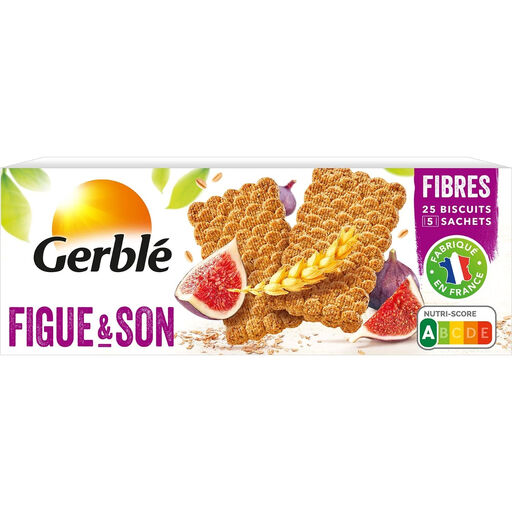 Image unavailable
Worth considering if you’d like to compare a cereal-based option with Breton shortbread biscuits for breakfast. This 210 g pack isn’t presented as a Digestive biscuit; check the label for the ingredients, nutritional information and allergens that matter to you.
No, the name alone doesn’t prove that it aids digestion. The DGCCRF states that health claims about food in France are regulated. When comparing biscuits, read their ingredients rather than interpreting the name.
The Breton shortbread biscuits listed by Auchan, Carrefour, E.Leclerc and St Michel contain wheat, milk or butter, as well as eggs. Check the label of the product you buy, including any trace warnings, rather than assuming this description applies to every recipe.
Compare the ingredients and nutritional information on a like-for-like basis, particularly per 100 g, then consider the portion you plan to eat. Fibre, sugars, fat, saturated fatty acids and allergens each tell you something different; no single figure tells you everything about a biscuit.
Follow the storage instructions on the pack and keep the biscuits protected from moisture. If the product comes in individual packs, check which ones will remain sealed after you open the outer pack.