
Livraison le jour même ou le lendemain

Qualité garantie

Débloquez vos offres de bienvenue: Livraison GRATUITE | Jusqu'à -80 % | 30 jours d'essai gratuits à JoyPlus
Téléchargez l'application
Expressing breast milk quickly means having to store, date, freeze and then defrost several portions. However, not all breast milk storage bags are created equal. An awkward closure, an unsuitable capacity or a misinterpreted temperature indicator can lead to waste and unnecessary purchases.
Before placing your order, there are three common pitfalls to watch out for:
180 ml breast milk storage bags are suitable for typical portions and generally take up little space in the freezer. Some models state a capacity of 6 oz, equivalent to approximately 177 to 180 ml. Others, such as 210 ml bags, may be more suitable if you store larger quantities.
To avoid waste, choose a capacity close to the amounts you actually express. It is often more practical to freeze several small portions rather than one large quantity, especially when the milk will be used gradually.
Always check:
Leak-proof breast milk storage bags generally feature a double zip closure or reinforced seals. These features make storage easier, but no packaging removes the need for careful handling.
To minimise the risks:
A self-standing bag can be convenient in the fridge. Conversely, a model designed to be frozen flat can help you organise freezer drawers more efficiently.
Pre-sterilised BPA-free bags are ready to use when this is clearly stated on the product listing or packaging. Some models are advertised as BPA-free and BPS-free, while others also specify that they contain no PVC or phthalates. Distinguish between information genuinely provided by the manufacturer and vaguer marketing claims.
Disposable breast milk bags are designed for single use. They should not be washed and reused, even if they still appear to be in good condition. This particularly applies to bags advertised as pre-sterilised or treated before use.
For defrosting, follow the instructions supplied with the product. The recommendations for the models presented here exclude microwaves and boiling water. Defrosting in the fridge or in warm water is generally recommended, depending on the manufacturer’s instructions. Always check the temperature before use.
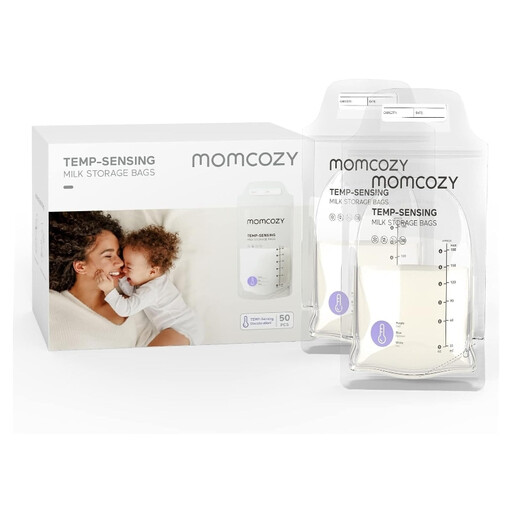
Why this choice suits this profile : A pack of 50 bags lets you get started without immediately building up a large stock, particularly when you are just beginning to organise your expressed milk portions.
The product listing mentions a leak-proof double-sealed closure and a maximum capacity of 6 oz. These details help prevent overfilling and bags that are difficult to identify.
Material advertised as BPA-free and BPS-free, writing area, flat or upright storage and a pre-cut opening to make pouring easier.
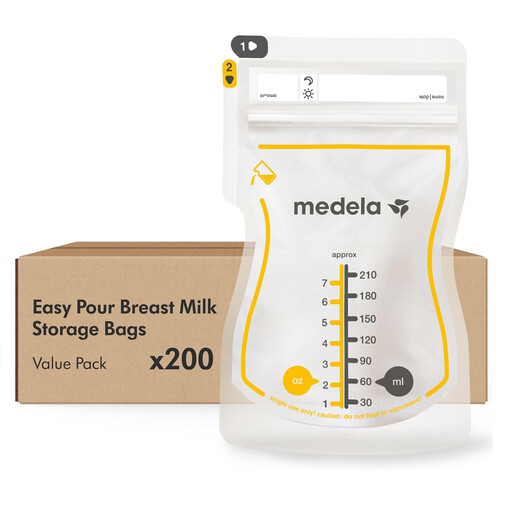
Why this choice suits this profile : Those who value simple, hygienic handling will appreciate the dual openings and specially designed spouts, which make transferring milk easier.
Its double closure and flat format help reduce the risk of leaks and save space. The manufacturer states that it is a single-use product treated with an electron beam (e-beam) before use.
210 ml capacity, graduated scale, labelling area and LDPE material advertised as free from BPA, BPS, PVC and phthalates.
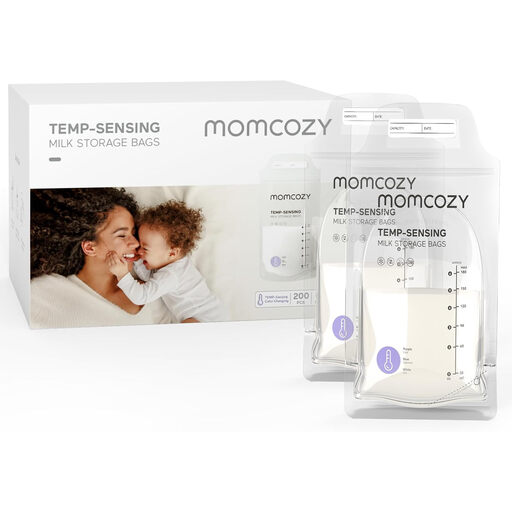
Why this choice suits this profile : A pack of 200 bags is suitable for parents who express milk frequently or want to build up supplies for several weeks.
The heat-sensitive indicator provides a visual guide, while the double closure, reinforced seals and separate areas for filling and pouring help reduce unnecessary handling.
200 bags of approximately 180 ml, BPA-free claim, advertised pre-sterilisation, writable label and flat or upright storage.
Breast milk freezer bags should be dated as soon as they are filled. Also note the volume and, if necessary, the time the milk was expressed. Keep the oldest portions easily accessible so that you use them first, in line with the recommendations of your maternity unit, midwife or lactation consultant.
For transport, place the bags in an insulated pouch with suitable ice packs. Inspect each bag before use and discard any bag that is torn, punctured or has a closure that appears weakened.
We have selected a complete, regularly updated range of products that meet these strict criteria, as well as European safety requirements.
No. The disposable models presented here are intended for single use. Washing can affect the seals, closure or hygiene properties stated by the manufacturer. Use a new bag for each portion.
It depends on the amount you usually express and the space available in your fridge or freezer. The 180 ml formats are suitable for smaller portions and compact storage. The 210 ml bags offer more room, but their maximum capacity must not be exceeded, particularly before freezing.
A bag with a temperature indicator provides an approximate visual guide. After warming the milk, always check its temperature in line with the recommendations of your healthcare professional or the product instructions. Do not use a microwave or boiling water when these methods are excluded by the instructions.