
Livraison le jour même ou le lendemain

Qualité garantie

Débloquez vos offres de bienvenue: Livraison GRATUITE | Jusqu'à -80 % | 30 jours d'essai gratuits à JoyPlus
Téléchargez l'application
Expressing milk to prepare for returning to work, going out or simply building up a supply requires a little organisation. Breast milk storage bags can make everyday life much easier, provided you choose a model suited to the quantities you express, your freezer and the way you transport it.
Some marketing claims do, however, deserve closer consideration.
Breast milk bags with a temperature indicator generally feature a heat-sensitive area that changes colour. Useful as a visual guide, this indication remains approximate. It does not replace checking the temperature before feeding your baby, nor does it provide any information about storage time or the quality of the milk.
A bag that freezes flat often makes it easier to organise a supply than a rigid container. However, take care not to fill it right to the top: milk expands as it freezes, which can deform the bag or cause a leak. The maximum capacity stated by the manufacturer must therefore be respected.
A breast milk storage kit may include bottles, bags, an insulated pouch and cleaning accessories. This is a convenient way to get everything you need in one go, but it offers little benefit if you already have a cool bag or only express small quantities. For everyday use, a box of 50 or 100 bags may be far more suitable.
Choose bags designed specifically for breast milk, with clear information about the materials that come into contact with food. Several products featured here are advertised as BPA-free and, depending on the model, free from BPS, PVC and phthalates.
The label “BPA-free” does not mean that the bag is reusable. A single-use model must be thrown away after use, even if it appears perfectly clean. Also check whether it is ready to use or needs to be cleaned before first use.
To reduce the risk of leaks, look for a double seal, reinforced side seams and an area for recording important information. A separate opening for filling the bag and a pre-cut corner for pouring the milk can also reduce handling.
Models with a pouring spout are useful when milk needs to be transferred quickly. Storage bottles are better suited to parents who want to express milk directly into the container, store it in the fridge and then feed their baby without changing containers.
Compare the stated capacity with the quantities you usually express. Bags holding 177 to 180 ml are suitable for common portion sizes, while 210 ml containers provide a little more flexibility. Never exceed the fill line, and leave enough room for the milk to expand during freezing.
For travel, a breast milk cool bag with an ice pack can complement the bags. How long the milk stays cool depends on its starting temperature, how often the bag is opened and the outside conditions. The manufacturer’s guidance remains the reference point.
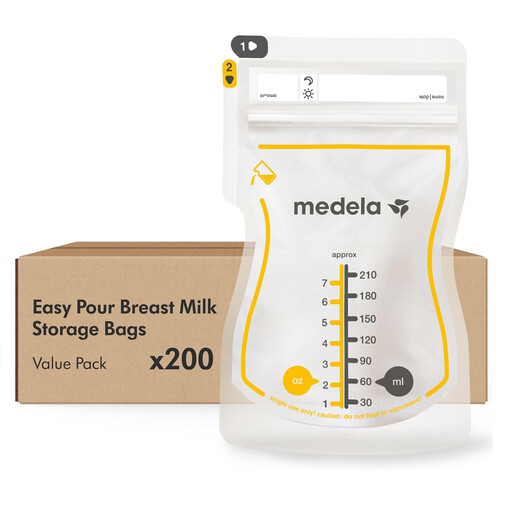
Why this choice suits this profile : With 100 bags, this pack is ideal for parents who regularly build up a supply without having to restock every week. The 210 ml size also provides plenty of flexibility for adjusting portion sizes.
The double seal and design suitable for flat freezing reduce the risk of leaks and make storage easier. As these bags are single-use, there is no uncertainty about whether they should be reused.
210 ml capacity, double-zip closure, flat or upright storage, material advertised as free from BPA, BPS and phthalates.
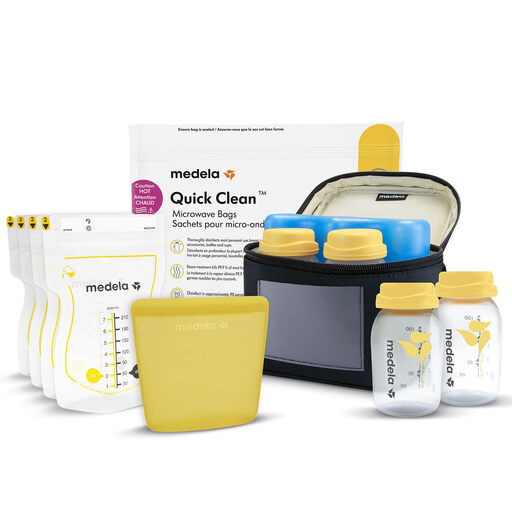
Why this choice suits this profile : This set brings together everything you need to express, store and transport milk. It comes into its own when returning to work or spending days away from home.
The kit saves you from having to buy multiple items and combines disposable bags, a reusable silicone bag, bottles and an insulated pouch. Each item must nevertheless be cared for according to its own instructions.
Four 150 ml bottles, four Easy Pour bags, one reusable bag, one microwave cleaning bag and one insulated pouch with an ice pack.
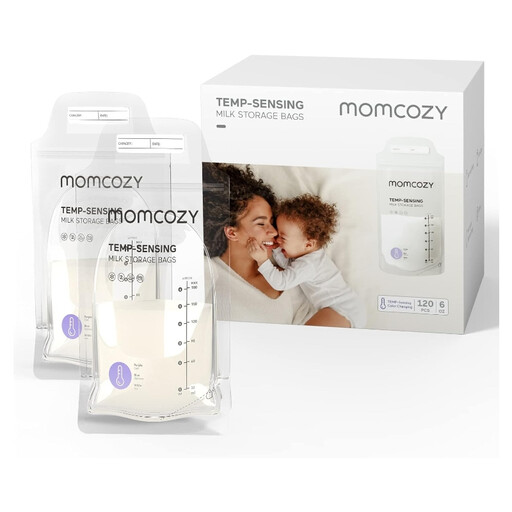
Why this choice suits this profile : With 120 bags, this pack is aimed at parents who express milk frequently and want to identify stored portions quickly.
The heat-sensitive indicator does not replace a manual check, but it provides a quick visual guide. The double seal and self-standing base make the bags easier to fill and handle.
120 bags of approximately 177 ml, writing area, self-standing design, separate filling and pouring openings, plastic advertised as free from BPA and BPS.
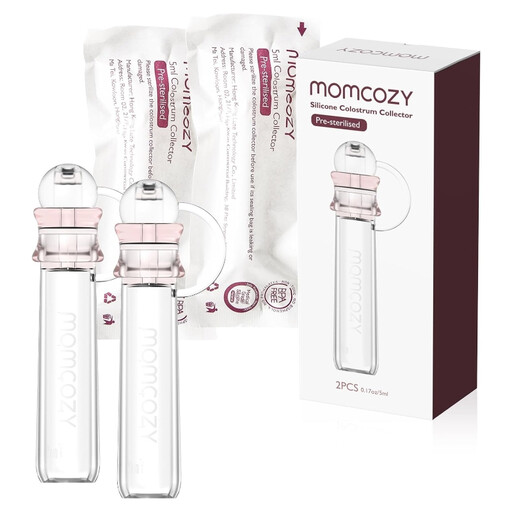
Why this choice suits this profile : Its compact format is particularly suitable for collecting colostrum or very small quantities, for which a large bag would clearly be excessive.
With a capacity of 5 ml, there is no need to fill a large bag with just a few drops. The collector is reusable, but must be cleaned before and after every use and checked regularly.
Two food-grade silicone collectors advertised as BPA-free, each with a 5 ml capacity, plus a 360° cleaning brush included.
We have put together a complete, real-time updated selection of products that meet these exacting criteria and European safety regulations.
No, if it is labelled as single-use. Washing may weaken the seams, closure or the material’s hygienic properties. Silicone containers and bottles designed for reuse must be cleaned according to the manufacturer’s recommendations.
Choose a size close to your usual portions, without filling the bag to the brim. Models holding approximately 177 to 180 ml are suitable for moderate quantities, while 210 ml bags offer greater flexibility. In all cases, follow the fill line and the manufacturer’s instructions.
It is useful when milk needs to remain cool for several hours while you are out, particularly when travelling between home, work and nursery. Check that it includes an ice pack, the number of compatible bottles and the stated storage time. For a short journey, a suitable insulated pouch may be sufficient.