People comparing sugar figures
For breakfast toast, you check the amount of sugars per 100 g rather than assuming that ‘no added sugars’ means the product contains no sugar at all.


If you’re looking for a spread with less sugar listed on the label, start by comparing the ‘of which sugars’ figure per 100 g: ‘no added sugars’ does not mean ‘sugar-free’. Then compare the recipes by their ingredients, including any polyols or fibre, and check the allergens and storage instructions for the jar you choose. A classic hazelnut and cocoa spread is another option if finding a ‘no added sugars’ recipe isn’t your priority.
For breakfast toast, you check the amount of sugars per 100 g rather than assuming that ‘no added sugars’ means the product contains no sugar at all.
You want to check the sweeteners, polyols and allergens before choosing a ‘no added sugars’ recipe.
You also compare the ingredients, jar size and storage instructions after opening to find a recipe that suits how you’ll use it.
Start by comparing the sugar content on the same 100 g basis, then read the ingredients and the instructions for the jar you’re planning to buy.
| Criteria | What to check | Who it’s for |
|---|---|---|
| Sugars listed | Compare ‘of which sugars’ per 100 g and distinguish this figure from the claim on the front of the pack. | If you want a sweet spread while prioritising the amount of sugars listed, around 45% of consumers would put this first. |
| Type of recipe | Look for sweeteners and polyols in the ingredients, and check the fibre information too. | If you’d rather compare recipes by whether they contain polyols than by their claim alone, this would be the main concern for around 33% of consumers. |
| Ingredients and use | Check the allergens, manufacturing information and storage instructions for the size you’ve chosen. | In a household where the ingredients and how long the jar will be used for determine the choice, around 22% of consumers would prioritise this suitability first. |
A spread with no added sugars may still contain naturally occurring sugars. So the claim alone doesn’t tell you how much sugar it contains.
Read the ‘of which sugars’ figure per 100 g and the additional information accompanying the claim on the label.
Two ‘no added sugars’ recipes can have different ingredients: Auchan’s product page for Gerblé lists maltitols, while Lucien Georgelin’s lists fibre.
Compare the ingredient lists for the exact products before choosing between these recipes.
According to the DGCCRF and Santé publique France, displaying Nutri-Score is voluntary in France. Whether or not it appears on a product, it doesn’t replace reading the nutrition information.
If it is displayed, use it as an additional guide, then check the sugars, fats, ingredients and allergens.
Allergens and storage instructions matter just as much in everyday use as your choice of recipe.
Check this information on the product and size you buy, especially if you’ll be using the jar over time.
Auchan and Carrefour list hazelnut and cocoa spreads with ‘no added sugars’ among the brand’s products.
A hazelnut and cocoa recipe with ‘no added sugars’ to consider if you’re looking for a product with a sweetener.
A classic hazelnut and cocoa spread, available in several sizes in Carrefour’s range.
This blueberry preparation can be spread on breakfast toast. It isn’t a hazelnut and cocoa spread, so choose it if you fancy a fruit-based recipe rather than treating it as one of the hazelnut and cocoa options compared above.
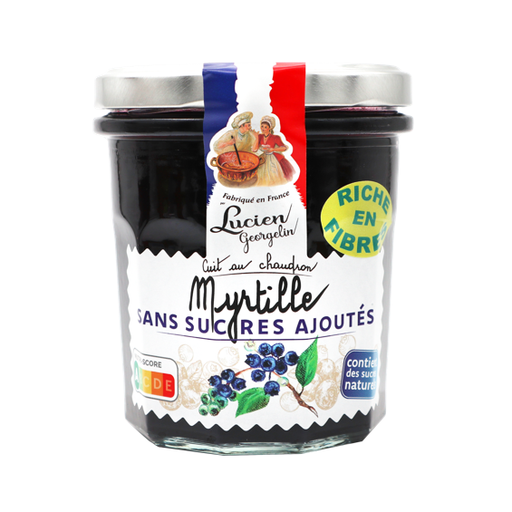 Image unavailable
If you fancy fruit on your breakfast toast, this preparation can be an alternative to hazelnut and cocoa spread when you want to try something different. It won’t suit you if you’re specifically looking for a hazelnut and cocoa flavour.
‘No added sugars’ doesn’t mean ‘sugar-free’: compare the sugars per 100 g on the label. The product listing says to refrigerate the jar after opening and consume within 10 days.
No. The DGCCRF and Santé publique France say that Nutri-Score is voluntary. To compare two products, read their nutrition information per 100 g, even if neither displays the logo.
No. Carrefour’s listing for the Lucien Georgelin product says that naturally occurring sugars may still be present. Check the ‘of which sugars’ figure per 100 g for the exact product.
Look at the ingredients rather than relying on the ‘no added sugars’ claim alone. Auchan’s listing for Gerblé mentions maltitols and polyols, while Lucien Georgelin’s lists fibre. Then compare the sugars listed and any other information that matters to you.
Check the label for each product, along with any manufacturing information. Auchan’s listing for Gerblé mentions hazelnuts and milk, and says the product is made in a facility that also handles other allergens.
Follow the instructions on the jar you buy, as they vary from one recipe to another. The listing for the Lucien Georgelin blueberry preparation featured here says to refrigerate it and consume within 10 days of opening.