If you’re looking for a quick breakfast snack and calories matter to you, compare the energy per 100 g, then check the amount you plan to eat. According to Carrefour France, a 30 g serving of Lay’s Oven Baked Original contains 133 kcal and 3.8 g of fat. If salt is your main concern, Pom’Lisse plain crisps with no added salt may suit a different priority: E.Leclerc lists 0.0 g of salt, but 543 kcal per 100 g. So a ‘lower fat’ or ‘no added salt’ claim alone isn’t enough to help you choose a lower-calorie portion.
Who are these options for?
People comparing fat content
If you want to keep your snack crunchy, look at oven-baked or lentil-based recipes, then compare their kcal and the amount you plan to eat. A fat reduction claim for one recipe doesn’t apply to every crisp in the brand’s range.
People looking for a lower salt content
A ‘no added salt’ product is worth considering if salt is your top priority. Also check the nutrition information per 100 g: this claim alone doesn’t tell you anything about calories or fat.
Parents and students in a hurry in the morning
If crisps are just an addition to breakfast, think of them separately from the meal itself. For children and teenagers aged 4 to 17, Manger Bouger suggests having wholemeal or cereal bread, a dairy product and fresh fruit or unsweetened fruit purée for breakfast.
Which criteria should you compare?
If you’re thinking of having crisps alongside a quick breakfast, start by choosing your main priority, then compare the nutrition information for the amount you’ll actually serve.
| Criteria |
What to check |
Who it’s for |
| Calories and fat |
Compare kcal and fat per 100 g, then for the amount you plan to eat; check the exact recipe. |
I want a crunchy snack, but don’t want to choose based only on a ‘lower fat’ claim. Around 40% of consumers rank reducing calories and fat as their main concern. |
| Salt |
Check the ‘salt’ line per 100 g; compare energy and fat separately. |
When I fancy something savoury in the morning, salt content is my priority, even if another recipe has fewer calories. Around 30% of consumers put this criterion first. |
| Where it fits into breakfast |
Decide how much to serve and what else to include in the meal. For a child, take account of the Manger Bouger guidance for their age group. |
When I’m eating in a hurry, I don’t want to mistake a portion of crisps for breakfast on its own. Around 30% of consumers prioritise putting together a balanced meal. |
Common misconceptions to avoid
-
Assuming ‘lower fat’ means ‘fewer calories’
A reduction in fat doesn’t tell you the total energy content on its own. For example, Auchan’s product listing for Vico Fine Herbs Lentil Crisps shows 453 kcal per 100 g.
Compare the kcal per 100 g for the products you’re considering, then work out how that applies to the amount you’ll serve.
-
Choosing ‘no added salt’ to cut calories
E.Leclerc’s listing for Pom’Lisse plain crisps with no added salt shows 0.0 g of salt per 100 g, but also 543 kcal and 34 g of fat per 100 g.
Choose this product if salt is your main priority. For calories, compare the energy content of the recipes and serving sizes you’re interested in.
-
Assuming information applies to every flavour
Ingredients, allergen information and nutrition values relate to a specific recipe. For example, Auchan’s listing for Vico Fine Herbs Lentil Crisps notes that they may contain gluten, soya and milk, and that they’re made in a factory that also handles peanuts.
If you have an allergy or intolerance, check the information on the pack for the flavour and size you’re buying.
-
Making crisps your entire breakfast
For children and teenagers aged 4 to 17, Manger Bouger’s breakfast ideas include foods other than a savoury snack, such as a cereal-based food, a dairy product and a piece of fruit.
If you’re planning to serve crisps as an extra, think about the rest of the meal separately, taking your child’s age and appetite into account.
Brands and products to know
Lay’s
The Oven Baked Original product lets you compare oven-baked potato crisps with other savoury snacks.
- According to Carrefour France, a 30 g serving of this product contains 133 kcal and 3.8 g of fat.
- Lay’s claims to have 50% less fat than the average crisps on the market. This claim doesn’t replace checking the kcal for the specific recipe and amount you choose.
Vico
Lentil Crisps are made with lentils, setting them apart from classic potato crisps.
- For the Fine Herbs flavour, Auchan France lists 453 kcal, 19 g of fat, 7.4 g of fibre and 13 g of protein per 100 g.
- Vico claims to have 40% less fat than classic crisps. This claim doesn’t mean that all flavours have the same nutrition values.
Pom’Lisse / Marque Repère
The plain, no-added-salt product is aimed at people focusing on salt rather than calories.
- E.Leclerc’s listing shows 0.0 g of salt per 100 g.
- The same product contains 543 kcal and 34 g of fat per 100 g: ‘no added salt’ doesn’t tell you about its energy content.
Pringles
Pringles Original comes in a tube, so it’s worth comparing if this format suits your choice of snack.
- Pringles France lists 158 kcal and 9.3 g of fat per 30 g of Original.
- For the same 30 g serving, Carrefour France lists 133 kcal and 3.8 g of fat for Lay’s Oven Baked Original. Check the packaging of the products you actually buy.
A snack option on Joybuy
This selection features bruschette crisps for a quick savoury snack. They’re a different type of crunchy snack from classic potato crisps, so compare the serving size and nutrition information according to your priorities.
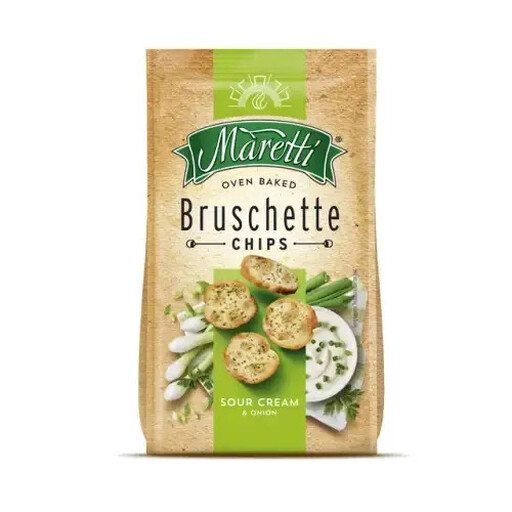 Image unavailable
MARETTI Bruschette Chips Sour Cream & Onion, 150 g
Worth considering if you’re looking for a ready-to-eat savoury snack for a quick bite. The pack contains 150 g. To work out how much you’ll eat, check the nutrition information and allergen details on the packaging.
View on Joybuy
Frequently asked questions
Are lower-fat crisps always lower in calories?
No. The claim refers to fat, not necessarily total energy. Compare the kcal per 100 g, then for the amount you plan to eat. Don’t assume the figures for one recipe apply to the whole range.
Do crisps sold in France have to display the Nutri-Score?
No. Santé publique France explains that producers choose whether or not to display it. When comparing two recipes, also check the nutrition declaration per 100 g, as explained by the Directorate-General for Competition Policy, Consumer Affairs and Fraud Control.
How can I quickly compare two packs for a morning snack?
First compare their nutrition information on the same per-100 g basis, then check the amount you plan to serve. Look at kcal if energy is your priority, salt if you’re comparing salt content, and the details on the exact pack if you have any concerns about allergens.
Can crisps make up a child’s entire breakfast?
Manger Bouger’s breakfast ideas for children and teenagers aged 4 to 17 include a cereal-based food, a dairy product and fresh fruit or unsweetened fruit purée. If you serve crisps, consider them an optional extra rather than a replacement for these foods.


