For a busy morning
You want a bar you can break into squares for everyday use, rather than an assortment of individual chocolates. The bar’s weight and recipe can help you choose the right option.


For a quick everyday breakfast, a chocolate bar is the better choice if you want to break off a few squares and compare a specific recipe. An assorted box is better suited to when you fancy variety, want to share or need a gift. Whichever format you choose, check the nutritional information per 100 g, as well as the ingredients and allergens for the exact product.
You want a bar you can break into squares for everyday use, rather than an assortment of individual chocolates. The bar’s weight and recipe can help you choose the right option.
You want to check the sugars, fat and other nutritional information per 100 g, then check the ingredients and allergens. In France, nutritional labelling is required for most pre-packed foods, according to the DGCCRF; the Nutri-Score is optional, according to the Ministry of the Economy.
You’re looking for several recipes in one box. If anyone sharing it needs to avoid certain ingredients, check the contents of the exact assortment rather than relying on its presentation.
First decide whether the chocolate is mainly for your morning routine or for sharing on a special occasion. Then compare the recipes on the same 100 g basis, and remember to check the ingredients for the exact product.
| Criteria | What to check | Who is it for? |
|---|---|---|
| Everyday format | The bar’s weight and, if stated, how it is divided into squares or portions. | When there’s little time in the morning, I want to be able to take a few squares without opening an assortment. Around 33% of consumers would prioritise this easy-to-portion format. |
| Nutritional information | Energy, fat, saturates, sugars and salt per 100 g. | If I’m comparing two recipes, the cocoa percentage alone doesn’t tell me their nutritional values. Around 27% of consumers would prioritise comparing this information. |
| Ingredients and allergens | The ingredients list and any ‘may contain’ statements for the exact product. | If certain ingredients need to be avoided, I should check the bar or each assortment I’m considering, even if it’s dark chocolate. Around 27% of consumers would put this check first. |
| Variety and sharing | The types of chocolate in the box, its contents and its total weight. | For giving or sharing, I’m looking for several individual chocolates rather than a single chocolate bar recipe. This variety would be the top priority for around 13% of consumers. |
Article 1613 ter of the French General Tax Code, published on Légifrance, applies to drinks and liquid preparations for drinks, not solid chocolate bars.
When choosing a chocolate bar, focus instead on its ingredients list and nutritional information, particularly the sugars per 100 g.
According to the Ministry of the Economy, displaying it is voluntary in France. Its absence doesn’t mean you can conclude that one recipe is better or worse for you than another.
If it’s shown, consider it alongside the nutritional information and ingredients list, rather than making it your only criterion.
A dark chocolate bar may carry a warning that it could contain traces of milk or nuts. Milk chocolate, hazelnut recipes and assortments may contain other ingredients that you’ll need to check.
Check the ingredients and any trace warnings on the packaging of the exact product you’re planning to buy.
An assorted box offers several recipes, but you’ll also need to check the ingredients in the individual chocolates it contains. This variety may not be what you’re looking for on a typical morning.
If you mainly want one recipe that you can portion out, compare chocolate bars first. Save the assorted box for occasions when sharing or variety matters more.
These range examples can help you spot formats and recipes to compare. Always check the information for the exact product you choose.
The Excellence range includes dark chocolate bars with different cocoa percentages; Lindt also offers assorted chocolate boxes.
The milk chocolate bar with whole hazelnuts listed by Carrefour is an example of a nut-containing recipe, distinct from a plain dark chocolate bar.
The 100 g Noir Bio 85% bar listed by Carrefour is an example of a specific recipe with a high cocoa content.
The 100 g Noir 90% Bio bar is an example of a recipe whose nutritional values can be checked per 100 g.
E.Leclerc’s selection of dark chocolate bars includes Equador products in different formats and with different cocoa percentages.
These products let you compare chocolate bars for breakfast with an assorted box for sharing. Start by choosing the format that suits your needs, then check the exact recipe.
 Image unavailable
A bar to consider if you want to portion out the same recipe over several breakfasts. The product title states 85% cocoa and a weight of 100 g; also compare its nutritional information and the allergens listed on the packaging.
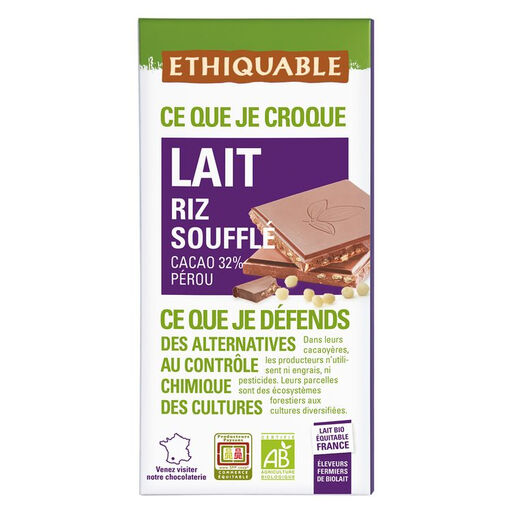 Image unavailable
This bar is a good fit if you’re looking for milk chocolate with puffed rice, rather than plain dark chocolate. It weighs 100 g; if you need to avoid certain ingredients, check the ingredients list and any trace warnings for the exact product.
 Image unavailable
If you’re comparing dark chocolate bars for breakfast, this one is labelled 70% cocoa and weighs 100 g. Check its ingredients list, including the maltitol listed for this product, and all the nutritional information before choosing.
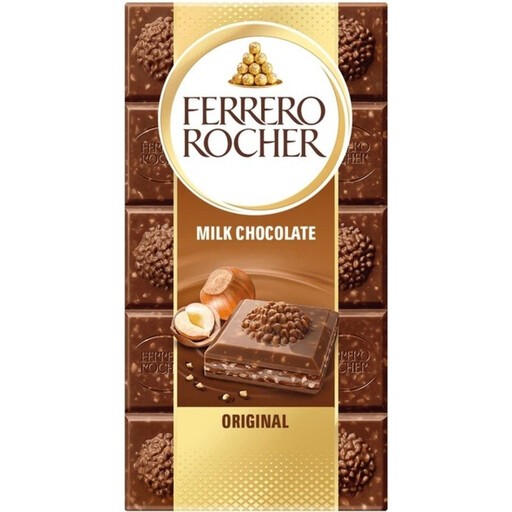 Image unavailable
This 90 g bar is worth comparing with the recipes you’re considering for breakfast, rather than with an assorted box. Check the ingredients before buying if milk, hazelnuts or soya are a concern for you.
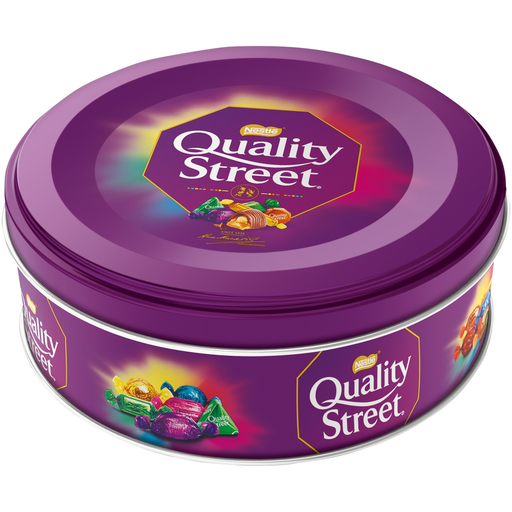 Image unavailable
This 400 g box is better suited to enjoying a variety of individual treats or sharing than to choosing a single-recipe chocolate bar. It contains assorted chocolates and toffees: check the contents and allergen information for anyone who needs to avoid particular ingredients.
No, not to a solid chocolate bar as such. Article 1613 ter of the French General Tax Code, published on Légifrance, applies to drinks and liquid preparations for drinks. The sugar content of a chocolate bar is still useful information when comparing recipes, but this tax isn’t a buying criterion.
No. Its display is voluntary in France, according to the Ministry of the Economy. The DGCCRF, however, states that nutritional information is required for most pre-packed foods. Use the values per 100 g to compare products, whether or not the logo is shown.
No. It tells you one thing about the recipe, but doesn’t sum up its energy, fat or sugar content. For two bars you’re considering for breakfast, compare their nutritional information on the same 100 g basis, then think about how much you plan to eat.
Yes, depending on the product. Dark chocolate bars listed by Carrefour carry warnings that they may contain milk and nuts, while a Lindt assortment listed by Carrefour includes milk and nuts among its ingredients. Always check the labelling of the exact product.