Households that often make bread, brioche and other bakes
Compare the stated dough capacity of each model with the size of your usual batches. Check for a dough hook, beater and whisk, and consider how easy the bowl is to grip when full.


If you often make bread, brioche and other bakes, start by considering how much dough you usually make, which tools you need and how much space you have. A food processor you already own may be enough if its dough hook and documented capacity suit your batches. For very large quantities of yeasted dough, consider a high-capacity domestic dough kneader, bearing in mind how much space it takes up.
Que Choisir sees a stand mixer as particularly useful for making bread, brioche and other bakes regularly or in large quantities. The right set-up then depends on what you make and how much space you have at home.
Compare the stated dough capacity of each model with the size of your usual batches. Check for a dough hook, beater and whisk, and consider how easy the bowl is to grip when full.
A food processor you already own may still be useful if it has a dough hook suited to the quantities you make and can also chop or blend. If you’d prefer a stand mixer with optional attachments, make room for the ones you’ll actually use.
Look for the dough capacity stated for the specific model, rather than relying on bowl capacity alone. Also measure the space you’ll need to set up and use the appliance.
First decide whether kneading is your main use, or whether chopping, mincing and blending matter just as much. Then compare capacities and practical considerations for the exact model you’re looking at.
Worth considering: if you often knead, mix and whisk, and don’t regularly need to chop or mince.
Bear in mind: a bowl sized for your batches may take up space and need careful handling when emptying and cleaning.
Worth considering: if you often make dough and also regularly use compatible attachments for other tasks.
Bear in mind: an attachment being available in a range doesn’t mean it comes in the box. You’ll also need to consider how easy it is to fit, clean and store.
Worth considering: if you already own one with a dough hook, it can handle the quantities you make and you regularly use it for other recipes.
Bear in mind: check the usable capacity for the specific model before relying on it for large batches.
Worth considering: if making very large quantities of yeasted dough is your main priority.
Bear in mind: check the stated capacity for the model you choose, as well as the space needed for the appliance and its bowl.
| What to consider | What to check | Think about your needs |
|---|---|---|
| Dough quantity | Compare the size of your usual batch with the dough limit stated for the model. Don’t confuse this limit with the bowl capacity, and check whether the bowl is easy to empty. | I sometimes make several loaves or brioche one after another, so I need a suitable dough capacity without choosing an unnecessarily bulky bowl. |
| Baking tools | Check for a dough hook, a beater for mixing and a whisk for whisked mixtures. Check exactly what’s included in the box. | I want to switch from bread to cakes using the tools supplied, without assuming that every attachment in a range is included. |
| Additional functions | Identify the tasks you regularly do, such as chopping, mincing or blending. Check which models the attachments are compatible with and how much storage space each one needs. | If my current food processor can knead the quantities I need, I can keep using it. Otherwise, I’ll compare the other functions I’d genuinely use. |
| Cleaning and storage | Check the dimensions, how easy the bowl is to grip and the washing instructions for each part. Allow for enough storage space if you’ll put the appliance away after use. | As I’ll be getting the mixer out often, I need to be able to empty the bowl and put each part away without hassle. |
| Parts and attachments | Look up parts listed for the exact model. Distinguish between the manufacturer’s stated commitments and whether the part you want is actually available. | I’d like to be able to find a compatible bowl or tool if I need a replacement. |
These figures alone don’t tell you how much dough the model can handle, or how easy it is to clean and store. Que Choisir’s test protocol includes testing bread dough at maximum capacity.
Start with the weight of your usual batches, then check the dough limit, the tools supplied and the instructions for the model you’re considering.
A large bowl can be awkward to empty, wash or store if you usually make smaller batches.
Compare the dimensions of the appliance and bowl with your worktop, storage space and usual batch sizes.
A mincer or blender shown as part of a range may not come in the box with the specific model you choose.
Check the box contents and compatible model numbers separately before relying on an additional function.
Extra attachments also need space, and take time to fit and clean.
A brand’s commitment to supplying parts doesn’t, by itself, tell you whether the bowl or tool you might need will be available for your model.
Note down the exact model and look up the matching parts and the service terms stated by the manufacturer.
These examples show different set-ups. Their capacities and attachments don’t automatically apply to every model from the same brand.
The MUM range combines stand mixers with attachments identified by model number.
The Masterchef Gourmet range includes stand mixers and attachments offered with selected models.
The CS 4200XL is a food processor to consider if you want to knead as well as prepare other recipes.
The Assistent is a domestic mixer-kneader designed, among other things, for making large batches.
These options are stand mixers for kneading or baking, including one model with additional functions. Compare their set-up with the batches you make. This list doesn’t compare food processors with bowls and specialist domestic dough kneaders.
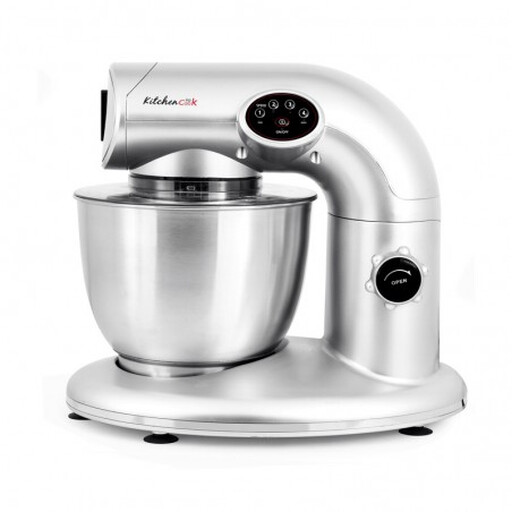 Image unavailable
If you plan to make batches regularly, compare the dough limit and operating time stated in the manual for this model with your needs.
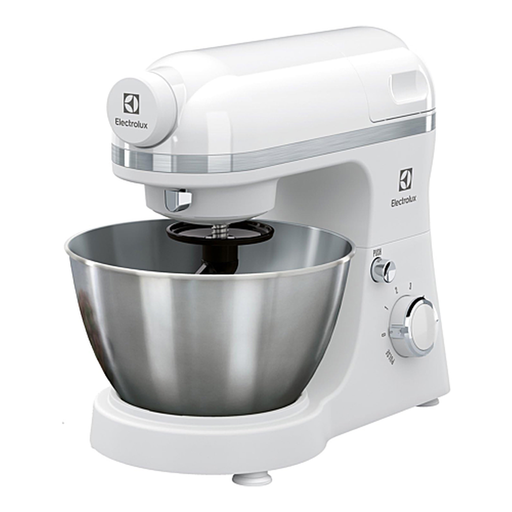 Image unavailable
For bread or brioche, check the maximum dough quantity allowed: the 4,1 L bowl doesn’t tell you this. Also check that the tools supplied suit the bakes you usually make.
 Image unavailable
The product name specifies a 6 L SUS304 stainless steel bowl, a tilt-head design, six speeds, a dough hook, whisk, beater and splash guard. For large batches, check the maximum dough load separately, along with the space needed to tilt back the head.
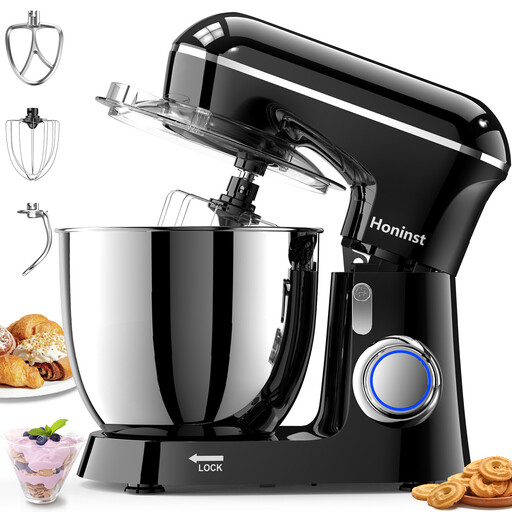 Image unavailable
This tilt-head mixer comes with a dough hook, whisk and beater. Before planning to make large batches, check the permitted dough load and the recommended running time for heavy doughs: the 6.5QT capacity doesn’t tell you this.
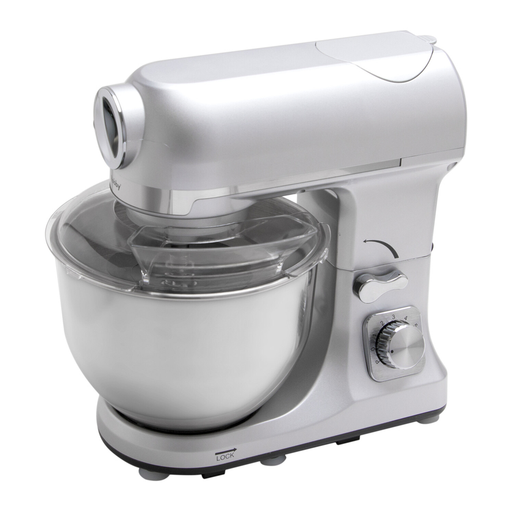 Image unavailable
The product name lists a 1,5 L glass blender and a mincer alongside the mixer. If you also want to bake, check exactly what comes in the box, including whether a beater is supplied, as well as the maximum dough load and washing instructions.
Yes, if it has a dough hook and the stated dough capacity for your model suits the size of your batches. Que Choisir includes bread dough in its food processor testing protocol, but having this function doesn’t guarantee that every appliance will suit large quantities or frequent use.
Not necessarily. Check the box contents for the exact model, and distinguish between the baking tools supplied and compatible attachments sold separately for mincing, blending or other tasks.