
当日/次日达

品质保障

开启新人专享福利: 全场免邮 | 低至 2 折 | 免费试用 30 天 JoyPlus 会员
下载 Joybuy
A bowl of beef noodle soup ready in just a few minutes can be a lifesaver for a student, a quick lunch at the office, or a handy store-cupboard staple. But the packaging and promises of “traditional flavour” aren’t enough when comparing Chinese instant noodles.
Before you buy braised beef instant noodles, three common pitfalls keep cropping up:
Non-fried noodles are dried without a frying step, according to the product description. Their texture can be firmer and their nutritional profile different, but that doesn’t automatically mean they suit every dietary need. Always check the nutrition table.
Standard noodles are often made from wheat flour, vegetable oil, starch and various texturising agents. Wide, knife-cut noodles, like those from Jin Mai Lang, offer a thicker, chewier texture. Vermicelli gives a different mouthfeel and is a good option if you fancy a change from wheat-based Chinese instant noodles.
The flavour of Chinese braised beef noodles usually comes from a blend of sauce, powder, flavoured oil and spices. Look closely for mentions of ginger, garlic, pepper, chilli, soy sauce and warming spices.
The term “braised beef” often describes a flavour profile inspired by Chinese braised beef, rather than a specific amount of meat. Some recipes therefore contain textured soya protein or a beef-flavoured seasoning. If the product clearly contains dehydrated beef, the label must state this explicitly.
Instant noodles can have a high salt content per 100 g. Product listings show, for example, 5.8 g for classic Lamianfan noodles, 6.0 g for KOMEYA and 6.4 g for the Wu Gu Dao Chang Green series. These figures make comparison easy, though the actual amount you consume also depends on the volume of water you use and whether you add all the seasoning sachets.
In the UK, take time to check the allergens, which are highlighted in bold: wheat and gluten, soya, sesame, but also sometimes egg, celery or peanuts. If you have an allergy, always rely on the label of the product you receive, which takes precedence over any online description.
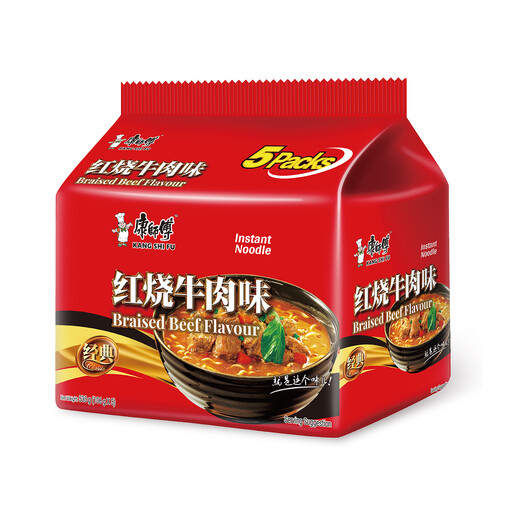
Why this suits this profile: The pack of five sachets lets you try Chinese beef noodles without committing to a large bulk order. Preparation takes three minutes in a pan.
The noodles, sauce, powder and vegetables are packed separately, making it easy to control the amount and read the ingredients.
106 g × 5 format, separate sachets and dehydrated vegetables. Allergens listed: wheat and soya.
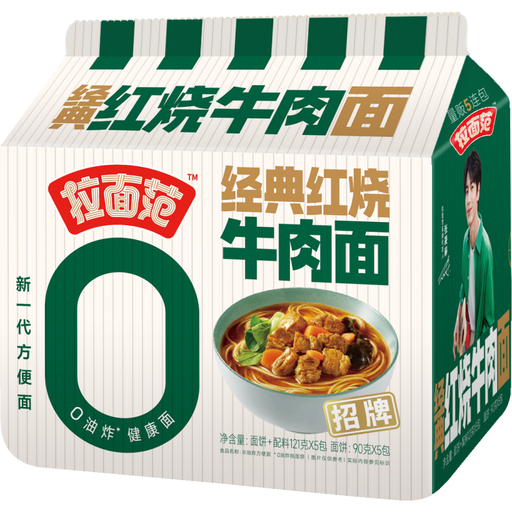
Why this suits this profile: The non-fried noodles and their firm texture appeal to those who care about mouthfeel and the composition of their meal.
The listing clearly separates the noodle block, soup base and vegetable sachet, rather than relying on a vague flavour promise.
121 g per serving, three-minute preparation with boiling water and noodles described as non-fried. Contains wheat and soya.
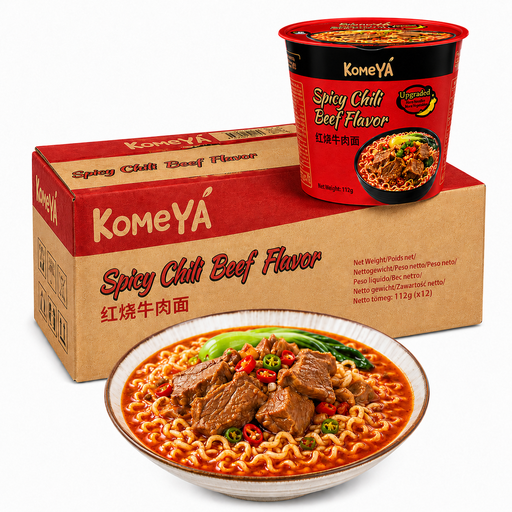
Why this suits this profile: The pack of twelve pots is ideal for an office, a shared house or a household that wants individual meals ready in minutes.
The pot means you don’t need extra dishes, and the resting time is three minutes. You’ll need roughly 500 ml of boiling water.
112 g × 12 format, vegetable sachet and individual serving. The listing mentions wheat and soya among the allergens.
We’ve put together a full, real-time selection of products that meet these exacting criteria and European safety standards.
For perfect results every time, use the amount of water stated rather than guessing. In a pot, pour water up to the fill line, cover, then stick to the recommended time. For pan cooking, generally add the sachets in the order given: the vegetables and powder during cooking, then the sauce at the end.
Store the packets in a dry, cool place away from direct sunlight. Once a pot or sachet is opened, prepare and eat it straight away. Frozen braised beef products, such as some Sijia Kitchen dishes, should not be confused with instant noodles: they must be kept at −18 °C and reheated all the way through.
Do braised beef instant noodles always contain beef?
No. Some recipes list a braised beef flavouring or seasoning without containing any meat at all. Check the ingredients list for dehydrated beef, beef extract or textured vegetable protein.
How long does it take to prepare a bowl of beef noodle soup?
Most of the products featured here take around three minutes. Others need three to five minutes, or even four minutes for some pots. Always follow the water volume and preparation time stated on the packaging.
How can I reduce the heat of spicy instant noodles?
Start by adding only part of the chilli oil or powder, then adjust to taste. You can also add vegetables, an egg or a portion of plain noodles, without affecting the product’s storage instructions.