
Livraison le jour même ou le lendemain

Qualité garantie

Débloquez vos offres de bienvenue: Livraison GRATUITE | Jusqu'à -80 % | 30 jours d'essai gratuits à JoyPlus
Téléchargez l'application
Brain teasers and puzzles appeal to families and puzzle enthusiasts alike. However, a well-presented product listing does not necessarily guarantee an experience suited to the player’s age, ability or available space. To avoid disappointment, it is worth checking a few practical criteria before choosing a brain teaser for adults and children, a 3D puzzle or a logic game.
A 6x6 or 7x7 cube requires method, patience and some experience with multi-layer cubes. It may therefore discourage a beginner looking for an accessible activity. Conversely, a puzzle that is too easy can quickly bore an adult who is used to complex brain teasers.
Difficulty depends in particular on the number of moving pieces, the shape of the game, the rules and whether a guide is included. Always check the recommended age and the user profile targeted by the manufacturer.
A wooden puzzle, a Sudoku puzzle with a drawer or a 3D model may take up considerably more space than expected. For traditional puzzles, a dedicated table makes sorting easier and means you do not have to move a puzzle in progress. In a small home, the dimensions when stored and the available storage options are just as important as the appearance.
A colourful finish, a popular licence or gift packaging says little about how easy the product is to handle. Before ordering, check the material, number of pieces, assembly method and care instructions. With children, small parts, metal balls and accessible corners require particular attention.
The statement ‘from 5 or 6 years’ is a useful guide, but it is not an absolute rule. A child may be the stated age without necessarily being able to manage an activity involving numerous pieces or small parts.
In particular, check the following:
These indications reflect the manufacturer’s declarations of conformity. They do not remove the need to check the condition of the game when it arrives.
Wood is suitable for boards, Sudoku games and certain decorative models. It provides a denser feel, but should be kept away from moisture. ABS, used for many cubes and brain teasers, can generally be cleaned with a soft, dry cloth. Cards and printed components should be kept dry and away from direct sunlight.
Avoid harsh cleaning products, particularly on stickers and printed surfaces. For a cube with a complex mechanism, use only a lubricant designed for this purpose and in accordance with the manufacturer’s recommendations.
The best choice depends on how you intend to use it:
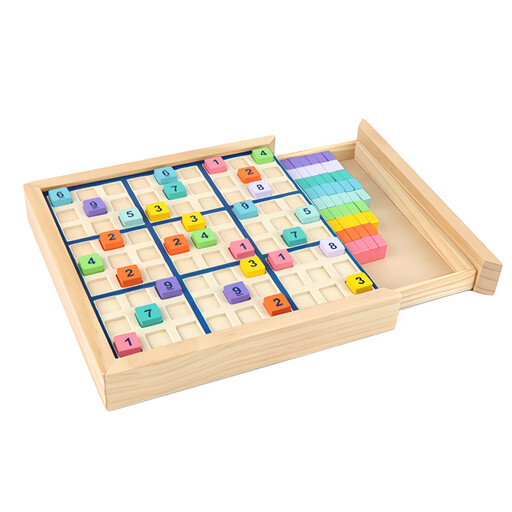
Why this choice suits this profile : Its 23.2 × 23.2 × 4 cm wooden board offers 4x4, 6x6 and 9x9 grids. This lets you progress at your own pace, whether at home or on the go.
The different formats allow you to increase the difficulty gradually, without starting with a game that is too demanding.
Wooden construction, integrated drawer and stated weight of 0.7 kg.
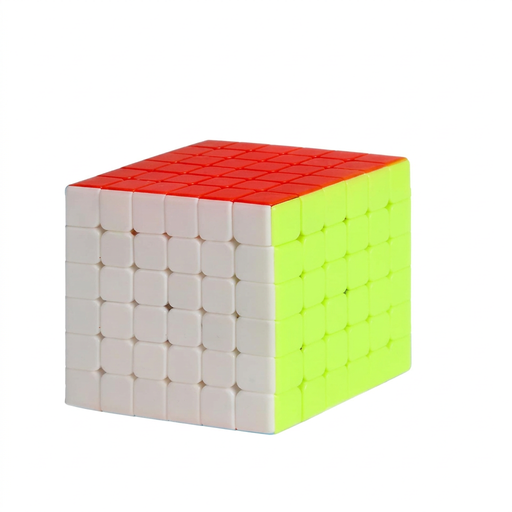
Why this choice suits this profile : This 6x6 cube is designed for players who are already comfortable with multi-layer cubes and for those looking for a more demanding manual mechanism.
The listing specifies the 6x6 format, battery-free operation and integrated colours, which replace stickers.
Stated dimensions of 8 × 11 × 8 cm, weight of approximately 180 g and an anti-lock mechanism described by the manufacturer.
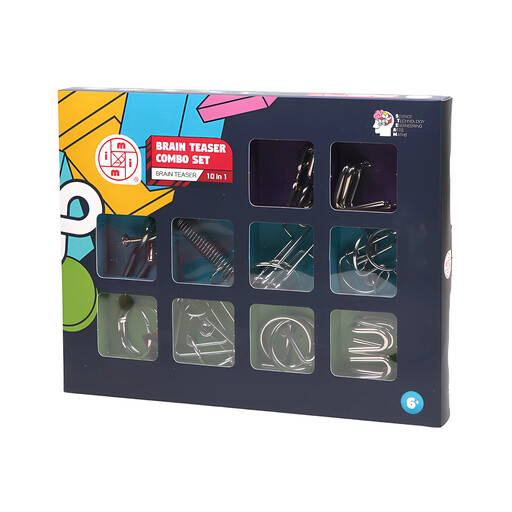
Why this choice suits this profile : Its ten metal brain teasers, with varying levels of difficulty, allow adults and families to enjoy a series of challenges during short sessions.
The variety of shapes means you are not limited to a single mechanism or one difficulty level.
Ten metal models and a case measuring 30 × 24 × 3.2 cm, as stated.
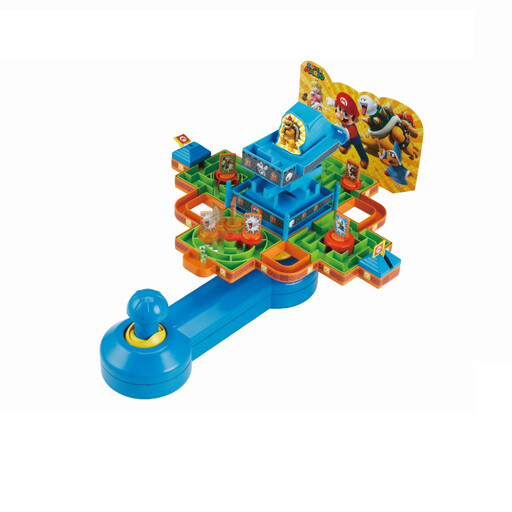
Why this choice suits this profile : Suitable from the age of 5, this controller-operated maze features four stages and an easy-to-understand objective for family play.
The rules are based on direct controls, with no assembly or app required. You can start playing straight away.
Four maze levels, two metal balls and six 2D figures included.
We have brought together a complete, real-time selection of products that meet these demanding criteria, as well as European safety requirements.
For a birthday, start by considering how much time the recipient has available and their level of experience. A 3D puzzle with 55 to 84 pieces can provide a hands-on activity while creating a decorative object. A wooden model, such as a music box to assemble, is better suited to an adult who enjoys building things and beautiful objects.
For an activity to enjoy together, an investigation game such as LANSAY The Mysteries of Beijing offers puzzles, decoders and cards for 2 to 6 players aged 8 and over. Fans of card games and licensed products may prefer the Magic: The Gathering – Marvel Super Heroes learning set, which is recommended from the age of 13 and comes with guides for beginners.
Choose a game with short rules, pieces that are easy to identify and an adjustable playing time. A controller-operated maze or a progressive educational puzzle may be suitable. Supervision is still recommended when the product contains balls or small parts.
These formats have more layers than a traditional cube and generally require a learning method. For beginners, a simpler model will often be more accessible. The 6x6 or 7x7 is better suited to someone who already understands rotations and wants to move on to the next level.
Store each component in a box away from moisture and clean the surfaces with a soft cloth. For cubes, prevent dust from building up in the mechanism and regularly check the condition of the pieces. Any cracked, misshapen or detached component should be set aside, especially when a child is using the game.