
Livraison le jour même ou le lendemain

Qualité garantie

Débloquez vos offres de bienvenue: Livraison GRATUITE | Jusqu'à -80 % | 30 jours d'essai gratuits à JoyPlus
Téléchargez l'application
Buying bottled natural mineral water might seem straightforward. Yet between still water, sparkling water, lightly sparkling water, small formats and family packs, the choice can quickly become expensive or impractical. A bottle that's too bulky for your bag, a pack that won't fit in your cupboard, or sparkling water that goes flat after opening – these unpleasant surprises are all too common.
Before you order, focus on three things: the type of water, the bottle size, and the total volume you actually need. That way, you can compare offers without being swayed solely by the brand, the packaging design, or a clever marketing promise.
Natural mineral water comes from an underground source and has a distinctive mineral composition, which is stated on the label. Spring water is also from an underground source, but its composition can vary more from one product to another. So these two categories don't meet exactly the same criteria.
To compare bottles on a solid basis, check the description on the packaging, the source's origin, the country of production, and the mineral composition. A French mineral water like Vittel or Volvic is perfectly suited to everyday drinking, while an Italian sparkling water like San Pellegrino is often chosen for meals or social occasions.
A pack that looks like a bargain isn't necessarily the most economical. The golden rule: compare the price per litre. The number of bottles and their capacity can change the result significantly:
Also factor in any delivery charges, the weight you'll have to carry, and the storage space you have at home or in the office.
A 50 cl bottle of water slips easily into a bag, a car, or a sports kit. For a family, however, it means more bottles to store and dispose of. The 1.5 L format is better suited to the table and home consumption, but is far less practical when you're on the go.
For meals, also think about the type of cap and how the water keeps after opening. Sparkling or lightly sparkling water should be stored away from heat and opened carefully, as the bottle is under pressure.
When this information is available, take the time to read the mineral composition. Calcium, magnesium, sodium, sulphates and bicarbonates all affect the taste and help you understand the water's profile as stated on the label. Vittel, for example, shows a characteristic mineralisation across several references, with 240 mg/L of calcium and 42 mg/L of magnesium.
This data is not a substitute for medical advice. If you need to limit certain minerals for health reasons, ask a professional and carefully read the label of the product in question.
For a single person or an office, packs of 50 cl are easy to hand out and avoid sharing a bottle that's already been opened. For a family, 1.5 L bottles reduce the number of units you need to buy and store. Large containers of 6 to 8 L, fitted with a tap or a practical cap depending on the model, can be handy for regular serving.
Always check the total net volume, rather than just relying on the number of bottles stated in the title.
Store bottles in a clean, dry, odour-free place, away from sunlight and frost. After opening, follow the instructions on the packaging: several product sheets recommend keeping the bottle in the fridge and drinking it within a few days.
Product sheets may also state whether the bottles are recyclable or made from recycled plastic. This information relates to the packaging described and should be checked for each component: bottle, cap and label, taking local recycling guidelines into account.
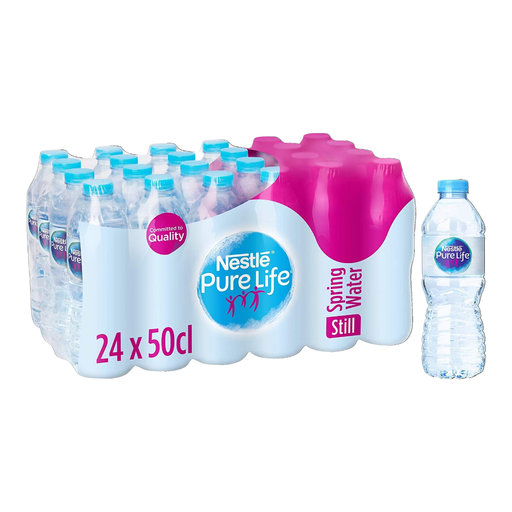
Why this choice suits this profile: This pack of 24 x 50 cl bottles gives you 12 litres of still water in easy-to-carry formats, perfect for home, the office, or on the go.
The total volume and individual bottle capacity are clearly stated, making it easier to compare the price per litre and avoid format mistakes.
Still water, with no sugar or calories according to the product sheet; bottles stated as 100% recyclable.
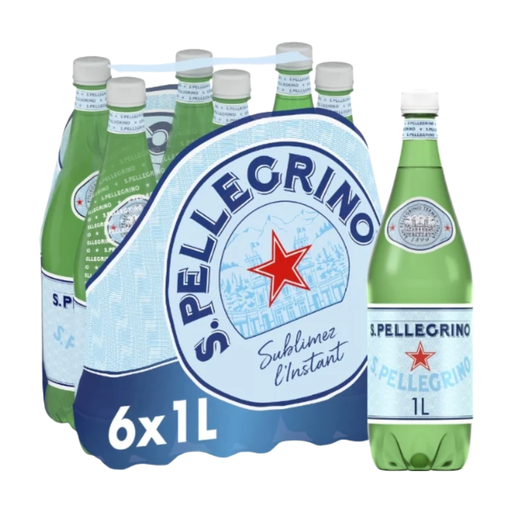
Why this choice suits this profile: With its 1 L format and fine bubbles, this water is designed for table service, especially with meals or during social occasions.
The 1 L format avoids lining up lots of small bottles on the table, while still allowing you to serve several people.
Pack of 6 bottles, sparkling natural mineral water, detailed mineral composition, and storage away from sunlight and frost.
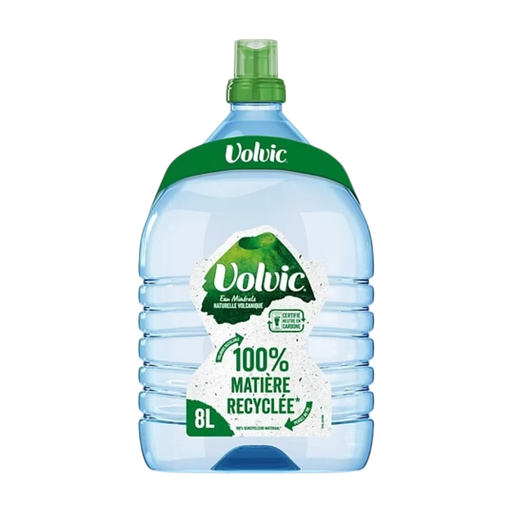
Why this choice suits this profile: This large container with a tap is ideal for shared spaces, offices, receptions, and regular home storage.
A single 8 L container avoids piling up bottles and makes serving simpler. You will, however, need to set aside a stable, easily accessible spot for it.
8 L capacity, practical tap, natural mineral water of French origin, and a PET container stated as recycled and recyclable, excluding the cap and label.
We've put together a comprehensive, real-time selection of products that meet these exacting criteria, as well as European safety regulations.
Unflavoured natural mineral water generally contains no sugar or calories. The products featured here show 0 kcal per 100 ml. A flavoured drink or one with added juice may, however, have a different energy value, so make sure it's a mineral water and not a flavoured drink.
Follow the manufacturer's recommendations. Several product sheets advise putting the opened bottle in the fridge and drinking it within a few days. For sparkling water, drinking it quickly also helps keep the fizz. Avoid leaving an opened bottle in a hot place or in direct sunlight.
Not necessarily. The 50 cl format is often more convenient, but its price per litre can be higher. Before you confirm your purchase, compare the total volume, the price per litre, the number of bottles, and any delivery charges.