What should you check before buying?
First decide when you plan to drink it, then compare your intended serving with the values given per 100 ml. For an intense, prolonged ride, consider hydration and sodium separately from your choice of juice.
| What to consider |
What to check |
Who it matters to |
| Carbohydrates during your ride |
Compare the carbohydrates per 100 ml with the amount you actually plan to drink. Try out your fuelling plan during training. |
“For a long ride, I want to know what my serving provides, without counting a whole bottle as one serving.” Around 29% of consumers would put this carbohydrate calculation first. |
| Hydration and sodium |
Check the salt content and plan what you’ll drink during exercise based on the duration, conditions and what you can tolerate. |
“If I’m riding for a long time at high intensity, I don’t want to mistake the juice for all the hydration I need.” This would be the priority for around 29% of consumers. |
| Packaging and transport |
Confirm the material, capacity and closure of the exact product. If you want to drink it while riding, consider decanting it into a clean cycling bottle. |
“I’d rather drink it when I stop than carry a glass bottle on my bike.” Around 24% of consumers would put practical packaging first. |
| Recipe and taste |
Tell the difference between pure juice, juice from concentrate and nectar. Check the ingredients and sugars per 100 ml. |
“Before or after my ride, I mainly choose a drink whose recipe and taste I enjoy.” This would come first for around 18% of consumers. |
For a product-specific comparison, Patrick Font lists 11 g of carbohydrates per 100 ml for its 25 cl Pure Apple Juice, while Alain Milliat lists 10 g per 100 ml for its Spanish Blonde Orange Juice. These figures can help you calculate a serving, but they don’t show that these juices meet all your needs for drinks during exercise.
Juice and nectar brands to know
These brands offer useful points of comparison for recipes and labels. The details below relate to the specific products mentioned, not every product in each range, and don’t necessarily mean they come in glass bottles.
Patrick Font
The brand offers a range of artisanal juices and nectars in sizes from 25 cl to 1 L.
- For its 25 cl Pure Apple Juice, Patrick Font lists 11 g of carbohydrates per 100 ml, including 9.9 g of sugars, as well as traces of salt.
- The brand advises keeping this product in the fridge for four days after opening. Check the packaging material of the product you choose; the figures for the apple version don’t apply to other flavours.
Alain Milliat
The brand offers a collection of juices and nectars designed to be savoured, with sizes that vary by product.
- For its Spanish Blonde Orange Juice, Alain Milliat lists 100% orange juice and, per 100 ml, 10 g of carbohydrates, including 10 g of sugars.
- The same product listing gives 0 g of salt per 100 ml. Don’t assume that its carbohydrate content makes it suitable as your only drink during prolonged exercise. Check the packaging of the product you buy too.
Joker
The Le Fruit range includes an apple juice marketed with no added sugars, for everyday enjoyment.
- Auchan’s product listing for this juice describes it as apple juice from concentrate and gives 10 g of carbohydrates per 100 ml, including 9.8 g of sugars.
- The listing gives 0 g of salt per 100 ml for this product. “No added sugars” doesn’t mean “sugar-free”; check the packaging if you’re looking for glass.
Carrefour
The supermarket’s own-label range includes Carrefour Extra mixed-fruit juice, marketed as pure juice.
- Carrefour’s product listing details the fruit juices and purées in this recipe and describes it as having no added sugars.
- This description alone doesn’t tell you whether it’s suitable for drinking while cycling or what the packaging is made of. Check the label and details for the exact product.
Juices and nectars available on Joybuy
These juices and nectars can be compared for enjoying when you’re not moving, before or after a ride. Don Simon nectar is described as coming in a glass bottle; for the other products, check the packaging material if glass is essential to your choice. In every case, consider the recipe and values per serving separately from your plan for drinks during exercise.
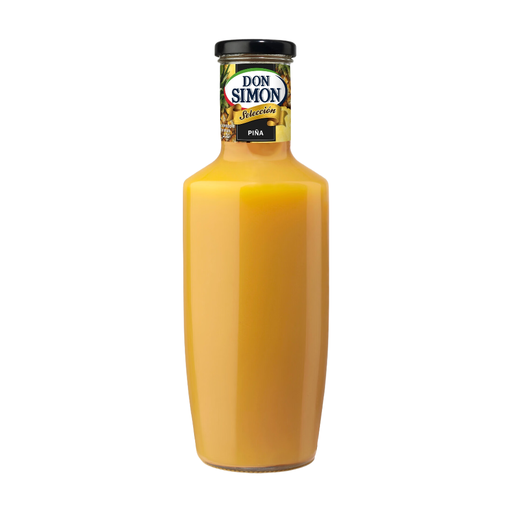 Image unavailable
Don Simon Pineapple Nectar in a 1 L glass bottle
A nectar in a glass bottle to consider for enjoying when you’re not moving, rather than a pure juice.
The listed recipe includes pineapple juice from concentrate, water and sugar. The nutritional information gives 11.1 g of carbohydrates per 100 ml, including 11.1 g of sugars, and 0.01 g of salt.
Check the refrigeration instructions after opening; its salt content alone isn’t enough to classify this nectar as a sports drink.
View on Joybuy
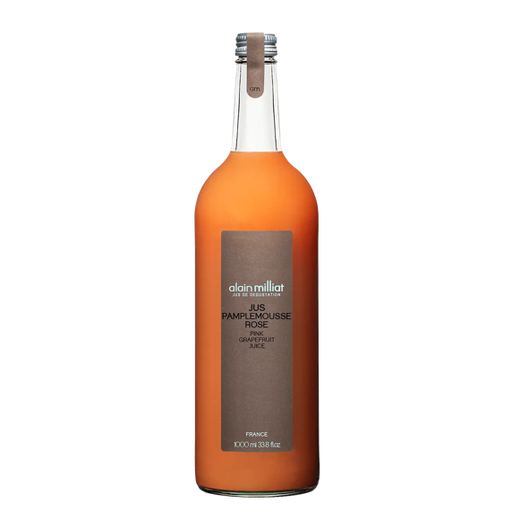 Image unavailable
Alain Milliat Pink Grapefruit Juice 1 L
A juice to compare with nectars if you’re looking for something to enjoy when you’re not moving.
The product listing describes it as 100% pink grapefruit juice and gives 8 g of carbohydrates per 100 ml, including 8 g of sugars, and 0 g of salt.
Check the packaging material before choosing it for its glass bottle, and follow the storage instructions after opening.
View on Joybuy
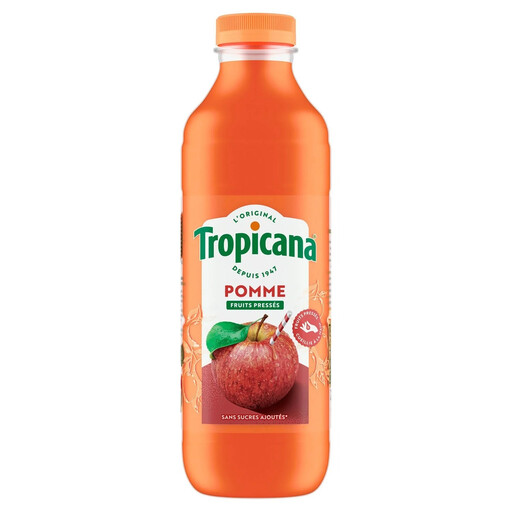 Image unavailable
Tropicana Pure Pressed French Apple Juice 1 L
An apple juice to compare if you’re looking for a recipe marketed as having no added sugars to enjoy outside of exercise.
The product listing describes it as pressed apple juice and gives 11 g of carbohydrates per 100 ml, including 11 g of sugars, and 0 g of salt.
“No added sugars” doesn’t mean “sugar-free”. Check the packaging material if you’re looking for a glass bottle.
View on Joybuy
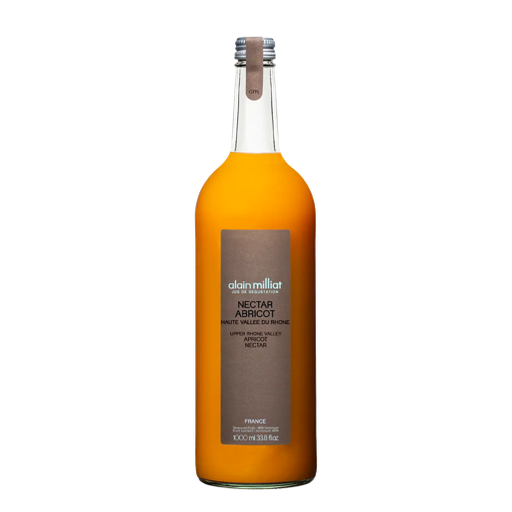 Image unavailable
Alain Milliat Bergeron Apricot Nectar 1 L
An apricot nectar to compare with juices if the drink’s ingredients are a factor in your choice before or after a ride.
The product listing gives 46% Bergeron apricot pulp and, per 100 ml, 14 g of carbohydrates including 11 g of sugars, as well as 0 g of salt.
Check the packaging material if you want glass. Its carbohydrate content alone doesn’t make it suitable as your only drink during exercise.
View on Joybuy
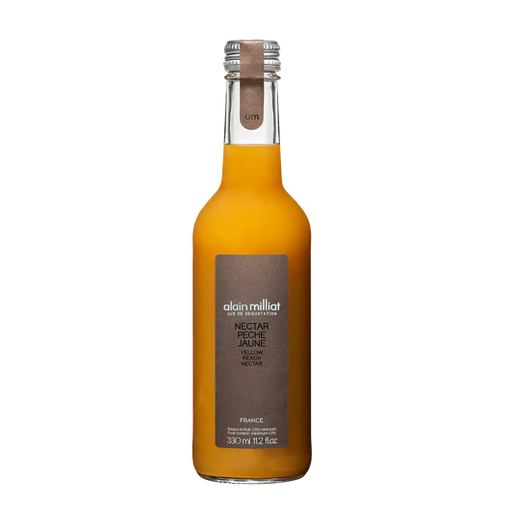 Image unavailable
Alain Milliat Yellow Peach Nectar 33 cl
The 33 cl size makes it a handy option to enjoy when you’re not moving, while still allowing you to calculate the carbohydrates in the amount you actually drink.
The product listing gives 53% yellow peach purée and, per 100 ml, 10 g of carbohydrates including 9 g of sugars, as well as 0 g of salt.
After opening, it should be kept in the fridge for three days. Check the packaging material before buying it if you specifically want glass.
View on Joybuy
Frequently asked questions
Can I drink only juice during a long bike ride?
Don’t assume that juice is enough as your only drink during intense, prolonged exercise. Endurance research indexed by PubMed looks at carbohydrates, hydration and sodium. Consider the serving of juice you plan to have and plan your drinks around the length and conditions of your ride.
Does juice labelled “no added sugars” contain sugars?
Yes, it can contain sugars naturally found in fruit. Auchan’s product listing for Joker Le Fruit apple juice, which is marketed as having no added sugars, gives 9.8 g of sugars per 100 ml. Use the figures for your specific product to calculate the amount in your serving.
How long can you keep juice after opening?
Follow the storage time and instructions on the product you’ve bought. For its 25 cl Pure Apple Juice, Patrick Font specifies four days in the fridge after opening. This storage time doesn’t automatically apply to other juices and nectars.
Where should I dispose of an empty glass juice bottle in France?
Put the empty bottle in the bin or container designated for glass packaging, following ADEME’s guidance. First, check that your product’s container is actually made of glass.


