
Livraison le jour même ou le lendemain

Qualité garantie

Débloquez vos offres de bienvenue: Livraison GRATUITE | Jusqu'à -80 % | 30 jours d'essai gratuits à JoyPlus
Téléchargez l'application
Borosilicate glass tableware is winning over more and more British households who want to cut down on plastic, organise their meals better and enjoy clear, easy-to-clean containers. But not all products are created equal. A dish that’s oven-safe may not work on an induction hob, while a double-walled glass has no place on a cooker.
Before you place an order, take the time to check the features that really matter. Here are the main pitfalls to avoid, the criteria to compare and a selection of products suited to different needs.
Borosilicate is a heat-resistant glass, but that doesn’t mean it can handle every appliance or every temperature change. A container that’s oven-safe may not be suitable for a hob. Similarly, some double-walled glasses can’t go in the oven or microwave.
Always check the product-specific instructions: oven, microwave, dishwasher, freezer, electric hobs, gas or induction with an adapter disc.
Marketing promises can sometimes be too vague. It’s better to look at a product page that clearly details the materials used: borosilicate glass, lid, silicone, bamboo or any coating. For PFAS-free glass tableware, make sure this feature applies to the product you’re interested in, not just a general brand statement.
The PYREX container page, for example, mentions non-porous borosilicate glass and the absence of PFOA in its composition. The Belissam saucepan page states it’s made without PTFE, without PFAS and without coating. However, you should always read this information in light of what the manufacturer actually provides.
A large box may seem practical, but it can become bulky in the fridge or oversized for a single portion. For lunchtime meals, leftovers or meal prep, compare the capacity, shape and whether the containers can be stacked.
Lids deserve the same attention: their seal, microwave compatibility and how much space they take up all affect everyday convenience.
Borosilicate glass is valued for its low porosity: it absorbs odours, stains and flavours less easily than a porous material. However, it is still breakable. A drop, a knock against the sink or a sudden temperature change can cause a crack.
Never place a hot dish directly into the fridge, freezer or under cold water. Let it cool gradually to room temperature and inspect it before each use.
For glass food storage containers, look clearly for the following mentions:
The Belissam borosilicate glass saucepan, for example, is stated as compatible with gas and electric hobs. Induction, however, requires the adapter disc mentioned on its page. Its maximum oven temperature is 180 °C: this limit must not be exceeded.
For a single person, a container of 150 to 800 ml may be suitable depending on use. A family would be better off combining several sizes. Rectangular boxes generally stack more easily in a fridge, while bowls are practical for serving.
For drinks, double-walled glasses of 270 ml work well for coffee, tea and cold beverages. A 500 ml reusable glass bottle is more suited to the office or on the go, provided you check the seal of the stopper and follow the warnings about fizzy drinks.
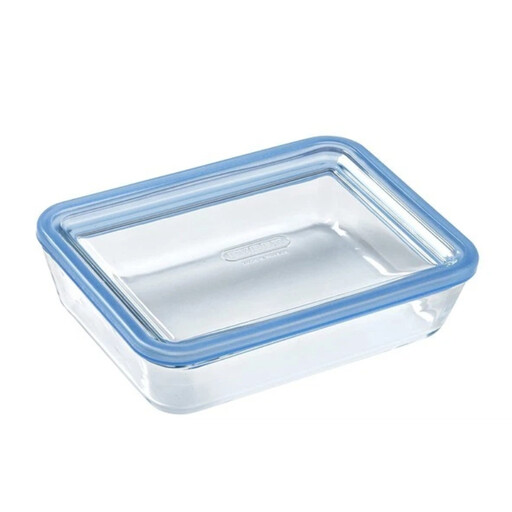
Why this choice suits this profile: Its 0.8-litre size works well for leftovers, individual portions and meal prep. The rectangular, stackable shape makes it easy to store in a standard British fridge.
The product page specifies its uses in the oven, microwave, freezer, fridge and dishwasher. Warnings about thermal shock should still be followed.
Non-porous borosilicate glass, 0.8-litre capacity, stackable design and dishwasher-safe according to the product page.
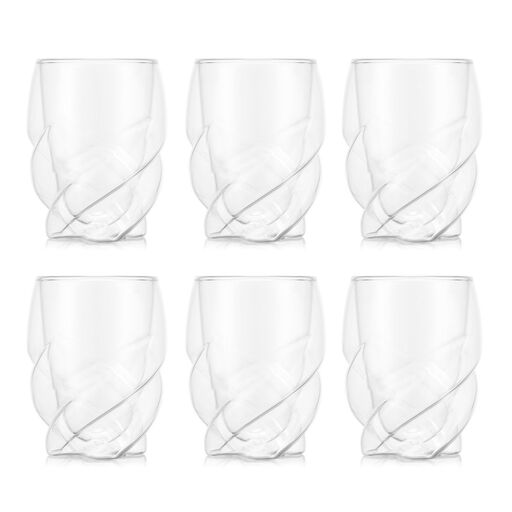
Why this choice suits this profile: These 270 ml glasses combine an elegant presentation with everyday use, for coffee, tea or cold drinks.
The product page clearly states that these glasses are not suitable for the oven or microwave. This limitation prevents them being used for anything other than serving.
Hand-blown borosilicate glass, double-walled, set of six and dishwasher-safe according to the product page.
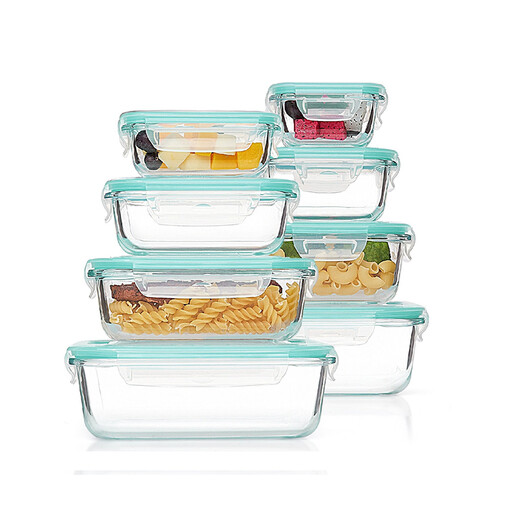
Why this choice suits this profile: The eight capacities, from 150 ml to 1,040 ml, make it easy to store sauces, sides, prepped portions and full meals.
The variety of sizes stops you from buying oversized boxes. However, check the instructions about the lids before reheating.
Eight volumes, detachable lids and sizes suitable for both packed lunches and home storage.
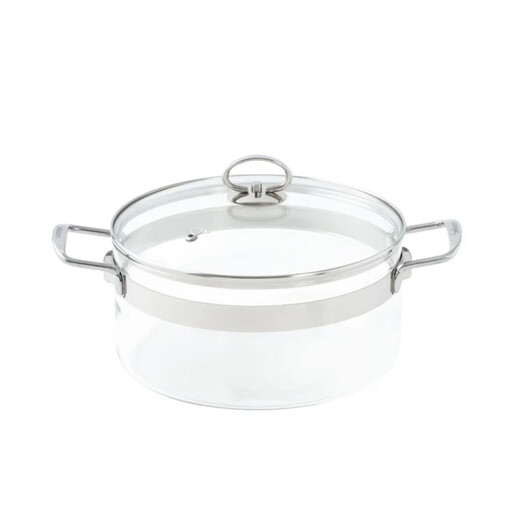
Why this choice suits this profile: Its capacity works well for soups, pasta, vegetables and family-sized dishes, for those looking for a clear glass saucepan.
The product page distinguishes between gas and electric hobs and induction, which requires an adapter disc. The 180 °C limit is also stated.
4.2 l capacity, integrated pouring spout and glass stated as PTFE-free, PFAS-free and coating-free on the product page.
We’ve put together a full, real-time updated selection of products that meet these demanding criteria and European safety regulations.
Glass kitchen accessories are generally cleaned with a soft sponge and standard washing-up liquid. Avoid abrasive products, steel wool and knocks against hard surfaces. For silicone lids, check the seals regularly and let them dry separately.
Lifespan depends mainly on impacts, deep scratches and temperature changes. Any container with a crack, chip or significant scratch should be discarded. Borosilicate glass can last a long time in a busy kitchen, but it doesn’t become unbreakable.
It depends on the product. Boxes and some bowls may be compatible, while double-walled glasses are sometimes explicitly excluded. Check the product page and only remove or partially open the lid if this use is allowed.
Not necessarily. Some models work on gas and electric hobs, but require an induction adapter disc. Never place a glass saucepan directly on an induction hob without a clear indication from the manufacturer.
It can be suitable for people looking for durable kitchen utensils that are reusable and transparent. However, its weight and fragility should be taken into account, especially for transport. A reusable bottle protected by a silicone sleeve may be more practical than a container fully exposed to knocks.