
Livraison le jour même ou le lendemain

Qualité garantie

Débloquez vos offres de bienvenue: Livraison GRATUITE | Jusqu'à -80 % | 30 jours d'essai gratuits à JoyPlus
Téléchargez l'application
A borosilicate glass storage container can make organising dry goods, preparing meals and storing leftovers much simpler. But you need to choose a model that suits your needs. A container that’s perfect for rice or coffee won’t necessarily be oven-safe, and a lid described as airtight may not be reliable enough for transporting soup.
To avoid unnecessary purchases, focus on three things: the intended use, the size, and the safety instructions. Here are the key criteria to check before buying an airtight glass jar or a glass food container.
Borosilicate glass generally handles temperature changes better than ordinary glass. That doesn’t mean every container made from this material can go in the oven, microwave, or straight from the freezer to a heat source.
Compatibility depends on the overall design: the thickness of the glass, the shape of the container, the lid, and the manufacturer’s recommendations. A borosilicate food container may therefore be intended only for the fridge and for storing dry goods.
An airtight glass jar limits contact with air and moisture. However, the effectiveness of the seal depends on the gasket, the lid, and how the container is positioned. To transport a liquid dish, check that the model is designed for that purpose and has a genuinely secure closure system.
An airtight lid is particularly handy for cereals, sugar, pasta, coffee, or dried fruit. For a bag or rucksack, it’s better to choose a glass lunch box with clips or a clearly described locking system.
A tall, round container can be very practical for dry goods, but it’s often harder to stack. Conversely, a rectangular box usually fits more easily into a fridge or freezer.
Before ordering, measure the depth of your shelves and allow enough clearance to reach the lid. The stated capacity isn’t everything: the external dimensions are just as important for keeping a well-organised kitchen.
Non-porous borosilicate generally doesn’t retain odours or stains like some more absorbent materials can. It’s therefore well suited to storing strongly flavoured foods such as coffee, spices, or sauces, provided it’s properly maintained.
To choose a heat-resistant glass container, carefully check the pictograms and permitted uses:
Even when a container is heat-compatible, avoid thermal shock. Don’t plunge a hot container into cold water, and don’t place it directly into the freezer. Inspect the glass regularly and stop using the container at the first sign of a crack, chip, or deep scratch.
For storing dry goods, sizes between 500 and 1,200 ml cover most everyday needs:
Sets with multiple sizes allow you to match each container to its contents and avoid leaving too much empty space. They’re particularly useful for families or batch cooking, as long as the dimensions are compatible with your cupboards.
A good glass container should be easy to open, wash, and dry. Lids made up of several parts can offer a more effective seal, but they also require more care to prevent residue building up in the crevices.
Wash each container before its first use. If the instructions recommend hand washing, follow this advice to preserve the glass’s clarity and the condition of the seal for longer. Dry the container thoroughly before filling it, especially when storing flour, rice, or cereals.
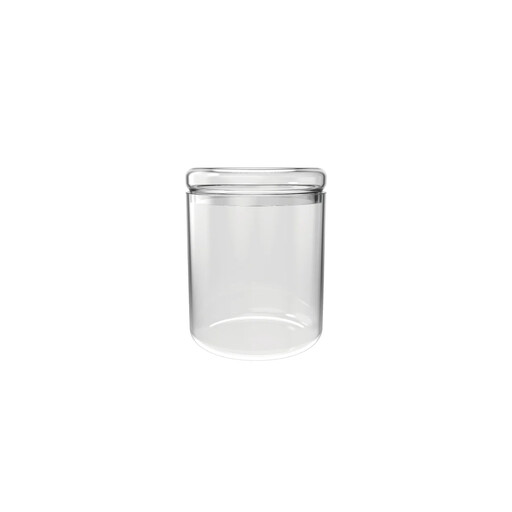
Why it suits this profile: Its compact size is ideal for starting to organise a cupboard, with spices, seeds, nuts, or ground coffee.
The listing mentions an airtight lid and states that the model is not suitable for microwave or oven use, which reduces the risk of misuse.
Non-porous borosilicate glass, contents visible at a glance, and compact dimensions of 11.5 × 9 cm.
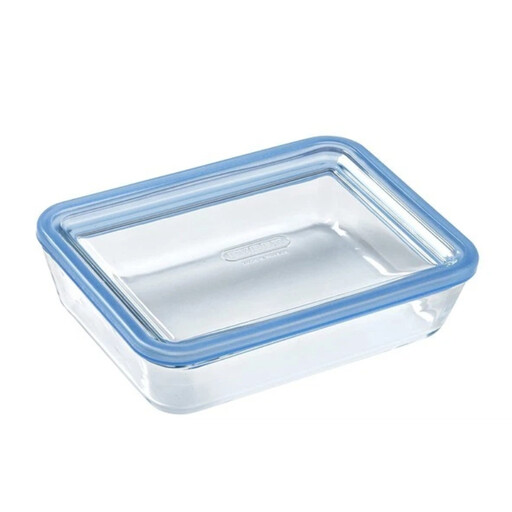
Why it suits this profile: Its rectangular 0.8-litre format is ideal for leftovers, individual portions, and meal prep.
The stated uses cover the fridge, freezer, microwave, oven, and dishwasher, with precise instructions to avoid thermal shock.
Non-porous borosilicate glass, stackable design, and a 0.8-litre capacity.

Why it suits this profile: With eight capacities ranging from 150 to 1,040 ml, this set lets you prepare multiple portions and transport a variety of meals.
The variety of sizes stops you using an oversized container for every meal, while the removable lids make washing and storing easier.
A set of eight rectangular containers, lockable lids, and capacities well suited to batch cooking.
We’ve selected a comprehensive, real-time updated list of products that meet these demanding criteria as well as European safety regulations.
The lifespan of a container depends on how often it’s used, how well it’s washed, and the condition of the glass. To keep your food container in good shape:
When cleaned properly, glass hardly stains and generally doesn’t retain odours. However, it is heavier and more fragile than a plastic container. For daily commutes, choose a sensible size and protect it from knocks in your bag.
Yes, it’s generally suitable for rice, pasta, cereals, sugar, coffee, and spices. An airtight lid helps limit moisture, but the container must be clean and completely dry before filling.
Only if the product listing clearly states it’s allowed. The material alone doesn’t determine compatibility. Remove the lid or adapt its use according to the instructions, and avoid any sudden temperature changes.
A set can work out cheaper than buying several individual sizes and can make meal prep easier. However, compare the capacities, dimensions, number of lids, and care instructions before making your decision.