
Livraison le jour même ou le lendemain

Qualité garantie

Débloquez vos offres de bienvenue: Livraison GRATUITE | Jusqu'à -80 % | 30 jours d'essai gratuits à JoyPlus
Téléchargez l'application
As Joybuy's resident product expert, I'm here to help you navigate the complex world of high-tech. Today, we're focusing on headphones for athletes—a category where safety and comfort are just as crucial as sound quality. Listening to your favourite playlist while running through the city or cycling in the countryside is an amazing experience. But completely cutting yourself off from the outside world can quickly become dangerous. That's where bone conduction headphones for sports and other open-ear models, which are becoming increasingly popular, come into play.
Be warned, not all models are created equal. Before making your choice, it's best to know the common pitfalls to avoid turning a promising purchase into a costly disappointment.
To make the right choice, trust the facts, not the marketing. Here are the three technical points to examine closely.
Understanding the technology is the first step, as it shapes your entire listening experience.
For open-ear sports headphones, stability is non-negotiable. A good fit prevents you from having to readjust your headphones every five minutes mid-workout.
Sports mean sweat and sometimes rain. An IP (Ingress Protection) rating is therefore not an option, but a necessity.
Instead of a long list, we've selected the ideal product for each type of athlete, based on the performance and design criteria discussed above.

Why we chose it: Perfect for discovering the joys of the open-ear format without breaking the bank. Ideal for a jog in the park or city commutes where you need to stay alert. An excellent solution for headphones for safe running.
The manufacturer is transparent: this is an "open-ear" concept, not fake bone conduction. Its clip-on design ensures a much better fit than a simple off-ear speaker.
Its discreet and lightweight clip-on design. The AI-powered noise reduction for calls also makes it very versatile for switching from sports to remote work.
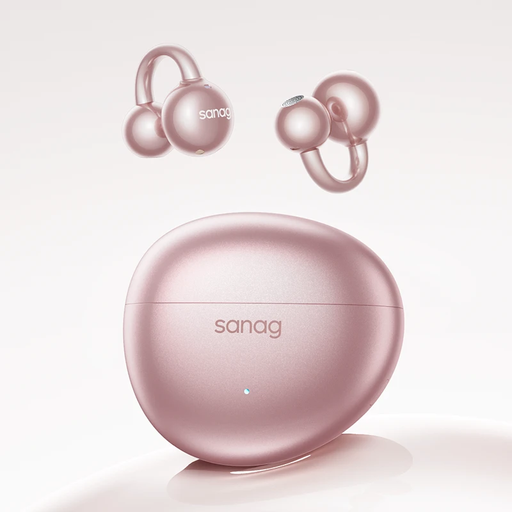
Why we chose it: Designed for long-distance training (marathons, long bike rides). Its bone conduction technology guarantees perfect environmental awareness, a non-negotiable feature for any athlete training on the road.
No surprises here: this is a TRUE bone conduction Bluetooth headset. The experience and safety are guaranteed. Its neckband is designed not to move an inch, even during the most intense efforts.
True bone conduction technology for maximum safety. Its extra-long battery life is built for endurance training.
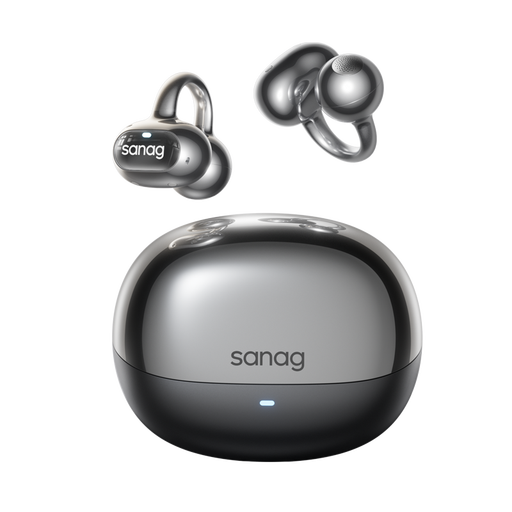
Why we chose it: For those who switch between workouts and video calls. The "ear clip" design is ultra-comfortable for long periods, and its touch controls make it practical for daily use, far beyond just sports.
Its "suspended" design solves the classic problem of earbuds that fall out or eventually irritate the ear canal. It's the ultimate stable and comfortable alternative to in-ear models.
Its suspended design, engineered for long-lasting comfort. Its touch controls are intuitive for easily juggling music and calls.
We have selected a full range of products that meet our selection criteria and safety standards.
Bone conduction sends sound via micro-vibrations transmitted through the skull bones directly to the inner ear. The ear canal thus remains completely open. Ear clip (or air conduction) headphones are mini-speakers that rest on the ear and direct sound towards the ear canal, but without blocking it. Both technologies allow you to stay aware of your surroundings, but the listening sensation and audio quality are not the same.
Yes, as long as you use them at a reasonable volume, they are perfectly safe. Since the sound bypasses the eardrum, many users even find them more comfortable. However, just like with any headphones or earbuds, prolonged listening at full volume can damage the cells of the inner ear. The golden rule remains the same: keep the volume moderate and take regular breaks.
After each session, a wipe with a soft, dry cloth is enough to remove sweat and dirt. If your model is rated IPX5 or higher, you can give it a quick rinse under clean water. Warning: Make sure the charging port is completely dry before plugging it in again. Never use solvents or harsh cleaning products. Finally, store them in a dry place to preserve the battery and electronics.