
Livraison le jour même ou le lendemain

Qualité garantie

Débloquez vos offres de bienvenue: Livraison GRATUITE | Jusqu'à -80 % | 30 jours d'essai gratuits à JoyPlus
Téléchargez l'application
Running along a road, cycling in town or walking on a busy trail with your ears completely sealed off can stop you from hearing the sounds around you. Open-ear headphones meet this need by leaving your ear canal free, but not all models use the same technology. Before buying a pair of wireless sports headphones, it’s worth checking how they work, their water resistance and their real-world battery life, based on how you plan to use them.
The term “bone conduction” is sometimes used to describe clip-on headphones or those with a speaker positioned near the ear. A genuine bone conduction headphone transmits vibrations through the areas in front of your ears, whereas an open-ear model projects sound close to the outer ear without entering the ear canal.
This difference affects the audio quality, how well they stay in place and the pressure felt around your ear. If you’re looking for headphones without in-ear tips, rely on the detailed description and product photos rather than just the product name.
A certification of IPX5, IPX7 or IPX8 does not automatically mean the product is suitable for lengths in the pool. The rating corresponds to a level of resistance tested under specific conditions, while the Bluetooth connection is generally unusable underwater. Some headphones designed for swimming therefore include internal memory so you can play audio files without a smartphone.
An IP67-rated headphone can withstand temporary immersion under the conditions set by the standard, but that doesn’t necessarily make it suitable for repeated use in water. Always check the manual and the limits set by the manufacturer.
Battery life varies depending on listening volume, phone calls, distance from your phone and temperature. A stated battery life of “up to” corresponds to a reference scenario, which is usually more favourable than everyday use. For long outings, a long-lasting bone conduction headphone or a model with built-in memory can save you from having to recharge too often.
For running, the headphone needs to stay securely in place despite head movements, without putting too much pressure behind your ears. A lightweight design, such as the Verbex K08 at around 25 g, can be comfortable during longer sessions. Clip-on models sit around the outer ear and don’t block the ear canal, but their stability depends more on the shape of your ear.
Comfort is very personal. Wear the headphone for a few minutes before an intense session and check that your glasses, cycle helmet or bag straps don’t create any pressure points.
After each session, wipe the headphone dry and let it air dry before recharging. For swimming, a model with MP3 memory, such as the Verbex X7S or the Mojawa RunPlus, is more suitable than a device that relies solely on Bluetooth. A wireless connection does not transmit well through water over the length of a swimming pool.
A sports headphone with a microphone can be enough for taking calls during a walk or a work commute. However, having a microphone doesn’t guarantee perfectly clear speech in windy conditions or near a busy road. When you’re running or have damp hands, physical buttons are often more practical than overly sensitive touch controls.
Even with open-ear headphones, keep the volume at a reasonable level. Being able to hear surrounding sounds doesn’t eliminate the risks from traffic, junctions or machinery. When cycling in traffic, your visual and auditory attention must remain the priority.
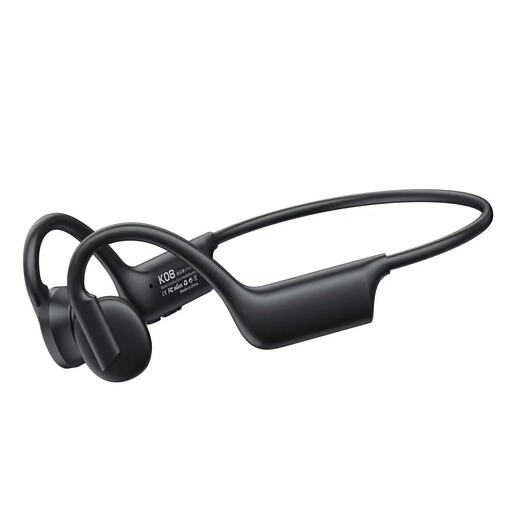
Why this choice suits this profile: Its open-ear design, stated weight of around 25 g and Bluetooth connection make it a suitable model for your first runs, gym sessions and walks.
The product page distinguishes the open-ear design and mentions an IPX5 resistance rating depending on the variant. This helps you avoid choosing this headphone for immersion, which it isn’t designed for.
Bluetooth, built-in microphone, USB-C charging and stated battery life of up to around 7 to 10 hours depending on the version.
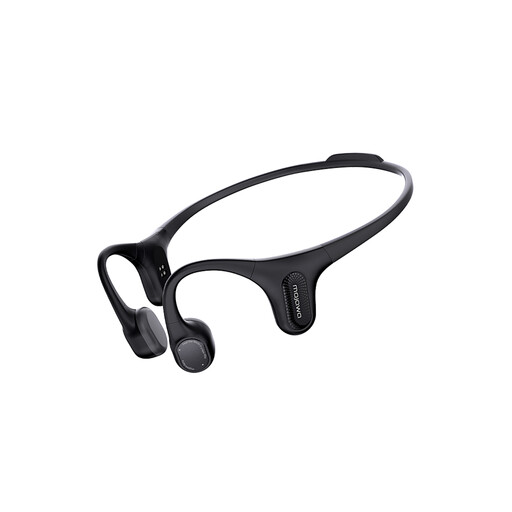
Why this choice suits this profile: This model is aimed at users looking for an open-ear headphone for running or cycling, with an IP67 rating and a built-in microphone.
The product page states it is not designed for swimming lengths and recommends drying the magnetic contacts before recharging.
Open-ear design, wireless transmission, microphone and IP67 resistance rating as stated on the product page.

Why this choice suits this profile: Its 32 GB of internal memory and stated IPX8 protection are aimed at swimmers and athletes who want to listen to content without carrying their phone.
The MP3 memory means you don’t have to rely on Bluetooth in the water. You still need to dry the charging port after your session.
32 GB of storage, Bluetooth, microphone, MP3 playback and stated battery life of up to around 8 to 10 hours.
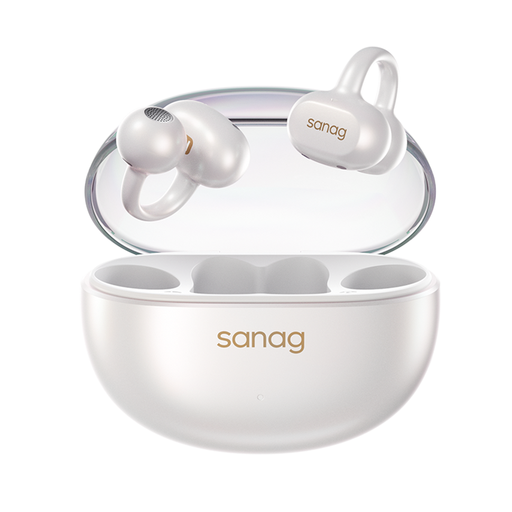
Why this choice suits this profile: Its clip-on format, without inserting anything into the ear canal, can work well in the office, for walking, cycling and gym sessions.
The product page recommends avoiding immersion as well as excessive exposure to sweat or rain: this model should not be mistaken for a waterproof headphone designed for swimming.
Open-back clip-on format, touch controls and stated noise reduction function for calls.
We’ve put together a complete, real-time updated selection of products that meet these demanding criteria and European safety regulations.
Yes, an open-ear model can work for these activities as long as it stays securely in place and you keep the volume at a moderate level. It allows you to remain aware of part of your surroundings, but it never replaces vigilance, especially in traffic.
It all depends on the battery capacity, listening volume and how often you recharge them. A stated battery life of 7 to 10 hours can cover several sessions. For heavy use, also consider the type of charging, whether a cable is included and protecting the battery from heat and moisture.
Yes, but only if the product is explicitly designed for swimming and has suitable protection, such as the Verbex X7S, which is stated to have an IPX8 certification and internal memory. Bluetooth alone is not reliable underwater. Also check the permitted depth and immersion time, as well as the drying instructions to follow before each recharge.