
Livraison le jour même ou le lendemain

Qualité garantie

Débloquez vos offres de bienvenue: Livraison GRATUITE | Jusqu'à -80 % | 30 jours d'essai gratuits à JoyPlus
Téléchargez l'application
Running, cycling or walking in the city with music doesn't have to mean shutting yourself off from the outside world. A bone conduction Bluetooth headset or an open-ear audio headset leaves your ears free, so you can hear surrounding sounds more easily. But behind the mentions of "sport", "AI" or "waterproof", the differences between models can be considerable.
Before placing an order, three pitfalls come up time and again:
An open-ear headset needs to stay firmly in place without putting excessive pressure behind your head or on your ears. For running and fitness, it's best to go for a lightweight design, with a headband or hooks that are properly positioned. An earpiece that shifts with every stride quickly becomes annoying, even when the audio quality is good.
Bone conduction models generally place their transducers near the cheekbones. Clip-on open-ear models, on the other hand, attach around the ear while leaving the ear canal free. This distinction helps you choose between comfortable earphones for cycling and fitness, a discreet sport Bluetooth headset, or a model more designed for professional calls.
The IP rating deserves to be decoded precisely:
A waterproof headset for swimming also needs to offer a suitable playback mode. Bluetooth transmits very poorly through water: for swimming, a headset with a 32GB MP3 player can prove far more practical than a model that depends on your phone. After each session, dry the contacts and charging port thoroughly before plugging in the cable.
For daily commutes, 5 to 7 hours can be more than enough. However, for a hike, a long training session or several uses without recharging, look closely at the stated battery life and the type of charging. Bluetooth 5.3 or 5.4 indicates a connection generation, but doesn't on its own guarantee better range or superior audio quality in all situations.
A wireless headset with a microphone can be perfectly suitable for calls, but the clarity of conversations depends particularly on the positioning of the microphones and the level of ambient noise. Noise reduction features dedicated to calls don't eliminate all the sounds around you. Even with an open-ear headset, keep the volume at a reasonable level near roads and junctions.
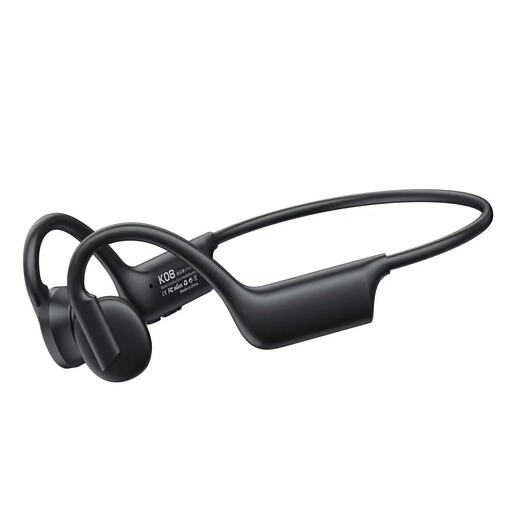
Why this choice suits this profile: Its open-ear design, stated weight of around 25g and battery life of up to 7 to 10 hours make it a great starting point for your first outings, the gym or daily commutes.
The product page states IPX5 resistance, which stops you from mistakenly choosing it for swimming or immersion.
The product page mentions Bluetooth, a built-in microphone, an open design and USB-C charging.
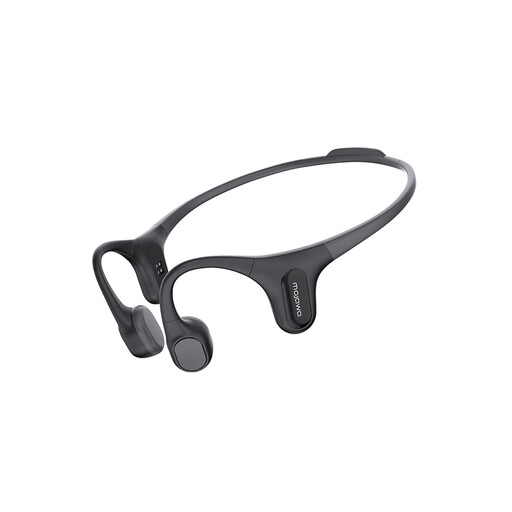
Why this choice suits this profile: This model combines an open-ear design, 32GB MP3 storage and a stated IP68 rating. It can therefore accompany workouts, commutes and certain water-based activities, within the specified conditions.
The built-in storage reduces reliance on your phone. As for the stated IP rating, it's best to check the conditions of use in the manual before taking it to the pool.
The product page highlights a 32GB MP3 player and a stated IP68 rating.
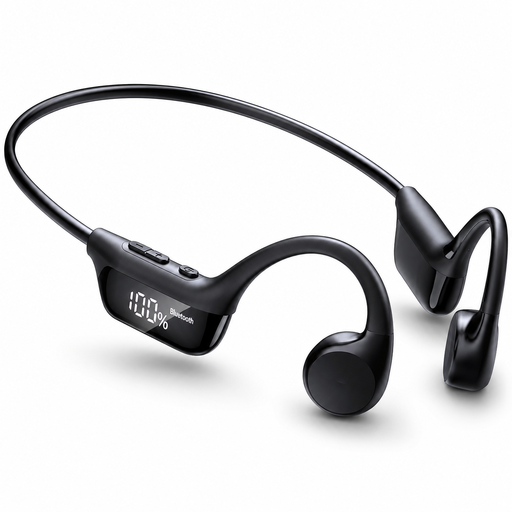
Why this choice suits this profile: With its stated IPX7 rating, battery life of up to 12 hours and built-in microphone, this sport Bluetooth headset meets the needs of running, cycling and gym sessions alike.
The IPX7 rating should not be confused with a certification intended for swimming. This limitation helps you better understand its use in the rain or after a workout.
The product page states Bluetooth 6.0, a battery life of up to 12 hours and an LED display.

Why this choice suits this profile: Swimmers and athletes who prefer to go without their phone have 32GB of internal storage, an MP3 mode and a stated battery life of around 8 to 10 hours here.
The product page states an IPX8 certification and recommends drying the port before charging: two essential precautions to avoid inappropriate use.
The product page highlights 32GB MP3 storage, a built-in microphone and an IPX8 rating.
We've put together a comprehensive selection, updated in real time, of products that meet these demanding criteria as well as European safety standards.
It leaves your ears free and makes it easier to perceive surrounding sounds. That obviously doesn't mean you can let your guard down, especially in traffic. Turn the volume down and avoid any use that could distract your attention.
No. Check the IP rating, the manual and whether there's an MP3 player. Bluetooth alone cannot transmit sound properly underwater. An IPX8 or IP68 model may be designed for immersion, but the exact conditions of use always depend on the product.
Manufacturers generally state between 5 and 12 hours depending on the model. The actual duration varies according to volume, calls, temperature and battery condition. To preserve the battery, use a compatible charger, avoid high temperatures and never charge a device that is still damp.