
Livraison le jour même ou le lendemain

Qualité garantie

Débloquez vos offres de bienvenue: Livraison GRATUITE | Jusqu'à -80 % | 30 jours d'essai gratuits à JoyPlus
Téléchargez l'application
A French press coffee maker lets you make coffee by hand with very little equipment. But some purchases can quickly disappoint: the capacity may be misleading, the glass may be fragile, the filter difficult to clean or claims of a “professional” result impossible to verify.
Before choosing a model for your home, office or get-togethers with friends and family, it’s worth checking a few practical points. Here’s what to look for, along with a selection of products for different needs.
A 1 l French press is often described as an 8-cup French press. But this depends on the volume used for each cup, which is usually much smaller than a large breakfast mug. A one-litre capacity works well for sharing, but it may not be enough to fill eight mugs.
By contrast, a 350 ml coffee maker is better suited to one person or two small servings. Check the capacity in millilitres before relying on the stated number of cups.
Borosilicate glass coffee makers are designed to withstand the heat of coffee, but they can still break. A sudden change in temperature can cause a crack, so avoid pouring very hot water into a cold carafe or placing a hot one on a wet surface.
A transparent model lets you watch the coffee brew, but it needs to be handled with care. Check the carafe before every use and stop using it if you spot even the smallest chip or crack.
A reusable metal filter means you don’t need paper filters, but it also traps coffee oils and fine particles. If the mesh isn’t rinsed properly, it can leave your coffee tasting stale or make the plunger harder to press down.
Choose a coffee maker that’s easy to take apart. After each brew, remove the plunger, rinse the mesh thoroughly and let the parts dry before putting them back together. Check which parts are dishwasher-safe: glass and steel generally are, while some plastic parts are better washed by hand.
Leave a little space below the lid to prevent spills when you press down the plunger.
Borosilicate glass is valued for its transparency and good heat resistance, but it isn’t unbreakable. A plunger and mesh made from stainless steel are reusable and don’t require disposable consumables. Keep plastic handles and lids away from flames and hobs.
Don’t use a French press on a hob, in an oven or in a microwave unless the manufacturer explicitly says it’s safe to do so. Use a separate kettle to heat the water.
This manual brewing method usually works best with a fairly coarse grind. A grind that’s too fine may pass through the mesh or make the plunger difficult to press. Pour in hot water, stir gently, leave to brew for a few minutes, then press down slowly.
This method retains more of the coffee’s oils than a filter coffee machine that uses a paper filter. The result may therefore taste fuller and more aromatic, with more sediment at the bottom of the cup. If you prefer a clearer brew, a filter coffee maker with a reusable filter or a manual pour-over dripper may suit you better.
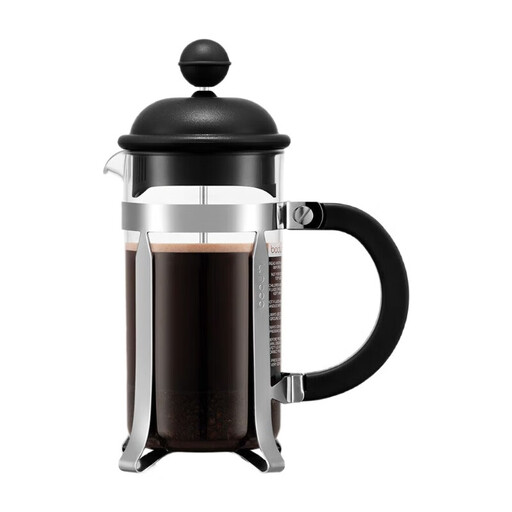
Why it suits this type of user: Its compact size is ideal for one person, a small office or anyone trying manual brewing for the first time.
At 350 ml, it reduces the risk of buying a large carafe when you only need to make coffee for one.
Borosilicate glass, a stainless steel plunger and parts designed to make cleaning easier, as specified by the manufacturer.
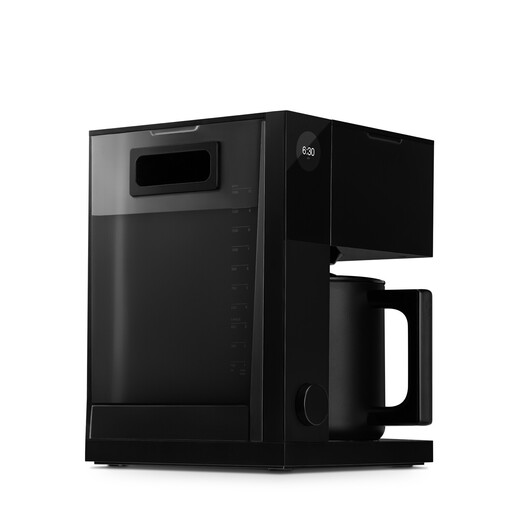
Why it suits this type of user: This filter coffee machine is for coffee lovers who want a programmable brew and more precise settings than a manual coffee maker can offer.
Its 1.5 l capacity and removable water tank make it easier to understand how much coffee it can make for several people.
1.5 l thermal carafe, strength control, touchscreen and a remote brewing function listed on the product page.
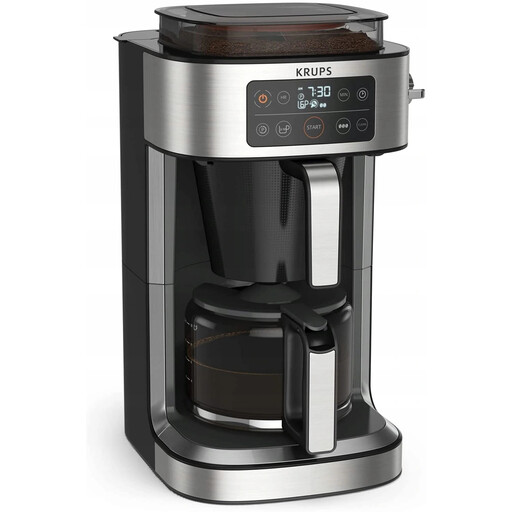
Why it suits this type of user: Its semi-automatic operation meets the needs of a household or workplace that regularly makes several cups of coffee.
Adjustable dosing and 24-hour programming save you from repeating the same steps every time you make coffee.
Integrated airtight container advertised as holding 400 g of ground coffee, capacity of up to 10 cups, automatic shut-off and 30-minute keep-warm function.
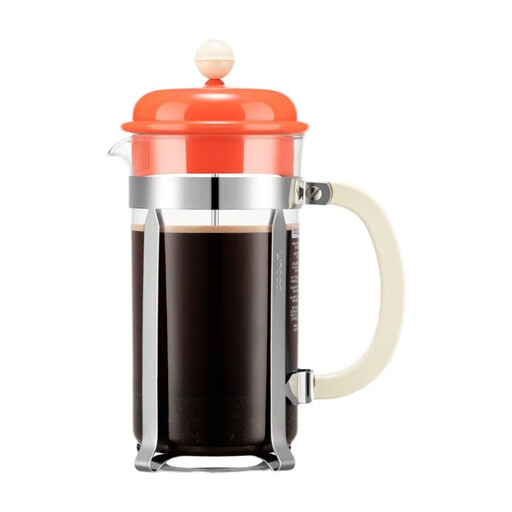
Why it suits this type of user: Its generous capacity is ideal for family breakfasts, shared meals and serving several guests.
The stated capacity is also given in litres, making it easier to compare with your household’s actual needs.
Borosilicate glass carafe, stainless steel plunger and filter, no paper filters needed, and a design that can be taken apart for easier cleaning.
We’ve put together a comprehensive list, updated in real time, of products that meet these strict selection criteria and European safety regulations.
Choose a coarse grind, similar to the grind used for some gentle immersion brewing methods. A fine grind may pass through the mesh and make the plunger harder to press. Use hot water, but don’t pour it straight into a very cold carafe.
Its lifespan depends on how you handle it, the condition of the filter and how regularly you clean it. A warped mesh, a plunger that sticks or a cracked carafe are all signs that it’s time for a replacement. To help it last longer, avoid sudden temperature changes, take the filter apart after each brew and never press down sharply.
It doesn’t need capsules or paper filters, which can reduce the cost of consumables. The main ongoing costs are ground coffee and hot water. On the other hand, brewing is manual and there’s usually no programming or automatic keep-warm function. The right choice depends on how much time you have, how many cups you need to make and how much control you want over the process.